For Your Pleasure

A song-by-song analysis of the lyrics and music of Roxy Music and the solo work of Bryan Ferry, Brian Eno, Andy Mackay and Phil Manzanera in the 1970s


Leave a comment

Piece of My Heart

Screen Shot 2019-04-03 at 7.21.20 AM
Piece of My Heart Bryan Ferry (cover version, These Foolish Things, 1973)
Piece of My Heart Erma Franklin (original, written by Jerry Ragovoy/Bert Berns, 1967)
Piece of My Heart Big Brother & The Holding Company (cover, Cheap Thrills, 1968)

Bert Berns – one of the greatest songwriters of all bloody time, it’s as simple as that!

Keith Richards

By the time Bryan Ferry recorded Jerry Ragovoy and Bert Berns’ ‘Piece of My Heart’ in 1973 the song was already a classic – producing hits for Erma Franklin (Aretha’s sister), Dusty Springfield and Janis Joplin. Taking on a woman’s song can never be easy, especially when one version – Joplin’s – is probably the defining track of a short career – but Ferry may have felt he could deliver a more soulful version than the throw-away delivered by Scottish all-male group Marmalade in 1968 (he could, and he did). By the time Sammy Hagar covered ‘Piece of My Heart’ in 1981, the legacy of Erma, Dusty and Janis were calling for a moratorium on men covering the song (Marmalade fared better their mega #1 hit cover of The Beatles Ob-La-Di, Ob-La-Da. So much for originality in pop in 1969!).

Ferry does a surprisingly excellent version of ‘Piece of My Heart’ on his first covers album These Foolish Things – surprising in that, negating the quirks of his quavering vocal style, he sweetens his voice to a degree that releases him from the narrow vocal canvas of Roxy Music and points the way towards the fuller sound heard on Stranded and 1974’s solo hit ‘Smoke Gets in Your Eyes’. Certainly, the opening line of ‘Piece of My Heart’ is stunning in its affectation as Ferry allows himself to be close-miked and vulnerable (hear the echo of the studio standing between him and the words):

Didn’t I make you feel (pause) like youuuu (hold) are the on-ly (hold) one (hold)?

Ranking as some of the best phrasing of his career to date, Ferry’s vocal is so considered and melodic in these opening lines that you, the cruel lover, cannot doubt the sincerity of the question being asked regarding actions towards the tender and broken heart. From here though, the success of Ferry’s recording really depends on how you feel about the song, for the upcoming shift in mood relies on the sudden call-to-arms of the jilted lover, an approach most successfully realized by Janis Joplin’s raspy and impatient ‘Co-o-ome on, come on, COME ON, co-o-o-ome on and TAKE IT!/Take another little piece of my heart now, baby‘. Suddenly ‘Piece’ shifts from imploring sweetness – which suits Ferry’s delivery to a tee – to brokenhearted antagonism, a style better suited to Joplin’s in-your-face Texas blues, and a reason surely why Joplin’s version is the standard for the song and not Erma Franklin’s more sombre (even glum), take. To my ears ‘Heart’ loses melody and purpose at this point, and Ferry’s version does little to change the outcome. Similiar to that perennial yet irritating 60s chestnut ‘Take a Load Off Fanny‘, you can either live with it, or you can’t. Nothing ventured, nothing gained.

Designing his version of the song to be more Erma Franklin than Janis Joplin, Ferry has in the end to deal with the legacy and weight of the Joplin version. In order to do so he applies a three-prong attack: beef up the female contingency via the all-girl harmony group The Angelettes – who do a fantastic job on ‘Hard Rain’ and indeed on the entire album (see entry ‘Hard Rain‘); beef up the horns – courtesy of Average White Band founder Roger Ball, a multi-talented composer, saxophonist, keyboardist, songwriter and arranger; and be sure to beef up Ferry’s vocal reach and range of expression – listen to the line ‘You’re out on the street (looking good)/And you know deep down in your heart that it ain’t right‘ at 23-32s and you’ll see that performing other people’s songs gives Ferry an opportunity to have some fun and stretch his range outside of the classic Roxy Music mold, with the benefit that he returns to the Roxy state of mind rejuvenated and focused.

All the same, none of this handsome attention to detail and fine vocal delivery really gets to the heart of the song – nor does it add much to the song’s presence in the world. Part of the reason is that the origin and history of ‘Piece of My Heart’ carries a heavy burden of illness and breakdown – the song’s key associations stemming from composer Bert Berns traumatic physical heart ailment that killed him at age 38 and Janis Joplin’s traumatic emotional life that killed her at 27. Too young, in both instances.

For many people The Beatles ‘Twist and Shout’ is a Lennon/McCartney number, famously belted out by a flu-struck John Lennon to complete the legendary twelve hour recording of The Beatles debut album Please Please Me. Yet it was Bert Berns who co-wrote the song with Phil Medley (Berns later credited as “Bert Russell”) and was originally a hit for the Isley Brothers in 1962. A monumental track in the Beatles catalog – performed at the critical Sunday Night at the London Palladium and Royal Command performances (“the rest of you just rattle your jewellery”), and for the February 1964 appearance on the Ed Sullivan Show – this brush with Beatles mega-fame was not the only example of Bert Berns originality. Bert created Bang Records in 1965 with Atlantic music giant Ahmet Ertegün (Ray Charles, Stones, Zeppelin) Nesuhi Ertegün and Jerry Wexler.  At Bang Berns wrote and produced a string of influential hit records, including ‘I Want Candy‘, ‘Hang on Sloopy‘, ‘Brown Eyed Girl’ (Van Morrison’s first single), and other Van Morrison/Them hits like the amazing riff-heavy ‘Baby Please Don’t Go’, and ‘Here Comes the Night‘. As the movie tie-in proclaims – “Though not as widely known as his contemporaries, Bert Berns ranks among the most significant and influential of his generation” (Wiki) hardly sounds like an exaggeration.

Despite the success, Berns life was marked by frail health: as a teenager he suffered from a rheumatic fever so virulent he was left with a permanently weakened heart: he was told he would not live to be 21 (HoF). When he died of heart-attack at 38 years old on  December 30, 1967, he was building a house for his family, and it is here that the emotional weight of ‘Piece of My Heart’ can be found both in song title and the weight of its compelling history. As metaphor, ‘heart’ plays a significant role in Berns writing, particularly the love songs that evoke tender emotion – titles such as ‘Cry to Me‘, ‘Everybody Needs Somebody to Love‘, ‘Cry Baby‘, and of course ‘Piece of My Heart’ – all speak to a melancholy and sensitivity sometimes lacking from other song-writers of the era (see: Gerry Goffin, ‘Don’t Ever Change‘). ‘I cry all the time‘ Berns writes in ‘Piece of My Heart’ and it feels like time is closing in, unmistakably love-lorn and companionless: When you’re all alone in your lonely room/Don’t ya feel like cryin’, don’t ya feel like cryin‘ (‘Cry to Me’). Overtly sensitive, Berns played the music game like he was short on time, clock ticking, combining both hit-making savy with feelings of approaching loss and melancholy.

In general terms then, much of the Bert Berns catalog requires a degree of emotional weight in order to be told with insight and sincerity – the performer does not necessarily have to have a life of discord and strife – certainly Bryan Ferry would presumably not have too much to complain about as his career rocketed in those few short years between 1971-1973 – but the ability to get inside a crying Bert Berns song with the necessary gravitas is crucial. This is where Janis Joplin scored so highly with her cover of ‘Piece of My Heart’ – taken from the band’s album Cheap Thrills, their version peaked at No. 12 on the U.S. pop chart, but the song became associated with Joplin long after the pop charts lost their relevance. By the time it was a hit for the hippie generation Berns was dead, and Joplin was beginning her very brief fifteen minutes in the limelight. Janis Joplin adopted ‘Piece of My Heart’ like it was her own off-spring: a wounded heart-sick woman who had only three years to live from the day of the song’s release.

In David Hepworth‘s book “Uncommon People: The Rise and Fall of The Rock Stars” Hepworth provides an extremely sad set of details chronicling Janis Joplin’s life: she came from hard working class environment in Texas. Puberty – especially the torments of acne – produced a self-conscious sensitivity about her looks, a wound she spent the rest of her life trying to shake. One student University poll cruelly called her the “ugliest man on campus”. On route to fame, she drank too much and became addicted to heroin (“I wanted to smoke dope, take dope, lick dope, fuck dope”). In spite of her fame, she never stopped trying to get acceptance and validation from those who had hurt her back in her home town. In 1970, she received an invitation to attend her high school reunion. Announcing her intention to attend on the Dick Cavett show (no less) she told the nation-wide television audience “They laughed me out of class, town, out of State, so I’m going home.” On another occasion: “Man these people hurt me…It makes me happy to know I’ve made it, and they are just still plumbers like they were” (Washington Post).

Unsurprisingly, it was not a good home-coming, doing little to settle old grudges. She clashed with the towns folk, who did not take kindly to being slagged on national TV. She clashed with siblings. Her parents left town to go to a wedding. She even volunteered to the television crew filming the event to re-visit the most painful incidents of her teenage years. “By the end of the visit,” Hepworth writes, “when the booze and pills had worn off, she looked broken and heart-sick. No vindication. No triumph of life over the little people.” (Hepworth). Two months later she was found dead in a Hollywood hotel room, alone, victim of a heroin overdose.

Heart-sick is the primary metaphor for the two people most closely associated with ‘Piece of My Heart’, writer Bert Berns and singer Janis Joplin. Other singers – notably Erma Franklin and Dusty Springfield – have gotten close to the emotional pulse of the song, but did not bring the ultimate sadness that the tune seems to demand of its singers. For Ferry, it was a genre piece – much loved and respectfully rendered – but his version is, by design, all dressed up and professionally delivered, drawing its strength and interest as much from a wish to acknowledge the great songwriting factories of the Sixties (Goffin/King; Leiber/Stoller) as opposed to portraying an emotional impact per se. This is of course in keeping with the stylistic and ironic distance found in the songs of Roxy Music. And while the solo covers & standards albums provide an opportunity to claw in the distance with a knowing wink, Ferry does have to deal with the fact that the passage of time renders the anthems of the 60s golden oldies (after all).  Ferry re-invented ‘A Hard Rain’s a-Gonna Fall’ and delivered ‘River of Salt’ straight, and produced credible, enjoyable successes. When it came to ‘Piece of My Heart’ though the song stood before him like a slab of unbearable sadness, unmovable, beyond reach.

Recorded: AIR Studios, England June 1973.

Credits: Poster for the stage musical The Bern Berns Story: Piece of My Heart; roxymusicsongs photo-composite left to right – BB in the studio/BB with Van Morrison/poster for the film Bang! The Bert Berns Story/BB with singer Solomon Burke; Pearl album cover out-take, Janis Joplin photographed by Barry Feinstein in Hollywood, Los Angeles in 1970; Janis foreign film poster for Janis: Little Girl Blue, 2015.

Next: Ferry takes on Elvis with ‘Baby I Don’t Care’ – and nary a karate chop in sight!

Leave a comment

Don’t Ever Change

Screen Shot 2019-03-27 at 6.41.57 AM
Don’t Ever Change Bryan Ferry (cover version, These Foolish Things, 1973)
Don’t Ever Change The Crickets (original, written by Gerry Goffin & Carole King, 1961)
Don’t Ever Change The Beatles (cover version, 1963)

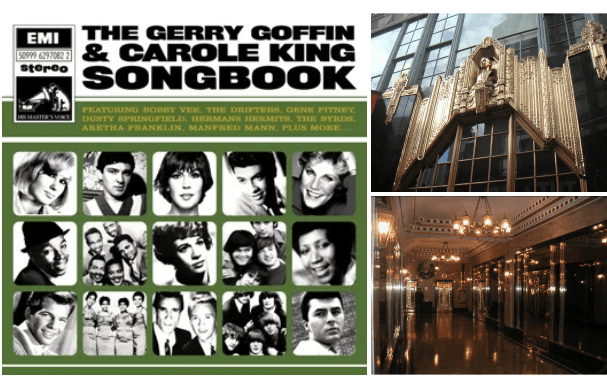
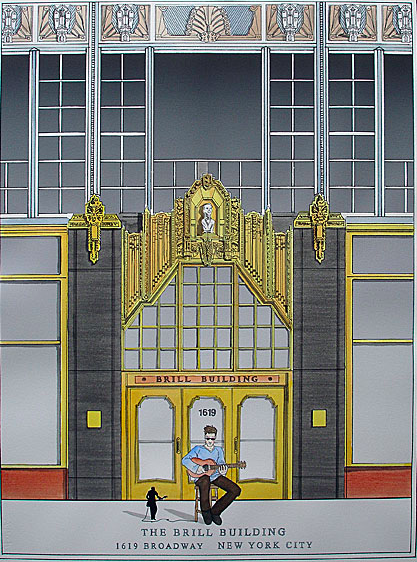
Few people outside of New York or the music business have heard of the Brill Building. Located at 1619 Broadway in New York City, just north of Times Square, the Brill was the place a great chunk of American pop music was written, arranged, recorded and sold, including ‘Don’t Ever Change‘ written by (Gerry) Goffin & (Carole) King, recorded by The Crickets (sans Buddy) in 1961, providing a Top 10 hit in the UK. ‘Don’t Ever Change’ confirms Bryan Ferry’s assertions that These Foolish Things was intended as a break from For Your Pleasures darker themes and mood. Having cracked ‘Hard Rain‘ and the rare ‘River of Salt‘ (“I’m probably the only person in England with a copy of that”), Ferry decided next to go to the Classic Songwriter’s Songbook and pull down a cut from the famous writing team of Goffin & King – the jaunty ‘Don’t Ever Change’ comes up next and it’s a nasty piece of work, despite its early 60s jaunty beat. The music suggests sunny optimism but the lyric delivers tyrannical rule.

‘Don’t Ever Change’ was written on the top floors (“on the roof”) of the The Brill Building, a stunning art-deco masterpiece that stretched along Broadway between 49th and 53rd streets. A mecca for songwriting talent, the Brill contained 165 music businesses at its peak in 1962. The songwriters worked to order, crafting melodies and lyrics that would define the late 50s and 60s: “You’ve Lost That Lovin’ Feelin'” (Phil Spector, Barry Mann, Cynthia Weil); Don’t Be Cruel (recorded by Elvis, written by Otis Blackwell); Do You Know the Way to San José? (the brilliant Burt Bacharach/Hal David); and so many more. Before Carole King become the mega-selling Carole King of ‘Tapestry’ (and the subject of the Broadway show Beautiful: The Carole King Musical) she was the teenager Carol Klein, married at 17 to 20-year-old lyricist Gerry Goffin. They got their break through their connection with Neil Sedaka, who knew Carole at High School and, in a last-ditch attempt at writing a hit before he was dropped from his contract, had composed and recorded a song called “Oh! Carol” (desperate, Sedaka studied the top singles of the day, mapped their melody, chord progression, lyrical styles and developed the ingredients of a hit single – he nailed it). Soon Goffin & King were writing compact, minor-miracle songs that sold by the truck-load – “Will You Love Me Tomorrow” (The Shirelles); “The Loco-Motion” (Little Eva); “(You Make Me Feel Like) A Natural Woman” (Aretha Franklin), and the fantastic “Pleasant Valley Sunday” (The Monkees).Screen Shot 2019-04-02 at 3.47.02 PM
In 1963, at the beginning of The Beatles rise to fame, John Lennon was quoted as saying that he and Paul McCartney wanted to become “the Goffin-King of England.”

‘Don’t Ever Change’ is one of Goffin & King’s lesser known songs, made to order like egg salad sandwiches at the local deli. Lesser-known in both status and (to be honest) tunefulness – The Crickets version did not chart in the USA – the song is nevertheless an interesting selection by Ferry who, presumably, had the budget and freedom to choose other Goffin & King songs, say, ‘On the Roof’ or ‘Will You Love Me Tomorrow’ (but not, thankfully, ‘Pleasant Valley Sunday’). Choosing to cover ‘Don’t Ever Change’ makes good sense in terms of These Foolish Things – it’s a breezy sing-along three tracks in – but there is something wrong with the song at root that Ferry cannot fix. His version is faithful to the original, with the benefit of being better recorded with deeper, fuller sound, but it neither detracts or adds to the original. The problem is not with Ferry’s take but the dishonesty of the song itself – ‘Don’t Ever Change’ pretends to be upbeat and idealist, but in truth it’s a mean song hiding behind a breezy disguise.

Carole King wrote in her memoir that her ex-husband Gerry Goffin – who she divorced in 1969 – suffered from mental illness following ingestion of LSD, eventually undergoing treatment with lithium and electroshock therapy, and later diagnosed with manic depression. Post-marriage Carole wrote her own lyrics, of which the mega-hit ‘You’ve Got a Friend’ (1971) is in character with her thoughtful and warm work. Contrast this with ex-hubby Goffin’s lyrical mauling of male/female relationships and you get the sense that long-term matrimony wasn’t in the cards, not with Goffin writing songs like ‘He Hit Me (And It Felt Like a Kiss)’ or ‘Chains’ or even the party-ending ‘Everybody Go Home’.  Goffin was talented, to be sure – his writing on the number 1 hit “Will You Love Me Tomorrow” show a sensitivity to the complications of sexual maturity, and ‘Pleasant Valley Sunday’ has a killer lyric (“The local rock group down the street/Is trying hard to learn their song/They serenade the weekend squire/Who just came out to mow his lawn”) – but lyricist Goffin typically informs his songs with a controlling hand that sets an uneasy tone that ‘Don’t Ever Change’ cannot escape and Ferry does little to interfere.

The premise of the ‘Don’t Change’ reminds us of ‘Chance Meeting‘ – male menace thinly disguised. You never wear a stitch of lace, we’re told – And powder’s never on your face / You’re always wearing jeans except on Sunday – you’re a tomboy in other words. Oh please don’t ever change, he continues, I kinda like you just the way you are. The narrator ‘kinda’ likes you, so be sure to swear allegiance to his idealized view of you for all eternity.

You don’t know the latest dance
But when it’s time to make romance
Your kisses let me know you’re not a tomboy  

In other words, I like you to be uninformed, awkward and sexually unthreatening – except when I’m having sex with you. And the final kicker: I know you would rather die than ever hurt me. ie. I know you would rather slit your wrists and bleed out instead of telling me what a jerk I am. And less we think that picking on songs written in the late 50s/60s is easy targets in 2019, we can hardly avoid the fact that the final sentiment of the song as a declaration of ultimate control. And for the tune itself – it would take the edge off perhaps if the music provided some respite from the high-handed rhetoric, but instead of sweetening its chorus, ‘Change’ hangs its hook on the descending riff “Sooo pleassse don’t everrr chaaange” that is in the chord of C#minor which in music theory contains the harmonic characteristic of despair, wailing, and weeping: “A passionate expression of sorrow and deep grief. Full of penance and self-punishment” (Ledgernote). Isn’t this supposed to be a love song? Run a mile girl, and then run another mile.

The Beatles recorded ‘Don’t Ever Change’ as part of a BBC session in 1963, and was not released until 1993 (just as Anthology was being compiled and the insatiable appetite for all things Fab Four was gaining force). Instantly forgettable in the Beatles catalog, ‘Don’t’ is notable only for the fact that it takes a rare Harrison/McCartney lead vocal. Perhaps we can see the song as an influence to solo-Lennon ‘Jealous Guy’, with its frank recognition of the failings of its controlling author John Lennon, and which Ferry, much to his credit, made his own in 1980 (“I guess I can relate to it”). You could never see the narrator of ‘Don’t Ever Change’ admitting that he never meant to hurt you, never meant to make you cry.

What is intriguing about ‘Don’t Ever Change’ is its pedigree as a production from the golden-age of late 50s early 60s song-writing partnerships. While ‘Change’ may not be the best of the Goffin & King canon – compare it to the uplifting ‘One Fine Day‘ – its appeal to Ferry during the selection process, in part, may be attributable to it being a part of America’s legendary Brill Building productions, and the idea of song-writing as craft, as a specialized art that required an apprenticeship and learned expertise.

Below Carole King describes the atmosphere at the “Brill Building” publishing houses of the period, a world perhaps that Ferry obviously wanted to acknowledge, promote, and – in contrast to his own brilliance-at-the-last-minute writing practices (see: ‘Mother of Pearl’ / ‘Love is the Drug’) secretly yearned for a Tin Pan Alley discipline of craft and professionalism that had been lost in the individualism of the singer/songwriter 1960’s and early 70s. ‘Don’t Ever Change’ – by the very nature of its title – may be a plea to never change, to return to a level of discipline that focused on the art of manufacturing hits for the youth market, a value and enterprise that Ferry himself discovered in 1973 with These Foolish Things and is still very much with us today as he recorded Bitter-Sweet (2019) with the Bryan Ferry Orchestra, an album that re-makes Roxy and solo Ferry songs in a style that re-creates the nostalgia of the past in a manner that makes it feel ever more potent in the present:

Every day we squeezed into our respective cubby holes with just enough room for a piano, a bench, and maybe a chair for the lyricist if you were lucky. You’d sit there and write and you could hear someone in the next cubby hole composing a song exactly like yours. The pressure in the Brill Building was really terrific—because Donny (Kirshner) would play one songwriter against another. He’d say: “We need a new smash hit”—and we’d all go back and write a song!

Carole King

Recorded: AIR Studios, England June 1973.

Credits: Brill Building drawing, New York Times; Goffin & King songbook/Brill Building exterior and interior; Goffin & King at the office, early 60s; Beatles and Crickets tackle ‘Don’t Ever Change’

Next: Ferry shoots for a Janis Joplin classic ‘Piece of My Heart‘ – you can’t fault him for brave choices!


Leave a comment

River of Salt

Screen Shot 2019-03-24 at 10.36.25 AM
River of Salt Bryan Ferry (cover version, These Foolish Things, 1973)
River of Salt Ketty Lester (original, You Can’t Lie to a Liar b/w ‘River of Salt’ )

One of the lesser-known cuts on Bryan Ferry’s first solo album These Foolish Things,River of Salt‘ was an obscure B-side single sung by American singer and actress Ketty Lester, written for her by Bernard Zackery, Irving Brown, and Jan Zackery. Never released on an album or as a single in its own right, ‘River of Salt’ is a miniature miracle that never found the audience it deserved. Lester had hit gold previously with the brilliant ‘Love Letters‘, a song that went to the top of the charts in both the US and the UK in 1962 (and one that David Lynch picked up for Blue Velvet). Chasing another hit single, Lester recorded and released three more ballads in 1962 but failed to repeat the success of ‘Letters’. That such a fine song as ‘River of Salt’ could be buried and forgotten as a B-side is testament to the quality of Lester’s output.

In choosing ‘River of Salt’ for the album, Ferry was in many ways drawing attention to his skills and appreciation for pop as a continuum, similar to the Art world reaching back into the (not so) distant past for its raw materials. Choosing well-known tunes was one thing – every one knows The Beatles, The Rolling Stones, Bob Dylan, Janis Joplin – but branching out into jazz and Motown, and giving the nod to artists like Nat King Cole, Ketty Lester, and Smokey Robinson was risky, especially for a working-class English boy from Newcastle. Expressing his love of the form, Ferry had very distinct ideas and tastes about music pre-rock: “The difference between then and now is that where you once had two almost clearly defined categories –  singers and songwriters – you now have a situation where all song-writers have to be performers … and sometimes it doesn’t work very well” (BF, 76). While rock-stars enjoyed referencing their rock roots – David Bowie’s Pin Ups/John Lennon’s Rock ‘n’ Roll – Ferry was reaching back to an earlier musical milieu. While not exactly singing The Great American Standards yet (that would come next in Another Time, Another Place) there was nonetheless an emphasis on classic singer/songwriter partnerships juxtaposed against the titan and preeminent standard These Foolish Things which, by choosing it to title the album, provided Ferry with a new mask: that of the lounge-lizard Romantic, the unrequited lovelorn personality whose confessions are framed by a writer’s self-conscious awareness of his own misery (and charm). A cigarette that bares a lipstick’s traces..

After the literary maelstrom that is Bob Dylan’s highly allusive and poetic ‘A Hard Rain’s a-Gonna Fall‘, Ferry pulls a fast one and gives his audience a 1 minute 48 second love ballad. As metaphor, ‘River of Salt’ is as basic as it gets:

River of salt
Flowing from my eyes
Seems as though
I can’t realize
My love is gone
She’s left this town
River of salt
Keeps flowing down

Metaphors can be exaggerated so much they become comical (as in, “Her tears were a river flowing down her cheeks and beyond”), but ‘River of Salt‘ has an innocence similar to Ferry’s cover of ‘Smoke Gets in Your Eyes‘ with its root metaphor of a lovely flame that dies, creating smoke, then tears (They said someday you’ll find/All who love are blind). In ‘Salt’ the bereaved lover also sheds unending tears while mourning the absent sweetheart. Although simple, the lyric may be onto something – there are no pure salt rivers in the world (according to Earth Science) and so the song taps into the Romantic idea of a bitter loss stretched across eternity, the Artist (hand on brow) writing reams of poetry à la climbing mountains, swimming oceans, walking thousands of miles to prove nothing less than everlasting love and commitment. Ferry knows the pulse of the song is earnestness tinged with a knowing wisdom and delivers it as such.

The musical set-up on ‘River of Salt’ is fantastic, and the track can be seen as a breakthrough in romantic sincerity for Ferry, a writer who in his own work prefers distance and irony to get to the heart of the matter. Richly recorded, bass and drum set the pace and are framed by a lovely electric piano chord introduction, laid down by professional session player Dave Skinner (who played for Roxy on the 1979 ‘Manifesto’ tour and solo Manzanera and Ferry records). By contrast the Ketty Lester recording is a bit stiff in these opening bars, with the double bass prominent but not particularly well-recorded, and the corresponding drum accompaniment sounding like it is being played with cutlery. In contrast, Ferry’s cover version is like hot chocolate in front of a roaring fire and white tiger rug. His vocal is (almost) stripped of its trade-mark quiver, and is delivered straight: Bryan Ferry the lounge-lizard/troubadour is born here, in this track, and in under two minutes he has set the stage for the appearance of his white tux and dickie-bow, glitter eye-liner be gone.

In most respects These Foolish Things is a love album. Songs like ‘Tracks of My Tears’; ‘Don’t Ever Change’; ‘Loving You Is Sweeter Than Ever;’ ‘Don’t Worry Baby’; ‘River of Salt’ strive to capture and represent love’s sentiments in all its various colors and Ferry is keen to present them to a young 70s audience.  What is telling is that he tackles these originals from a vantage point of sincerity and eagerness to please, as if covering a track like ‘River of Salt’ note-for-note is the purest form of flattery. After dealing with love as a postmodern game of signs and signifiers – ‘Re-Make/Re-Model’; ‘Ladytron’;Editions of You‘ – Ferry shifts his writing towards regaining (or finding) love in its full range of emotions. He does so from two directions: writing his own songs and covering the songs of others. While For Your Pleasure is cold to the touch, purposely distancing love in favor of a blow-up sex doll or bogeyman sex, These Foolish Things tackles love as an emotion lived and experienced by other people – in its 1 minute plus Ketty Lester’s ‘River of Salt’ has all the emotion it can handle – and so in his musical arrangement Ferry chooses not to mess too much with the established formula, as if by not doing so he might spoil a song that had once provided a lifeline to his personal feelings and experiences. For Ferry, Foolish Things was only “half successful” (NME) because he felt he did not experiment enough on the source material. If he had done so with ‘River of Salt’ it is very likely that the Third Roxy Music album Stranded would have been a very different recording – mature, yes, but insulated and aloof, instead of warm and tropical, full of emotional heat. Without ‘River of Salt’ it’s possible we might not have had ‘A Song for Europe’ … and where, dear friends, would that have gotten us?

It often seems that Ferry is using his music, not as an end in itself, but as an attempt to create an identity for himself, a reality beneath all the style.

Allan Jones

blue ferry
Next: The template for ‘Every Breath You Take’: Ferry covers ‘Don’t Ever Change‘, the same team that brought you hits from The Partridge Family, The Hollies, The Cookies, and Rod Stewart – Ladies and Gentlemen, Gerry Goffin and Carole King!

Recorded: AIR Studios, England June 1973.

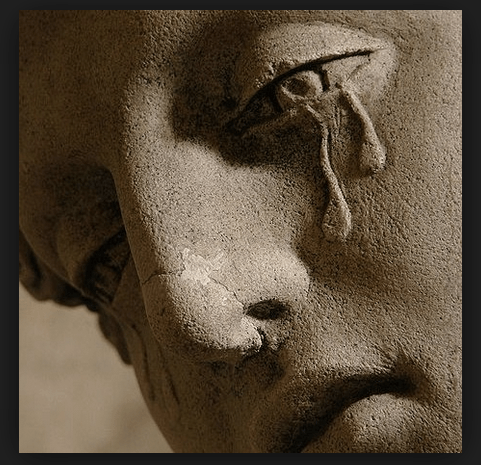
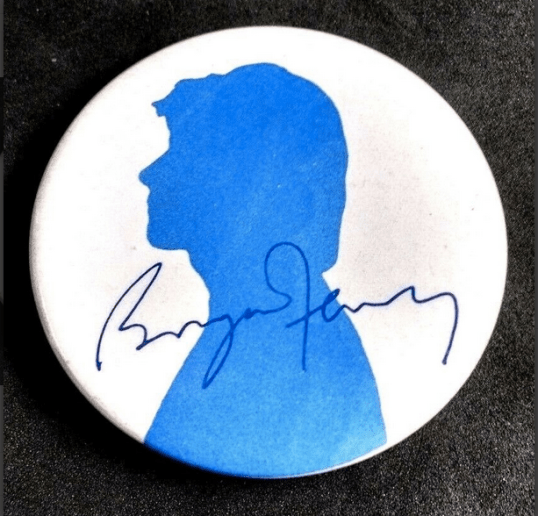
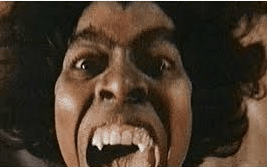
Pics: Detail of the 1672 sculpture Entombment of Christ, showing Mary Magdalene crying; RMS composite, ‘River of Salt‘ original pressing & original Love Letters LP; signed BF Foolish Things; below, it’s tough to make a living in the music business: Ketty Lester in Blacula (1972).

Til next time!
ketty


5 Comments

A Hard Rain’s a-Gonna Fall

Screen Shot 2019-03-04 at 3.59.57 PM

A Hard Rain’s a-Gonna Fall Bryan Ferry (cover version, ‘These Foolish Things’ 1973)
A Hard Rain’s a-Gonna Fall Bob Dylan (original, ‘The Freewheelin’ Bob Dylan’ 1963)

Oh, where have you been, my blue-eyed son?
Oh, where have you been, my darling young one?

I. Where Have You Been?

There is a moment at the beginning of Ken Burns heart-rending documentary The Vietnam War when Bob Dylan’s A Hard Rain’s a-Gonna Fall provides the soundtrack to a chilling and moving prophecy: something dreadful and abhorrent is on its way, and the blue-eyed sons of a generation are going somewhere they may never return from, and if they do return, they may never be the same again.

Another blue-eyed son – Bryan Ferry – takes Dylan’s anti-war anthem and turns it inside out, downplaying and de-emphasizing the poetry while heightening the music and tunefulness of the original. It’s a fair trade, and one that still stands as an astonishing cover version of a folk classic Strikingly original and as tuneful as hell, Bryan Ferry chose to re-record the song as the lead track on his first solo album These Foolish Things, and in doing so scored a surprise hit, reaching number 10 in the UK charts in October 1973 (Viva). Success came at a price however: the single was controversial for its stomping (literally) on sacred ground, and it also created a schism in Bryan Ferry’s writing – a trend towards  minimizing lyrical density in favour of cover songs and a heightened mainstream sensibility  – an inclination, thankfully, still far away on the horizon as 1973 unfolded, they year that delivered two classic Roxy Music albums (For Your Pleasure, Stranded) and a surprising, even innovative, “one-off” solo release in These Foolish Things. As Ferry drily noted, 1973 “was some year of work.”

As Brian Eno left the band in July 1973, the Roxy Music band-members felt the pain of losing their original line-up and their hard-earned musical identity. Andy Mackay felt angry enough to come close to quitting Roxy and joining Mott the Hoople (with whom he had played on their single ‘All the Way to Memphis‘ during the recording of For Your Pleasure). The saxophonist even insisted on creating a solo personae in the vein of a Ziggy Stardust alter-ego, as if to hedge bets for the future. (“I’m changing my name to Eddie Riff,” he told the NME in the same issue that Eno’s departure was announced). Phil Manzanera recalls the period as being, understandably, highly contentious and difficult: “When Eno left we were in danger of imploding completely” (Rigby, 86). After some breathing space and tempered negotiations – Manzanera and Mackay would receive writing co-credits on future Roxy Music recordings – the band decided to continue, Manzanera for one observing that “I hadn’t had my fill of being in a pop band yet” (Stump, 99). Band members also felt that doing solo albums would be a good way to relieve creative tension and so followed the two Brians on their solo album path, while retaining the Roxy Music brand as their raison d’être:

What’s interesting about Roxy is that most people in bands don’t do solo albums until they’ve been together for years. We all started doing solo albums almost immediately. We always had our own agenda, and as long as there was enough common ground we stayed together. There was always a possibility I could have left when Brian Eno did. I felt very loyal to him.

Andy Mackay

For his part, Bryan Ferry still felt that Roxy Music was the main thing, yet considered the Roxy ‘state of mind’ as malleable and applicable to other art projects. So he set upon the idea of recording an album of pre-written “ready-made” songs, some standards, some well-known classics, all of them personally important to Ferry as they spanned several decades from the 1930s through the 1960s, re-creating in spirit the set-list of his previous R ‘n’ B band The Gas Board.  Confiding to Melody Maker that “The people who did the best songs were pre-Beatles” Ferry was keen to surprise his audience, so much so music writer Hal Norman maintains that by its very contradictory nature These Foolish Things “remains as much of a revolution in the head as the great LPs of ’67 or ’77.” While this errs on the side of hyperbole – The Beatles and Sex Pistols be damned! – there is little doubt that Ferry was in new territory in 1973: for the post-60s generation originality was King, and anything less than an artist writing, recording and playing songs of striking originality was met with suspicion. Covering other people’s tunes demonstrated a lack of talent, a throw-back to Frank Sinatra‘s generation and the jazz standards of the 50s. No matter that John Coltrane had savaged the old Broadway chestnut ‘My Favourite Things‘ to create a be-bop revolution, the current thinking was that a Neil Young or a James Taylor wrote from their own observations  – meaning and expression was a gift to the audience by Artist, who toiled in everyday experience to bring the fruits of their insight to the masses.  Even Ferry was initially cautious in his ambition. “It wasn’t that I wanted to have another career,” he explained,  “I saw it as a one-off album”:

I must have been encouraged to do [a solo album] by Mark and David [Enthoven]. I thought it would be great to do a different kind of album to For Your Pleasure, one which wasn’t as dark and had a lightness in the way sinartrathat, say, Picasso does ceramics which are fun, and also does dark and mysterious work as well. I’m sure the album had good and bad repercussions. It opened Roxy Music up to a more mainstream audience. On the other hand, I might have pissed off the purists.

Bryan Ferry

Moving fast then – ‘Foolish Things’ was recorded in June 1973, with single and album released in September and October (at the same time Roxy went into the studio to record ‘Stranded‘), Ferry wisely stayed within his comfort zone by working with the members of the established Roxy Music machine – Paul Thompson was invited to play drums; Phil Manzanera played guitar on the Beatles cover of ‘You Won’t See Me’; For Your Pleasure musician and friend John Porter played bass and co-produced with Ferry; AIR Studios was re-booked; John Punter was back for co-production and engineering assistance; and as per the previous two Roxy albums, cover design was by Nicholas De Ville and photography was by Karl Stoecker. Andy Mackay and Brian Eno did not participate – which should come as a surprise to absolutely no one given the subterfuge and fall-out of the summer.

Utilizing Marcel Duchamp‘s idea of ready-mades or ‘found-objects’ – a pop-art trick Roxy Music had used so well on ‘Virginia Plain‘ and ‘Editions of You‘ – Ferry was keen to stick to mentor Richard Hamilton’s credo that art should be “Popular, transient, expendable, low-cost, mass-produced, young, witty, sexy, gimmicky, glamorous, and Big Business” (Hamilton). This opened the way to throw another brand into the mix – that of the solo star, a beefcake teen idol called “Bryan Ferry”. The message to his audience and fellow Roxy band-members was clear: damn the torpedoes, I have ideas to burn, I can make it on my own. In doing so Ferry hit the nail on the head: the record sold by the bucket-load.
Screen Shot 2019-03-06 at 7.04.53 AMII. Who Did You See?

‘Hard Rain’ starts with the plaintive and familiar sound of Bryan Ferry’s electric piano tapping out a D-chord intro: it’s telling that the rhythm is slightly choppy, irregular, a human touch  – until four short seconds in, when the sound of violins slowly creep into the mix, precise, panning across both speakers. Ferry takes a breath at .09 and the voice is introduced, mid-range. Paul Thompson kicks in at .16 with a deft double-stroke roll and we’re off to the races, the rhythm catching fire for an extremely original and entertaining 5.19 minutes of pop perfection.

The introduction and selection of ‘Hard Rain’ for this, the opening cut on Bryan Ferry’s first solo album, is inspired and provides context for much of what follows for Ferry and Roxy Music in the 70s. Take innovative song selection and album sequencing for starters: in its original format Dylan’s track is a brilliant, if musically repetitive, question-and-answer poem that was ten minutes+ plus live, and six minutes fifty-five recorded – influenced by French Symbolists Arthur Rimbaud, Stephane Mallarme, and others, Dylan took the question and response format from multiple sources, some religious, one of them in the style of a centuries-old Scottish border ballad called “Lord Randal” with its question-and-answer format: “Oh where have you been, Lord Randal, my son; And where have you been my handsome young man” (FT). All sources helped imbue his song with striking images of conflict and apocalypse. The effect was a rain-driven “surrealistic downpour” (Riley) that became increasingly important and prescient for a country who, in 1963, was incubating hostility in Vietnam. (In another world, in some faraway galaxy, it is nice to imagine a society that heeds the warnings of the poets and assigns the Generals and war-mongers the noble job of grocery shopping and child-rearing). Intensely cinematic, Ferry’s choice is inspired – so wrong it’s right – and the sequencing on the record surprises as we move from ‘Hard Rain’s five minutes plus (the longest track on the record) to Ketty Lester‘s ‘River of Salt’ (the shortest).

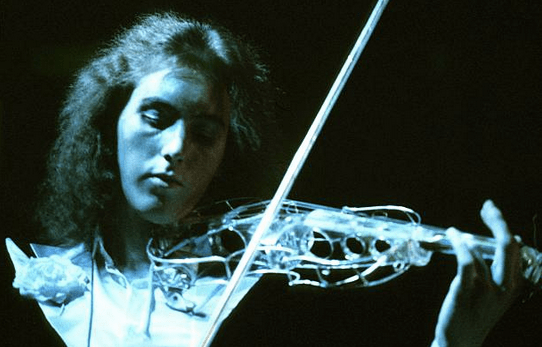
The first few moments of ‘Hard Rain’ also introduce a significant moment in the history of Roxy Music: the debut of new band member, the fantastic and compelling multi-instrumentalist Eddie Jobson.
Screen Shot 2019-03-08 at 7.20.59 AM
“Who can replace Brian Eno?!”
Andy Mackay fumed to the NME when the split was announced to the music papers in July 1973. The answer to Andy’s question is, Eddie Jobson can.. Or, to be more precise, no one can. But Eddie Jobson was not a replacement for Brian Eno – he wasn’t hired to mix sound at live concerts, or manipulate Phil Manzanera’s guitar in the studio; he wasn’t hired to provide theories of being in a rock band or explain the role of ‘non-musician’ – quite the opposite, the gifted and multi-instrumentalist Jobson was hired to enhance and strengthen the musicianship of Roxy Music, to provide a wide breadth of support for live concerts, where keyboards, synth, violin and more could be supplied as the songs required, while Bryan Ferry took center-stage as singer and centerpiece of the live Roxy line-up. This view of Roxy as a professional and much sought-after viable recording & live music entity was what had kept Bryan Ferry awake at nights during the writing and recording of For Your Pleasure. Now the message had clarity – the goal of all marketing initiatives –  resulting in no audience confusion on how to receive and enjoy the b(r)and. Glamour. Style. Pop and rock perfectly captured and presented – the best integrated guitar, drums and saxophone in England, and not an earthworm in sight. Now the parts were in place, Ferry began to extract the spoils of war and put the (very young) 18-year-old Eddie Jobson to work.

“Did you know I was the entire orchestra on Bryan’s first album?”

Whether by grand design or sheer luck – Bryan Ferry was familiar with Eddie Jobson via a close family connection, both men hailing from North England, County Durham – Jobson was an incredible find for Roxy Music, enhancing the band’s sex appeal via his youthful presence (he was eighteen when he joined Roxy) and musical skill, topped off with a visually arresting translucent plexiglass violin that was as thrilling to look at as it was to listen to. Screen Shot 2019-03-17 at 9.43.54 AMMoreover, Jobson contributed immensely in the studio, not only honing and applying an exquisite taste in musical embellishment, but also bringing his creativity and skill to some of Roxy’s best recordings (‘Song for Europe‘, ‘Out of the Blue‘ and ‘Sunset‘ among many). And so too is the case with Ferry’s first solo outing – if you ask most people about Ferry’s cover of ‘Hard Rain’ it is the strident and multi-layered strings that are most remembered. “I came up with the choppy strings,” Jobson recalled of the sessions:
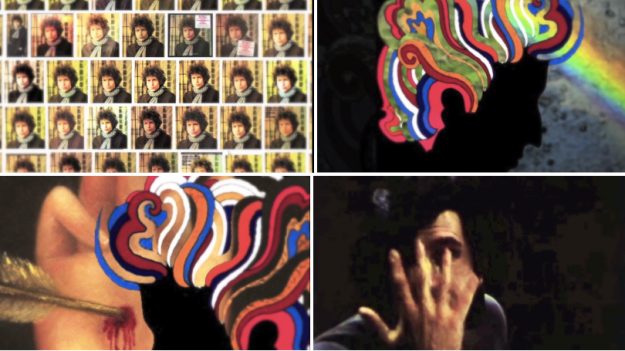
My credit on [These Foolish Things] casually says “strings” but I don’t think people realize that I not only wrote all the string parts, but I individually over-dubbed the violins, violas and cellos until my fingers were blistered. I also added the double bass parts by playing them on viola at double speed and then slowing down the tape (Jobson, 141).

The intensive string over-dubs changed the music beyond recognition – the Dylan original was a classic finger-picked ballad/protest ballad in the vein of folk icon Woody Guthrie (with whom the unknown 19-year-old Dylan visited regularly during the famous folkie’s final years).  The finger-picking style – with thumb picking out the base line and middle fingers picking out the rest of the chord – is a great vehicle for writer/poets who prefer to place emphasis on sound and alliteration, the steady rhythm serving to unclutter the poetry and message. John Lennon’s ‘Working Class Hero‘ is a classic of the genre, where the beat is steady and simple throughout, yet the message is barbed and to the point. In this regard, Dylan’s ‘Hard Rain’ is designed to be listened to. Indeed, Dylan took the question and answer format in part from the sacred text Child Ballad No. 12 Lord Randal and it does carry a sense of religious fervor that one suspects Ferry responded to – he didn’t care much for the political aspects of the song (“I can’t be bothered with all that Cuba Crisis stuff” (Viva)), but the devotional format would have made sense with Roxy recording the evangelical ‘Psalm‘ from Stranded almost concurrently with ‘Hard Rain’s’ release.

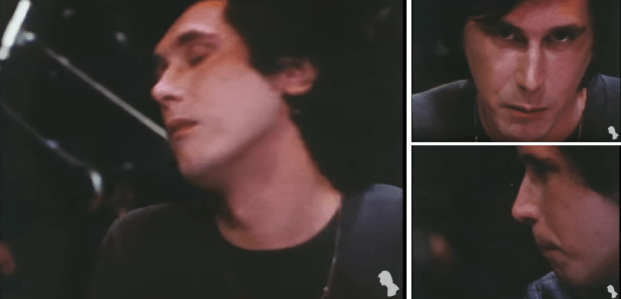
Lyrically, Ferry largely keeps to Dylan’s word choice, dropping only the repeated personal pronoun – instead of I’ve stumbled on the side of twelve misty mountains, Ferry’s version go straight to the verb form as in “stumbled on the side of twelve misty mountains”/crawled on six crooked highways and so on. These minor edits keeps each line moving at a fair clip. Ferry’s cover of ‘Hard Rain’ also adopts the Q&A format, with each verse the narrator asking a specific question, with answers coming from the young son. Verse 1 asks Where have you been? (Oh, where have you been, my blue-eyed son?/Oh, where have you been, my darling young one?). Verse 2 asks What Did You See? Verse 3 asks What Did You Hear? 4 asks Who Did You Meet? And the final verse asks the most important question What Will You Do Now? Ferry used this call-and-answer format to maximum effect in his famous (and very early) promotional video for the single: sitting at his Grand white piano, squeezed between the instrument’s cover and soundboard, Ferry looks directly to his viewers and asks his questions. A separate camera picks up the dialog as he turns his head dramatically to answer and describe what he sees/hears/meets (Heard the song of a poet who died in the gutter/Met a young woman whose body was burning/Saw a etc). An important aspect of Dylan’s song is retained and dramatized in the promo video as we, the audience, become the ‘blue-eyed’ son making our way through this tangle of poverty, ignorance and violence.Screen Shot 2019-03-17 at 9.36.29 AM
III. What Did You Hear?

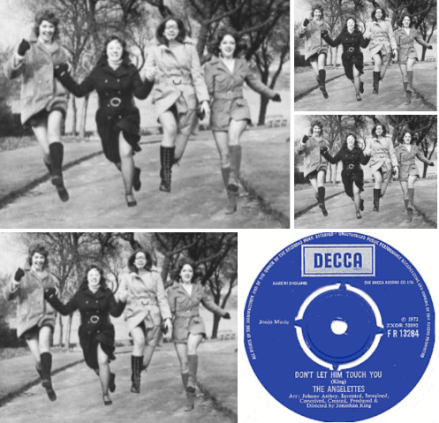
By the time the first verse is underway, Ferry, Jobson and Thompson are inter-locked, moving swiftly towards twelve misty mountains and six crooked highways. At .44 we hear the winning sound of The Angelettes affirming Ferry’s conclusion that it’s a hard (hard!) hard rain’s a-gonna fall.” The Angelettes – Pat, Jan, Sue and Julie – were a harmony girl-group from Manchester, and along with Eddie Jobson, serve as a North England talent coup for Ferry, as he hired them for the AIR studio recordings and for his (now lost) appearance of the song on Top of The Pops. This is the first instance in a long career that Ferry uses female singers for vocal accompaniment – an attribute used extensively for future solo and Roxy Music recordings. While the commercial fortunes of The Angelettes never matched their skill for harmony and innovation, the fact that they contributed so much to ‘Hard Rain’ is often over-looked due to the humorous rag-tag chorus of the promotional video (complete with cross-dressing Coronation Street alumni), yet they shine on the album, particularly on ‘Hard Rain’ and the successful Beach Boys cover, ‘Don’t Worry Baby
Screen Shot 2019-03-21 at 9.28.25 AM
If Verse 1 sets the ball rolling with heavy rock, strings and dynamic drumming, then Verse 2 builds the sound picture with the introduction at 1.05 of John Porter’s guitar. In an effort to paint pictures in words and music, the guitar is the first instrument that sonically responds to the horror of the lyric, recoiling with a shake and a twang at I saw a room full of men with their hammers a-bleedin’ (1.21). Intending the song to be heard (before it was seen) Ferry applies sound-effects liberally: “The sound of a thunder” produces thunder-claps at 2.02;  “Heard the roar of a wave” and we hear the sound of waves crashing at 2.08; Heard many people laughin’ brings forth studio laughter (2.17) and so on. In fact, it may be the effects and laughter that got up the noses of hardcore Dylan fans and critics – how can laughter be appropriate in such an apocalyptic song? – but this is both the attraction and ultimate success of this cover version – it’s grand, crass, pompous (in the best 70s sense), ironical, inspired, and above all, reverential. Taking on the mantle of the poet who “died in the gutter” new poet Ferry assumes the role of Dylan the Clown (who cried in the alley) only to be mocked by the chorus – announcement of his death is met with a sarcastic “awwww” at 2.21. Sounds like everyone in the control room – including the Angelettes – had fun with that one.

Over the course of the five verses in this six minute song, music and effects are carefully added to build a tapestry of ominous visual images and puns. The question and answer effects continue (black dog: “howwwl“/rainbow: “sprinkkkle”), yet there is a sense at the half-way point that we could conclude here and all would be fine, slow fade. A good cut for the BBC and the singles market.  But the story is not over: we have been, seen and heard, but have yet to absorb the lessons of human history, so the young one volunteers to “a-goin’ back out ‘fore the rain starts a-fallin’.” Ferry is up for a-goin’ back out, and carries the second half by beefing up the instrumentation and vocals for the remaining two minutes 40 seconds of the song.
Screen Shot 2019-03-20 at 4.57.29 PM
Facing an emotional challenge – the young son will most certainly face death if he goes back out into the black forest (Where the executioner’s face is always well hidden) – the chorus and guitar build their lines to a harmonious climax. But the song is designed for Ferry by Ferry, the new solo star, so he creates room in the final verse to highlight his vocal performance and power, raising his naturally odd inflections across several closing lines:

Where the people are many and their hands are all empty
Where the pellets of poison are flooding their waters
Where the home in the valley meets the damp dirty prison
Where the executioner’s face is always well hidden
Where hunger is ugly, where souls are forgotten

Ferry sings brilliantly here as he spits out Where the people /Where the pellets/Where the home/…/ culminating in a fantastic staccato rhythm that requires an (audible) sharp intake of breath to get through the climax:

And I’ll tell it and think it and speak it and breathe it
And reflect it from the mountain so all souls can see it

Here Ferry declares his right to sing Bob Dylan’s ‘A Hard Rain’s a-Gonna Fall‘ and re-interpret this classic folk song, turning it away from its acoustic roots to the world of foot-stomping teenage-rampage Glam. It matters not a wit, the message is the same: he will tell it, speak it, and continue to breathe it, for truth never goes out of style. A song re-made without compromise, Ferry gives a giant to-hell-with-you to the snobs and critics, and climbs to the top of the mountain streamline as a beacon of light, a reflector of the new modernity.

In Memoriam: To all the men, women and children killed and injured in New Zealand, March 2019. To the families of those left behind, we are sorry for your loss.

Screen Shot 2019-03-21 at 3.39.38 PM
You may have chosen us but we utterly reject and condemn you.
New Zealand Prime Minister Jacinda Ardern

Next month: Brian tackles a sad-song metaphor – ‘River of Salt’

Recorded: AIR Studios, England June 1973. Various different versions of ‘Hard Rain’ release potent emotional energy – The Staple Singers engage in a powerful 1968 call-and-response that maintains a steady beat, and intensifies before the final verse; so too with Joan Baez, her unmistakable voice holding us in rapt attention. By far the most emotionally charged and profound take on the song, building to tears by the final verse, is Patti Smith‘s Bob Dylan’s acceptance speech at the 2016 Noble Peace Prize. At 1.54 Smith completely freezes (her word), and there is stunned silence from the Nobel crowd as she tries to get back to the verse lines. With a disarming “Sorry…I’m sorry.. Can we start that section.. I’m sorry…I apologise.. I’m so nervous” and a wide smile, she gains a well-earned round of applause. Emotion and good-will fill the room. It’s a profoundly moving moment, and Smith tackles the tough last verse cleanly with her frailty acknowledged and her humanity intact.

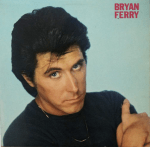
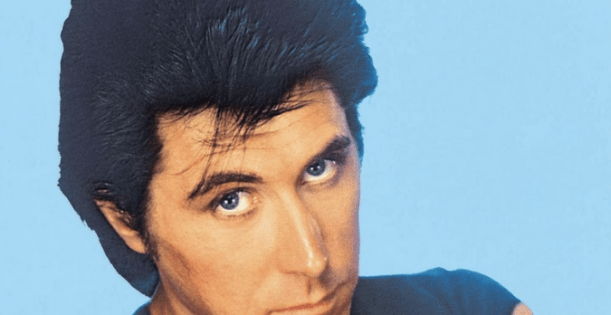
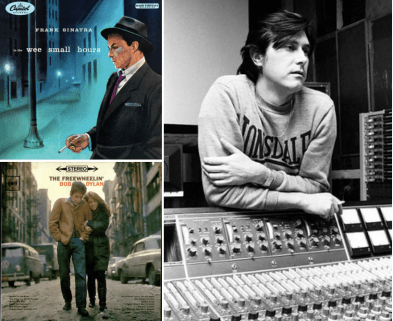
Pics: BF close-shot cover These Foolish Things; RMS composite Frank Sinatra, Bob Dylan, Bryan Ferry (in studio recording TFT); various editions of the single; Eddie Jobson; EJ and BF making boogie at the old Grand piano; RMS composite from ‘Hard Rain‘ promo video plus some Bob Dylan shots pinched from the internet; RMS composite the magnificent Angelettes; RMS composite official BF ‘Hard Rain’ promo vid.


5 Comments

Pyjamarama

Screen Shot 2017-07-24 at 8.27.51 PM

Pyjamarama
Pyjamarama (Viva! live)
Pyjamarama (Polydor Mix, 1976)

‘Pyjamarama’ is a great song, funky and cool, and very stylized. Yet it fits uneasily within the Roxy canon, feeling much more like an album cut. But then – on which album would it be placed, and in what running order? Recorded and released as a singles-only promotional track for the upcoming (not yet recorded) album For Your Pleasure, ‘PJ’ marked a few important firsts for the band: first use of George Martin‘s newly opened Air Studios on Oxford Street; first use of Beatles/Pink Floyd co-producer Chris Thomas; first Bryan Ferry composition on guitar (check out the “ta-da!” opening to hear the grandeur and importance of it all). And it was also the first Roxy Music production sounded really good: Ferry‘s voice is clear and thick, and intelligible; Paul Thompson‘s drumming is robust and placed high in the mix, and it can be said with no hesitation that musically this is a great performance from the band, as Andy MacKay and Phil Manzanera join Thompson to define the collective synergy that enabled Roxy Music to produce its very best music over the next decade.

Brian Eno didn’t think much of ‘Pyjamarama’  (“We should never have put it out as a single“), but John Peel loved it (“another dandy pearl from the boys,”) and it was popular with fans and easily made Top 10 in the UK. The hesitation came mostly from the circumstances of the recording, which were by all accounts rushed: between ‘Virginia Plain’ and ‘Pyjamarama’ (June 1972-Feb 1973) the band played at least 77 concerts, had their lead singer hospitalized for tonsillitis, replaced two bass players,  played a triumphant re-scheduled tour of the UK, played a dispiriting, unsuccessful tour of the USA, and now were back home, welcomed into a chilly London winter and tasked with creating a follow-up hit single and album.

The recording sessions for ‘Pyjamarama’ saw bass player Ric Kenton replaced by John Porter, a friend of Bryan Ferry’s and musical partner in the pre-Roxy University band the Gas Board. Porter was a strong influence in the group, very musical, and went on to do solo Ferry and Andy Mackay records, in addition to producing the first Smiths album (a place in the history books thereby assured). Despite general band misgivings about the rush-job and timing and recording session,  ‘Pyjamarama’ is actually fairly experimental, both in its sound and its execution. For starters, it was not an overtly commercial song in the sense that ‘Virginia Plain’ was; and just like VP the band again achieved a Top 10 hit without the aid of a chorus or discernible hook.  The “hook” in this case is replaced by two dissonant instrumental breaks, the first is by Andy Mackay and is completely mental in its sound and execution, producing the famous “handsome noise” that John Peel commented on in his glowing review of the single.

Much had been made of ‘Pajamarama’ being Ferry’s first use of guitar as compositional tool, yet the strummed  introduction (“ta-da-da”) is the only place were this in fact makes much of a difference. The opening bars are high-drama bravado, an overture to announce that Roxy Music were back, ready for action and as full of promise and excitement as ever. The opening was a big tease, sly even, and unabashedly earnest. Ferry chose to set the song in Eb (E-flat), defined by Classicists as the key of  “love, of devotion, of intimate conversation with God.” (Musical Keys).  The “lifting-up” introduction is very effective as a scene-setter: check out the version on Viva! and consider for a moment that the song’s natural role should have been as a concert opener for every show they ever did. (No complaints from this side of the house). Shifting to the verse 30 seconds in, the reverie turns funky, and by all accounts, solicitous: couldn’t sleep a wink last night we’re told, and all at once we are set up for a classic Roxy Music faire une confession, and this one has considerable bite to it. In ‘Virginia Plain’ the author made a deal with the devil for fame and money: what now were the effects fame would have on love?

Screen Shot 2017-08-05 at 2.41.54 PM

Couldn’t sleep a wink last night
Oh how I’d love to hold you tight
They say you have a secret life
Made sacrifice your key to paradise
Never mind, take the world by storm
Just boogaloo a rhapsody divine
Take a sweet girl just like you
How nice if only we could bill and coo

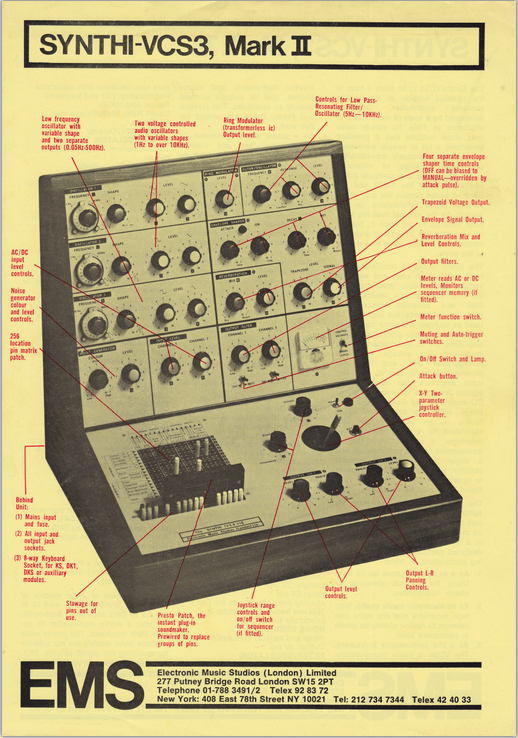
Couldn’t sleep a wink takes us out of the fan-fare introduction and into a catchy but kooky and idiosyncratic musical funkiness, followed by an equally kooky and idiosyncratic vocal delivery by Ferry.  The music is tight and percussion and tambourine and bass are in lock-step here, with Porter’s new sound fitting right into the groove, perhaps even creating it. Eno has a nicely urgent bleeping synth note chasing down Ferry’s ultra-cool delivery and Paul Thompson’s drumming is exactly right, as the song is a tough one to get to swing properly, and in contrast to the opening section, the verse is considerably cooler, and is to be held together, held in place, oh just so. Then Andy Mackay comes along and throttles the bejesus out of the proceedings at 1.03, holding his opening note a full six seconds as the unwilling air around him is sucked into the saxophone and spat out the other side as if abused by a wrecking ball. It’s a lovely little lick Andy plays, very lively and clever, so lively in fact that Eno decides to goose-step the solo by programming his VCS3 to simulate the sound of the saxophone drowning – so incongruous is the juxtaposition of sax and synthesizer that, if you think about it, and you add Ferry’s hilarious ‘if only we could bill and coo-oo’ you may have actually found the secret sauce to which Roxy Music is built on. Lively, catchy, coy, funny, dissonant, urgent – you heard it here first.

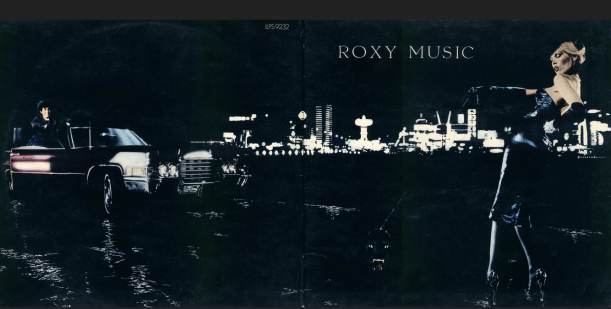
As a package, ‘Pyjamarama’ is presented as a mystery.  The atmosphere of the song is utterly unlike ‘Virginia Plain’, that road movie on amphetamines. Instead, ‘PJ’ is like a dose of your favourite drug, administered by acolytes while a Turkish bath is being slavishly prepared across town at your private villa. You get the picture – above all, sensual. ‘Virginia Plain’ flirted with mystery too, its puns and illusions, its slippery surface in no hurry to reveal the identify of the love object. It was this aura of mysteriousness and seduction that was at the heart of Roxy Music’s appeal and popularity in early 1973, and the band enjoyed to tease, presenting the single and the upcoming album as an exercise in seduction and play, designed especially ‘for your pleasure’.  The voice hooks you right away with its graceful appeal to longing and desire, Couldn’t sleep a wink last night/Oh how I’d love to hold you tight.  Then it very quickly turns to the mysterious: They say you have a secret life/Made sacrifice your key to paradise. What a remarkable thing to say so early in the song –  I am crazy for you, I physically yearn for you, but people say have a secret life and that you may actually be dangerous. The “You” here is the object of desire (hold you tight); a subject of gossip (they say); mysterious (secret life); and strong (made sacrifice). This is almost a stock representation description of a 1940s and 50s cinema’s femme fatale archetype.  While it is true that Roxy did not go into Air Studios with a overarching plan for the next record (only one or two tracks having been written when recording started) Ferry’s cinematic interests extended to the film noir style, especially the themes of the mysterious and seductive woman whose “charms ensnare her lovers”(Wiki)  – just look at the cover of For Your Pleasure, where the femme fatale is so omnipotent she is leading a black panther on a leash. In literature, a black panther is an age-old symbol of death, hence the femme fatale is literally leading death around on a leash, choosing her moment to release her darkness and terminal ruination on any unsuspecting (male) victim – in this case a rather happy-chappy and recognizable chauffeur. As even the most casual Roxy fan knows, this particular femme fatale was the socialite and model Amanda Lear,  the subject and prime-mover, arguably, of ‘Pyjamarama’s secret life.

for your pleasure

I. Amanda Lear’s Secret Life

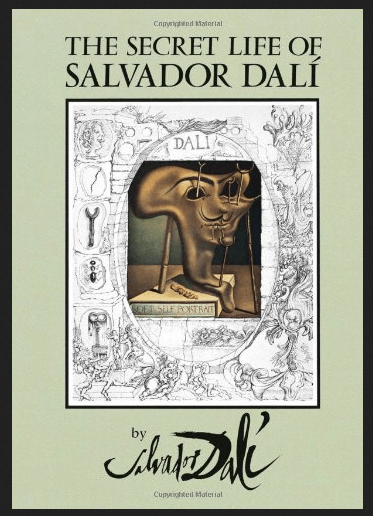
In Italy I’m big because they’re all so sex-obsessed,” Lear once said of her Italian fan-base. “In Germany I succeeded because they’ve been waiting for someone like Marlene Dietrich to come along ever since the war. I played on their need for a drunken, nightclubbing vamp” (Guardian). In the same manner that ‘Virginia Plain’s Baby Jane Hozer was a strong-willed, independent woman from high-society background, Amanda Lear was also part of the 60s and 70s nightclub scene, her name linked in with David Bowie, Bryan Ferry and others, including Brian Jones, who wrote the Rolling Stones track Miss Amanda Jones about her. What is more interesting than her affairs with rock stars however is her relationship with Salvador Dali, the prominent Spanish surrealist painter and artist and publicity hound. Now, Dali is an interesting case in his own right – his subjects and interests included symbolism, science, sculpture, fashion and photography, theatre and film, literature (he wrote a novel). Tagged as a gimmicky art merchant in the 70s and 80s, Dali has since been cited as a major inspiration by many modern artists, such as Damien Hirst, Jeff Koons, and Roxy Music muse Andy Warhol proclaimed him an important influence on pop art. Dalí met Amanda Lear at a French nightclub in 1965, when she was still known under the incredible name of Peki D’Oslo. According to Lear, she and Dalí were united in a “spiritual marriage” on a deserted mountaintop. Lear took the place of an earlier Dali muse, Ultra Violet (Isabelle Collin Dufresne), who had left Dalí’s side to join The Factory of Andy Warhol (the plot thickens!).

A Guardian newspaper article perhaps summed up the allure of Amanda Lear best: ‘Lear’s background remains a mystery. She has variously let it be known that her mother was English or French or Vietnamese or Chinese, and that her father was English, Russian, French or Indonesian. She may have been born in Hanoi in 1939, or Hong Kong in either 1941 or 1946. Once she said she was from Transylvania. And to this day, it is a matter of conjecture as to whether she was born a boy or a girl.’ (See also ‘Rebel Rebel‘, ah hem). Mysterious origins, the secret wife of a famous painter, a recipient of a sex-change operation, Lear has never confirmed these details, although she was happy to trade on the notoriety they generated. ‘It makes me mysterious and interesting,’ she said. ‘There is nothing the pop world loves more than a way-out freak.’ (Guardian).

dali

There are several different versions of how and where Bryan Ferry and Amanda Lear met – some say in August 1972 at the Rainbow Theatre in London during the support gig for David Bowie; others, that Ferry saw her on stage at a fashion show (Q). Some reliable sources even say they were engaged for a time, but we do not much care for these private details here, as our concern is primarily a careful reading of the lyrical and music content of the songs and not the social life of its authors. However, you can’t help but make associations, as Ferry’s style was quickly evolving into, as Nick De Ville would say, “I have this problem, I’m writing this pop song” – a meta-analysis of the world in which he had only recently entered, the work buffered and protected by dense literary and social puns, allusions, and inventive narrative imagery. Yet, make no mistake, his work was confessional in the sense that his experiences were being analyzed and interrogated, and the deeper search for meaning in a “looking glass world” was starting to be pushed front and center now that he had joined the fame game club. In ‘Pyjamarama’ the party is in full swing as the clandestine couple grab a private moment and our narrator leans in and whispers, Couldn’t sleep a wink last night/Oh how I’d love to hold you tight:

They say you have a secret life
Made sacrifice your key to paradise
Never mind, take the world by storm
Just boogaloo a rhapsody divine
Take a sweet girl just like you
How nice if only we could bill and coo

They say you have a secret life: ‘Secret Life’ is the title of Dali’s famous book
Made sacrifice your key to paradise: sex-change; deception of age and origin
Never mind, take the world by storm: the sacrifice will lead to success

Then, another shift in tone, and a move to judgement:

Just boogaloo a rhapsody divine: the text book meaning for rhapsody is an “effusively enthusiastic or ecstatic expression of feeling”, an intensity of emotion that is almost religious in its intensity – we hear this during the song’s 30 second intro. Ferry undercuts the sentiment by suggesting the woman “boogaloo” the divine – that is to say, turn rapture into a cheap (Latin) dance move. Cheapen the experience, commercialize it. High art becomes low art and Roxy Music continue their examination of trash and its increasing value in modern culture.

Take a sweet girl just like you: again, there is a trace of salt in these words – based on what we’ve seen so far this femme fatale is far from “sweet” and the “take a girl just like you” quip suggests she (and her fame dream) are dime-a-dozen, with thousands of hapless others willing to re-create and pimp themselves for stardom (Ferry, once citing himself as an “orchid born a coal tip” includes himself in this equation, obviously).

II. Meet Bill and Coo

How nice if only we could bill and coo: one of the singer’s funniest lines, with a brilliant camp delivery (bill and coo-u-ooo). Again, there is shade and contrast here, as these two rather sophisticated types, full of self-interest, are placed in the context of a soft nest in which to nuzzle and purr and coo at one another. Secret lives, mysterious origins, affairs, world domination – these two would never win the lead roles in Bill and Coo, the 1948 film directed by Dean Riesner, a film that Ferry is sure to have known as it was a very popular entertainment for children in the UK, as a town of  birds is terrorized by a crow known called the Black Menace. Turn to the archetype of Lear as femme fatale and darkness incarnate and you can see the vision of For Your Pleasure being built in Ferry’s mind in this, the first song recorded at Air studios for the album.

Andy Mackay’s wonderful “handsome noise” solo at 1.03 propels us into the second half of the song, which is a mirror image of the first half, with the subject of the narrative focusing shifting to the male suitor and Andy’s musical solo being repeated on guitar by the magnificent Phil Manzanera, the musician who around this time stepped out of the shadows to contribute and define the classic Roxy Music sound.

I may seem a fool to you for ev’rything
I say or think or do
How could I apologise for all those lies
The world may keep us far apart but up in heaven, angel
You can have my heart

In the first verse the subject is the woman, the “you” who has a secret life, who made the right sacrifices and is set to take the world by storm. The second verse shifts to “I”, the man, the narrator of the song, who is apologizing for his very existence I may seem a fool to you for ev’rything/I say or think or do. His plea for forgiveness confirms we are eavesdropping on a couple’s clandestine break-up (How could I apologise for all those lies). The issue is, we know there is no apology forthcoming (it’s how could I apologise as opposed to how can I apologise) and by his own standards of judgement (up in heaven) the man is guilty. Two things are happening here: the narrator starts out by identifying and judging the woman (he sees through her), then shifts to judgment on his own actions (he sees through himself). But really, who can you trust? (I may seem a fool to you). Well, the answer of course, as any Roxy fan can attest, is to be found in the following run of brilliant songs on For Your Pleasure and Stranded, particularly ‘In Every Dream Home, a Heartache’ and ‘Psalm’. Ferry lands on a narrative strategy here by developing an idea he first hinted at in ‘Virginia Plain’: the role divinity plays in the lives of people. From this point on during the 70s until Manifesto in 1979, Roxy Music would explore both musically and lyrically how divinity as a spiritual Ideal provides us mere mortals (and rock stars) with the sign-posts on how to live; for Roxy, the divine is much less about “God” as a thing or religion as a collective, but as a place where Nature or Art is seen as one of the means of connecting yourself to a higher spirit or intelligence. Bryan Ferry uses the divine as a totem to measure and judge his actions, his moral code, and, in the end, the worthiness and success of his art.

The world may keep us far apart but up in heaven, angel/you can have my heart: the temptations of the flesh in this beastly world mean, frankly dear, you’ll have to wait until we are pure Spirit before you stand a chance of holding me down. This is both wonderfully honest and of course extremely self-serving: Ferry is looking up to the heavens, and saying – fuck it, catch you later – the time for fun is now. Let me catch up to Immortality and Goodness when I’m done with this corporeal road trip. Come on Angel, why do you think I had to tell all those lies?

III. Boogaloo the Divine

The concluding lines of the song offer up an opportunity for you, the listener, to see where you land on a key question:

Diamonds may be your best friend
But like laughter after tears
I’ll follow you to the end

In your own emotional experience, what does laughter after tears mean to you? Is it an image of reconciliation, that all becomes good once the sobbing has stopped (as explored by R.E.M in ‘Sweetness Follows‘); or is it a mocking gesture, best articulated in private (as explored by XTC in ‘Me and the Wind Are Celebrating Your Loss‘). The final dedication is unequivocal however: I’ll follow you to the end. This is either an act of intentional damnation for all eternity (we are the same creature you and I, and this will be our ruination), or something much different, for this divine dance has been mostly played out on the human scale, with its social play, its concern with appearance and diamonds and gossip and dramatic romantic gestures played to packed houses. Think pyjama party with Noel Coward and Gertrude Lawrence in the play Private Lives. On the microcosmic scale this is a comedy of manners, a pyjama-drama played out by modern people who are unlikely to illicit our sympathy (he is a liar, she a manipulator). Yet by the time we get to laughter after tears, there are no regrets, and we turn to heaven where, at least in the world of Higher Ideals, he will follow you to the end.

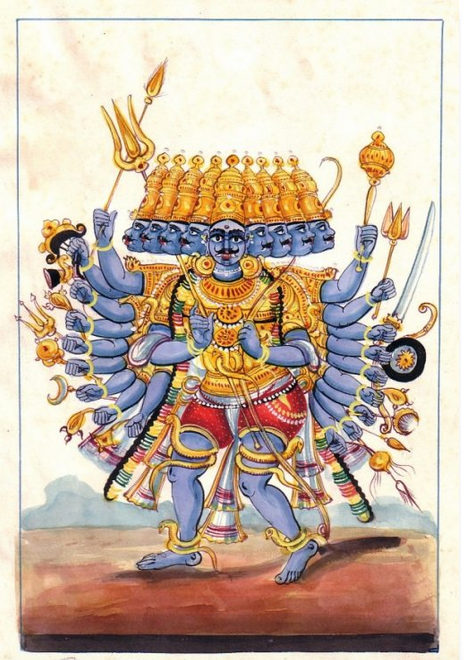
Phil Manzanera’s wonderful guitar break closes the song – a genuinely fine and uplifting solo that repeats the central motif, then goes back on it, then forward again, with Paul Thompson’s juggernaut drumming propelling the whole scene outwards and upwards to a conclusion. This is a bursting forth moment, the musical equivalent of joy and rapture, a coming into the light, like laughter after tears.  We have come back full circle to the song’s opening celestial overture, our divine key of Eb (E-flat) with its emotional effect “of love, of devotion, of intimate conversation with God.” Remember this has been a Pyjama-rama, and Rama, in the oldest Sanskrit epic poem Ramayana, is the Lord of Virtue and he and and his wife Sita are the very essence of purity – a shining example of martial devotion that our two earth-bound lovers could only aspire to. Using the guitar as a compositional tool for the first time, Ferry playfully opens the song with a devotional overture to to God (“ta-da-da”!), and then proceeds to judge his own actions in the context of the Divine, a role he understands, perhaps, but can never possibly fulfill.

tina and kevin

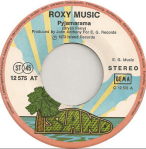
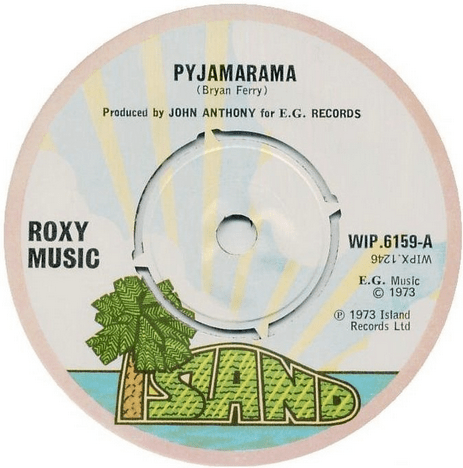
Credits: a painting of the 10-headed enemy of love, the demon Ravana. Rava kidnaps Sita, and is rescued by the noble Lord of Virtue, Rama (http://www.ancient.eu/Rama/); Italian copy of the single; NME review of the single; PJ original inner label 6159-A (that oddly does not credit Chris Thomas as co-producer); For Your Pleasure gatefold sleeve w/Amanda Lear and Bryan Ferry, design Ferry, Nicholas Deville art direction, photography; The Secret Life of Salvador Dali (by Salvador Dali); Bill and Coo, the 1948 film directed by Dean Riesner; Noel Coward and Gertrude Lawrence in the play Private Lives; two prints of the divine love of Sita and Rava


Leave a comment

Virginia Plain – Part 5

dylan 1
Oh a false clock tries to tick out my time
To disgrace, distract, and bother me
And the dirt of gossip blows into my face
And the dust of rumors covers me
But if the arrow is straight
And the point is slick
It can pierce through dust no matter how thick
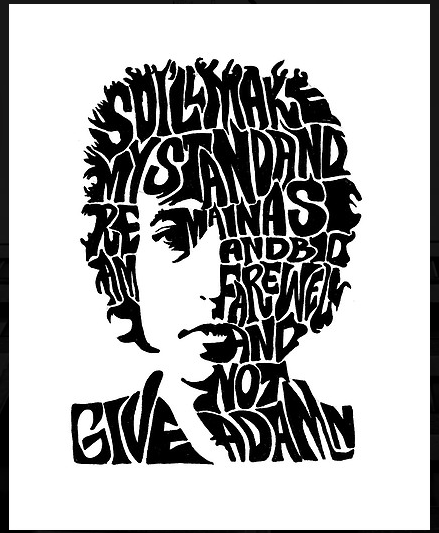
So I’ll make my stand
And remain as I am
And bid farewell and not give a damn.

Bob Dylan, ‘Restless Farewell’, The Times They Are a-Changin (1964).

Every decade popular music re-experiences what Pete Townshend called “the bloody explosion” – the wonderful collision of music, energy and sex, the desire to get out of your head, break chains, kill boredom, be free. ‘Virginia Plain‘ is a 70s road movie about that bloody explosion, and it is in the details of its flamboyance that is has been most celebrated. The song performed a career-defining double for the band: the university crowd bought the first album Roxy Music by the truck-load; and the kids bought ‘Virginia Plain‘, not once but twice, propelling it to #4 in the charts in 1972, and then five years later their younger brothers and sisters took it to #11. This was cross-pollination of a kind that only happens once or twice in a band’s career, and it provided Roxy with longevity  in a tough and fickle business, re-uniting art, commerce, and accessibility most fully 10 years later in 1982 with Avalon.

In the meantime ‘Virginia Plain’ had to conclude its 2.58 minutes of pop art lunacy and Roxy had to get on with the business of taking a hit album and single on the road. Onward and upward and over to America, be damned, the country of origin for much, but not all, of ‘Virginia Plain’s imagery. One of the unexpected surprises of writing about VP over the past few months is the sheer depth and weight of its lyrical content – the five blog entries have totalled the same page count as that written for the first album Roxy Music. One song equaling one album! What a trip. And so it is fitting now to move on to the riches of ‘Pyjamarama‘ and For Your Pleasure, as we arrive at the conclusion of our roller-coaster ride, destination reached, a place where Bryan Ferry, adopting the words of Bob Dylan, will make my stand/and remain as I am.Screen Shot 2017-07-02 at 9.30.02 AM

The story so far:

Verse I: Make me a deal: The first verse presents the art project Roxy Music as they negotiate a music contract. As desperate as the band are to make the big time, the narrator reckons he may be making a deal with the devil. The verse cuts like a knife: make it/take it/show it/blow it.

Verse II: What’s real and make belief: The journey kicks in, we lurch towards money, America, fame, and a walk with God. Don’t judge me or mess with my pride, the writer tells his Maker – isn’t it all just fiction anyway? The band hit the big time, leave Baby Jane in the dust and head for Rio. Take me/take me/take me.

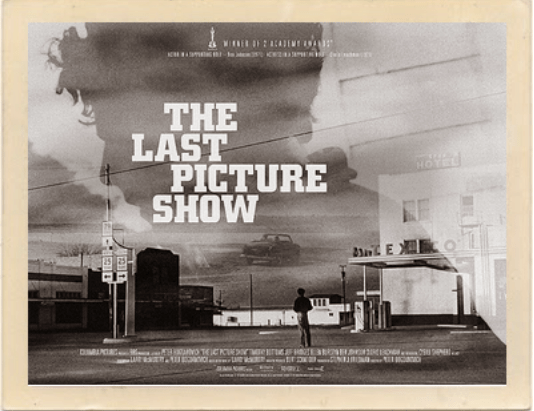
Verse III: Sinking fast: Enter teenage waste land for a hipster jive with fame. Take a trip to the dead desert for the Last Picture show; shake hands with dead and disposable rebels; drive in your mummified car and visit the ghosts of the sheer and the chic.  Trying/jiving/driving (drive-in).

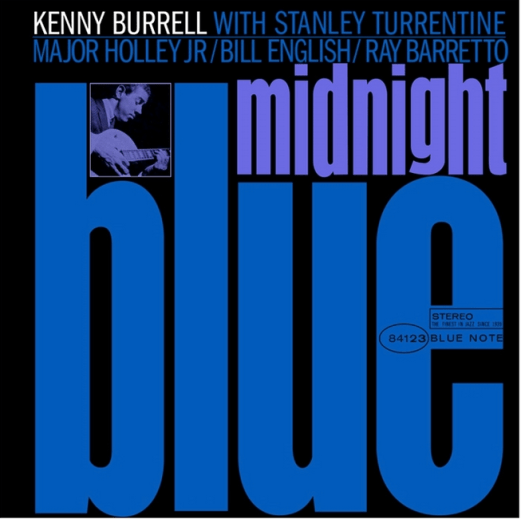
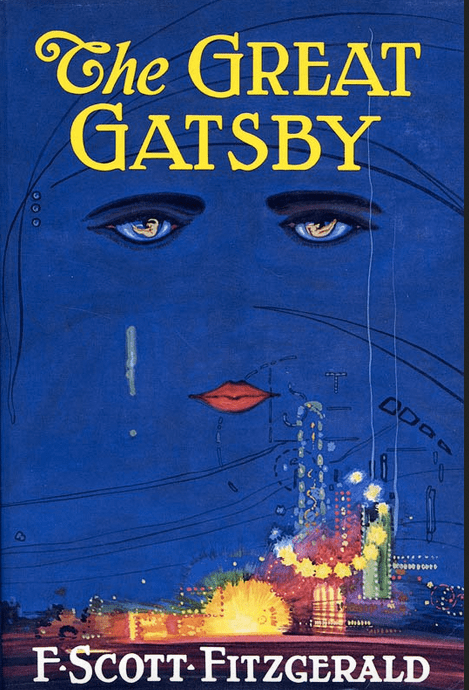
Verse IV: Reach For Something New: Shaking off the vibes from the previous verse, we now enjoy the view from mountain peak, enjoying exclusive access to those blue casino floors. Oh wow! We are characters in the Great Gatsby, reaching for something new. Burn those blue jeans, slaps on some lipstick and join the revolution. Me and you/just we two.

V: Far Beyond the Pale Horizon
Far beyond the pale horizon
Some place near the desert strand
And where my Studebaker takes me
That’s where I’ll make my stand but wait
Can’t you see that Holzer mane?
What’s her name, Virginia Plain?

Verse 5 is a consolidation of the ideas and images that have taken us to this mythical place beyond the pale horizon. By the journey’s conclusion, Ferry has shared his dreams (Americana, fame), influences (jazz, dance, cars), and fears (clutching at straws, sinking fast). The song serves as a psychological review of an artist’s state of mind as it becomes aware of a radical change brewing on the horizon.  Thankfully Ferry would continue this self-interrogation right through Roxy’s first five albums and beyond. The reason why ‘Virginia Plain’ is not cited as an example of meta-analysis in the same manner as, say, ‘Mother of Pearl’, is that the music is locomotive straight, lots of fun and catchy enough to captivate the ear on first listening without necessarily having to worry about the detail.

Eschewing a chorus in favor of a thrashing two-chord verse romp, ‘Virginia Plain’s forward moment is aided by a sentence structure that emphasizes the accents within each line. Look at the first three lines of each stanza and you see the repeating 8/7/8 pattern:

/           /     /     /    /      /      /            /
Make me a deal and make it straight [8]
All signed and sealed, I’ll take it [7]
To Robert E. Lee I’ll show it [8]

Take me on a roller coaster [8]
Take me for an airplane ride [7]
Take me for a six day wonder [8]

Throw me a line I’m sinking fast [8]
Clutching at straws can’t make it [7]
Havana sound we’re trying [8]

Flavours of the mountain streamline [8]
Midnight blue casino floors [7]
Dance the cha cha through till sunrise [8]

Far beyond the pale horizon [8]
Some place near the desert strand [7]
And where my Studebaker takes me [9]

Stanza five breaks the pattern for no reason other than “Studebaker” is a bit of a mouthful! With this movement forward we eventually arrive at our destination, that mysterious place beyond the pale horizon. ‘Pale’ is an interesting word choice because being pale is to be without color: “lacking the usual intensity of color due to fear,” (Cambridge). To be beyond the pale is to “travel outside of a boundary. To leave behind all the rules and institutions of English society,” (Urbandictionary). The Irish origin of the word identifies The Pale as a geographical district for the well-heeled and educated; to live beyond The Pale was to be part of the lower social classes and, presumably, live among the uneducated and the Great Unwashed. Bryan Ferry, channelling his creative energies into a new style rock band, states his desire to seek out the new and leave polite society behind, break the chains of conformity, and live life on the edge with his new art. If this was biographical criticism then we have the coal-miner’s son trying to re-invent himself and leave behind his working-class background and origins. He takes us with him to party on the midnight blue casino floors and greet the pink flamingo morning,  onward and outwards as the day brightens (pale horizon) and intensifies (desert strand). Tracing both the desire and distrust of fame, Roxy Music move beyond the pale horizon and land “some place near” the desert strand. And where my Studebaker takes me…Screen Shot 2017-07-02 at 9.31.43 AMAcutely aware of the cruel nature of fame’s double-edged sword as lived by James Dean, Baby Jane, and Robert Johnson (he of devil-deal making) our singer/songwriter hero rides into the final scene of ‘Virginia Plain’ in his (un)trusty Studebaker, comically echoing the words of Bob Dylan and General Custer as he does so:  And where my Studebaker takes me/That’s where I’ll make my stand. Ferry is referencing Bob Dylan’s song ‘Restless Farewell’, the last track on the seminal album The Times They Are a-Changin (1964). The song was written by Dylan in anger in response to a newspaper article that he felt contained a number of hurtful comments and untruths. Dylan’s is a song of confession and moving on,  of saying, this is me, I’ve done my best, that’s all I can do, that’s how I am: Oh a false clock tries to tick out my time/To disgrace,/distract, and bother me/And the dirt of gossip blows into my face/So I’ll make my stand/And stay as I am. Ferry would have been well familiar with the song  – “[Dylan] brought poetry into pop music,” he told the Telegraph after completing an album of Dylan covers in 2007 – and the singer uses the sentiment to define his own professional modis operandi: remain as I am/bid farewell/not give a damn.
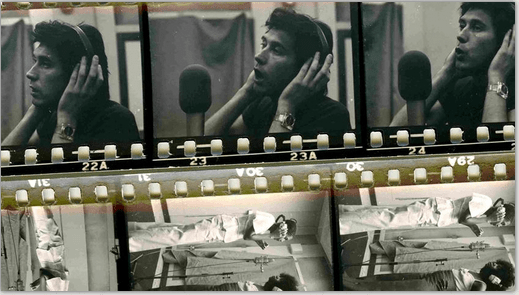
The problem for Ferry of course is that he does give a damn, and was sensitive to early criticisms of Roxy Music as a fake trumped-up band, dressing up, lacking talent, not paying dues.  At the time of ‘Virginia Plain’s composition, Ferry explained the criticism away as Roxy being an art-project first and a pop band second: “I came into pop music from a different angle. And a lot of people still resent me for it. That was one of the strengths and also the cross that I was sort of impaled on,” (Rogan, 44).

This observation is written into ‘Virginia Plain’ as a statement of independence, echoing Bob Dylan’s make my stand/remain as I am. Years later the criticism continued and intensified. In 1978, sporting an LA tan, mirror sunglasses and fashion-model girlfriend (all by design), Ferry experienced a ground-shift in his support base, and a deep suspicion was cast over his ability to speak – or have empathy with – his fans and ordinary people. At the time of the Queen’s Jubilee and the punk rock explosion, “entertainment” and artifice in rock and pop was under attack, as it had been when Roxy started out in 1971. Authenticity was identified as political and class-based. Street-cred was everything. Even the best music writers were hard-core drug users (NME scribes Nick Kent and Charles Shaar Murray were heroin and meta-amphetamine addicts, respectively). Interviews with the singer were printed in a harsh unedited format that made you feel like you were eavesdropping on a Church confessional. In fact one article was actually called Darkness Falls: Ferry in the Confessional, and reads like ‘Virginia Plain’s deal with the devil had now gone all horribly wrong, and the song’s lost idols and ghosts were now closing in on the pop idol: “If people hate me, fuck them” Ferry responded, testily. “I know how good I am, and as long as I have faith in myself, I’ll continue. And, as far as I’m concerned at the moment, everybody else can just go and fuck themselves” (Melody Maker, 1978).

Markedly prophetic, the sentiment in ‘Virginia Plain’ is both open (where my Studebaker takes me) and defiant (That’s where I’ll make my stand). And in its last verse the narrator pauses for one final question: But wait..custer
That’s where I make my stand… Battle of the Little Bighorn (The Custer Fight) by Charles Marion Russell

But wait…

There’s a wonderful moment in ‘Virginia Plain’ when Roxy Music asks us, the listener, if we are going to share in this new future:

And where my Studebaker takes me
That’s where I’ll make my stand but wait
Can’t you see that Holzer mane?
What’s her name, Virginia Plain?

One of the many gifts of Bryan Ferry’s song-craft is his belief in his art, and his willingness to share his most intimate feelings, joys, fears and inadequacies. For this he is on par with his heroes Bob Dylan and John Lennon, men who often stumbled in public but always strove to tell the truth as close as they could perceive it at the time. This level of self-interrogation takes guts and no shortage of humor to stay the course. Our hero rides into scene on his (un-trustworthy) Studebaker to beat the critical insurgence coming from the South. In a quest for understanding, Ferry addresses his audience:

Can’t you see that Holzer mane?

Baby Jane Holzer – the signifier being her hair (not eyes or smile) but the appendage to which Warhol’s superstar is most famous for. Are you, the listener (just we two), seeing this as I do?

What’s her name, Virginia Plain?

The age old songs-about-women is both celebrated and undercut: undercut in that the mystery of the girl is never revealed in the song, nor mentioned at all in the romantic sense. This is not ‘Sweet Caroline’ as a mystery woman, or ‘Ruby’ as she takes her love to town, or even love object ‘Peggy Sue’.  This is a love story between singer and audience: Just as two flamingos look the same, me and you/just we too/got to reach for something new.  Do you see what I see – or more importantly – do you see how I see it? These are the question Ferry asks his audience. You can feel him reaching out for emotion, for contact:  I am everything that I hear, read and watch – I am the Great Gatsby; I am the Last Picture Show; I am the teenage rebel; I am the New York art scene in the 1960s; I am James Dean; I am a flight to Rio; I am Andy Warhol.

Just look at the surface of my paintings and films… And there I am.

maryln wink 2
Credits: Pete Townshend, Rolling Stone interview, 1968; Roxy Music promo and in the studio with Chris Thomas, 1972, More Dark Than Shark; Battle of the Little Bighorn (The Custer Fight) by Charles Marion Russell; Marilyn Munroe photographed by  Philippe Halsman.

Titbits

If Roxy Music never wrote a good song the rest of their careers, they still have that, and it’s great.
John Lydon, interview, 2012


Leave a comment

Virginia Plain – Part 4

decoVirginia Plain – Part 1
Virginia Plain – Part 2
Virginia Plain – Part 3

‘Virginia Plain’ is a road movie song transported by car, plane, the imagination, and even the occasional roller-coaster. Its spirit and energy celebrates the spectacular growth in youth culture triggered in the 1950s and 60s, yet at its core the song mourns the past it replaces while being deeply suspicious of it. This delicious balance between celebration and anxiety, of reverence for the past and a mistrust of easy nostalgia, injected a freshness into the pop music scene in the summer of ’72. Promoting the single on Top of the Pops, the band presented themselves as collectors, hybrids of glitter, glam, Space Age 50s decadence, if there ever had been such a thing, and if there hadn’t been, there was such a thing now. Mining the past, the song builds on the music biz cliche of songs written about women: Barbara Ann; Gloria; Ruby; Peggy Sue. But who is Virginia Plain? – Baby Jane Hozer? The teenage rebel? The “you” in just we too? The guesswork is fun but the song denies the satisfaction of an easy answer. It teases. It winks. The tune rejects all effort to impose an over-riding interpretation onto its cool reflective surfaces. Indeed, there exists a deep thread of discomfort and warning within its grooves, a hand-wringing anguish that, like all the best narrative writing, starts with the personal and expands outwards to the Universal: even in his wild hybrid of pop culture images, Ferry is asking straight-forward questions we all can recognize: what are my life plans and goals; what does my life mean; what are my values and what is important to me.  ‘Virginia Plain’ marks a significant transition point between the gleeful thumb-your-nose experimentation of Roxy Music (72) and the darker more introspective hue of For Your Pleasure (73). Is it depressing? Goodness no – like all good road movies, the enjoyment is in the journey.

Our roller-coaster ride up to this point looks something like this:

I: Make me a deal: The first verse presents the art project Roxy Music as they negotiate a music contract. As desperate as the band are to make the big time, the narrator reckons he may be making a deal with the devil. The verse cuts like a knife: make it/take it/show it/blow it.

II: What’s real and make belief: The journey kicks in, we lurch towards money, America, fame, and a walk with God. Don’t judge me or mess with my pride, the writer tells his Maker – isn’t it all just fiction anyway? The band hit the big time, leave Baby Jane in the dust and head for Rio. Take me/take me/take me.

III: Sinking fast: Enter teenage waste land for a hipster jive with fame. Take a trip to the dead desert for the Last Picture show; shake hands with dead and disposable rebels; drive in your mummified car and visit the ghosts of the sheer and the chic.  Trying/jiving/driving (drive-in).

IV: Reach For Something New

Flavours of the mountain streamline
Midnight blue casino floors
Dance the cha cha through till sunrise
Opens up exclusive doors oh wow!
Just like flamingoes look the same
So me and you, just we two
Got to reach for something new

No longer sinking or clutching at straws, we sit now atop of a mountain, the multitude of fresh experiences flow like champagne down beyond the pale horizon. ‘Virginia Plane’ is at its most poetic here as Ferry shows us the view from the giddy peak. The words are designed to flow like champagne: mount/ain; stream/line; mid/night; sun/rise – the clipped emphasis propels us towards a soft landing: mountain streamline is a beauty, rolling effortlessly off the tongue, as luxurious as bubbly pouring into an open glass. Our destination is the midnight blue casino floor, an enviable place to visit by any account, and also a nod towards the jazz classic Midnight Blue by guitarist Kenny Burrell, the title track of which is a mid-tempo Latin groove. Name-checking Burrell’s lovely record keeps us close to ‘Virginia Plain’s Latin music sensibility – clearly as much a sign-post for Ferry as any American cultural source – wrapping us in an envelope of considerable expectation and warmth.

Screen Shot 2017-04-23 at 10.55.51 PM
I think audiences are quite comfortable watching something coming into being

Brian Eno, interview, 1995

One of the striking aspects of ‘Virginia Plain’ is how the words and and music rub against against each other to create a sense of palpable excitement under a bed of lyrical uneasiness. Musically the beat is pure thrash (F#/C#/F#/C#/…) with no chorus to relieve the tension, while the words, giddy with excitement, deliver messages of loss and foreboding, blowing cactus across the dead towns that show dead movies starring dead celebrities. On the surface, Flavours of the mountain streamline is the lightest of the five stanzas – it’s pretty hard to beat quaffing champagne while en route to the casino! – and the stanza comes wrapped in a midnight blue moon glow, like a book jacket cover for a famous novel or classic jazz album. The blue color scheme is fortuitous: in literature the color blue is linked to consciousness and intellect, an introspective value associated with the blues, Blue Note, and of course that teeming bummer of a movie from the 80s, Betty Blue. In more recent times, the color is also associated with power brokering and Corporate culture. In art, it’s a primary cool color. In business, it’s the armor of lawyers and money men. (Don’t think color association works? Think of your favorite food in blue and you’ll see what we mean). Writers can strike an intended mood by selecting a particular color scheme – think yellow in this stanza and you get a sense of lightness and glitter perhaps, but it feels superficial and light. Red would be too much, too over-stated. Green doesn’t even rate. Blue has depth and shade, and also places us squarely in the hours of late evening, when the idle rich (ie, those privileged enough to not have to get up in the morning), come out to play. As we make our way to the casino in anticipation of a good party, we recognize the presence of a key Bryan Ferry literary influence: F. Scott Fitzgerald and his American fictional classic, the The Great Gatsby.

Published in 1925, seven years after the close of World War I, Gatsby portrays the 1920s as an era of decayed social and moral values, evidenced in its overarching cynicism, greed, and empty pursuit of pleasure. Works of art become “classic” in part for their ability to age well and speak to contemporary audiences over time. Gatsby held considerable weight in the 70s and the themes of the novel also ring true today, evidenced by the breakdown of industrial capitalism and its inability to look after the health and welfare of its underprivileged citizens. The albums Roxy Music made in the 70s used the style, mannerisms and themes of Fitzgerald’s novel as both experience lived (the endless pursuit of pleasure) and as a warning (In Every Dream Home, a Heartache). Indeed, Bryan Ferry has been so influenced by, and associated with, the Great Gatsby, that one critic was moved to ask, “Is Bryan Ferry the Real Gatsby?” And of course the singer contributed re-arranged Roxy and solo jazz covers to the soundtrack for Baz Luhrmann’s 2013 flawed but entertaining film.

An early devotee of art and literature, Ferry has stated a life-long love of the works of F. Scott Fitzgerald: The first novel that I really read for pleasure was “Gatsby.” At school we were always given, you know, “great books of famous literature.” I somehow discovered that myself and I said, “This is what I really want to study.” I love that book and all of his writing, actually (2013). For the song’s 4th verse, Ferry paints an exciting image of party-goers wrapped in sophistication and glamour – entry to those exclusive doors is by invitation only, and understandably, the mind of the coal-miner’s son is blown (oh wow!). The origins of the world we are entering here can be traced back to the deep influence Fitzgerald had on Ferry’s ideas and his obsession with style and decadence. The blue fever-dream of the Great Gatsby cover would have been burned into the retina of Ferry’s young imagination, and he successfully re-creates its themes in ‘Virginia’s Plain”s energetic mix of intoxication and fatalism. 

gatsby
So we beat on, boats against the current, borne back ceaselessly into the past.

F. Scott Fitzgerald, The Great Gatsby

Painting sadness and decadence in equal measure,  the cover of the novel is still used on F. Scott Fitzgerald’s masterpiece 88 years after its debut (!). Normally one would have to be specific about the edition and year of a cover to pin down an image or title that influences a generation, but not so in this case – indeed, one of the fascinating aspects of the story is that the cover was painted before the novel was completed, and that the picture actually influenced, or was used for, some of the scenes and images in the book. Painted by Spanish artist Francis Cugat for a $100, the image is built on a cobalt blue background, the sad gaze of another mystery woman (Daisy?), her face hovering over bright colors of city lights, good times and parties (oh wow!) but the look is sorrowful and sad, a nude body is the subject of the gaze, swirling, lost, against a tear that serves as an exclamation mark. In many Roxy songs, Ferry often replaces this female gaze for his own male point-of-view (‘Mother of Pearl’, ‘Beauty Queen’). Party-time wasting is indeed too much fun, and when one steps back to think of life’s inner meaning you may not like what you see. Here is Ferry quoting literary critic Cyril Connolly on F. Scott Fitzgerald, and in doing so he neatly sums up his own narrative style and approach: “‘His style sings of hope; his message is despair.’” (2014). In other words, ‘Virginia Plain’ in a nutshell.

When you mix color with the senses (flavours of the mountain streamline/Midnight blue casino floors) you have the effect known as synesthesia, the ability to taste sound, smell color, and other sensory phenomena as identified by Lucy in the Sky with Diamonds and every other pop song written in 1967. ‘Virginia Plain’s brand of psychedelia follows a color arc that leads us from dark to light, from midnight dance to post-party morning wakefulness (Dance the cha cha through till sunrise). Hangovers are felt, morning doors are flung open, and what do we see but the sun-hued visage of two pink flamingos:

Just like flamingoes look the same
So me and you, just we two
Got to reach for something new

The flamingos are presumably the spent party-goers (just we two) leaving their midnight cha cha romp in order to greet the sun-kissed dawn. A heightened romanticism is expressed in these lines as the beautiful dancers metaphorically represent the beauty, balance, and grace of the flamingos. You could also make an argument for the opposite, which would be to see the creatures as plastic, garden gnome variety suburban nightmares. Which would be true, and ironic and a great piece of pop art, but it’s a bit far-ahead of itself here, because we leave the puns and the color metaphors behind for a moment as Ferry strips down to the core question of the song and sings the next two lines from the heart, not the head: So me and you, just we two/Got to reach for something new.

These lines are as thrilling today as they were in 1972: we are the beautiful flamingos, young and full of potential, and we bring our music, dance, art, literature and fashion before you to usher in the new modern era. And the band are more than ready to give this moment the heft it needs to hit home. Listen in around the 2.00 min mark and you hear this “something new” presented in in the most dramatic musical terms: Ferry hammers out his C# piano chords like that train finally coming out of the tunnel; Phil Manzanera responds with clean guitar strikes, holding down the tension; Paul Thompson thrashes his skins in perfect timing to the guitar and piano, until at last all resistance gives way and modernity arrives in the form of – wait for it – Brian Eno’s synthesizer!

ems
The sound of the future
in ‘Virginia Plain’ is the sound of Brian Eno’s EMS VCS3 taking over the song at 2.12 to provide the best instrumental break in pop history (or of 1972 at least). Keen to answer the band’s call and response theatrics, Eno plays a four or five note scale refrain that is simple to the extreme but so full and thickly textured that it still sounds radical today. This would become one of the hallmarks of Eno’s brilliant solo career – the reward is in the texture and depth of the sound as much as the emotive beauty pulled from the uncomplicated chords and melodies.

It is no coincidence that the final lines of the stanza get such exciting musical attention.  Got to reach for something new is a break from the lyrical approach of the song; it breaks from mountains and champagne and casino floors and it breaks from the history of the previous verses with its concern with extinct cultures and forgotten matinee idols and last picture shows. The song yearns for a new future. But what is interesting is that there is no tidy conclusion as to what the future is, or what it should look like. During our art-rock journey we have rubbed shoulders with Andy Warhol, Richard Hamilton, Marc Lancaster, James Dean, Peter Bogdanovich, the cast of the Factory, the jazz men of Havana Sound and many more, and so it would be safe to say that this cast of characters is the story of ‘Virginia Plain’. And this would be true enough, or at least as true as the me and you are the beautiful dancers waking to a new dawn. But me and you is also you and I dear reader, Ferry reaching out to you, the listener, with an invitation to come together with him to create meaning from our collective jumbled past and make something coherent and worthwhile of today, tomorrow, of this life. And don’t forget there is still that nagging “something” … something new is not the same thing as saying this is the new. Ferry is still reaching in the song, reaching for something not fully formed yet. And what is not formed is him, the man writing the song. As we leave stanza 4 and make our way towards the final installment of this masterpiece pop encyclopedia, I give the final words on this matter to the succinct writing of music critic Greil Marcus, speaking not only of Little Richard and Eddie Cochran and Elvis Presley and Bryan Ferry and all those who have the drive to become famous, but speaking for us all:

You had to find something new. You had to listen to everything on the market and try to understand what wasn’t there – and what wasn’t there was you. So you asked yourself, as people have been asking themselves ever since, what’s different about me? Yes, you invent yourself to the point of stupidity, you give yourself a ridiculous new name, you appear in public in absurd clothes, you sing songs based on nursery rhymes or jokes or catchphrases or advertising slogans, and you do it for money, renown, to lift yourself up, to escape the life you were born to, to escape the poverty, the racism, the killing strictures of a life that you were raised to accept as fate, to make yourself a new person not only in the eyes of the world, but finally in your own eyes too.”

Greil Marcus, History of Rock-n-Roll in Ten Songs, (2014).

CreditsManhattan Hotel, Tokyo. A futuristic vision of Manhattan as if seen from the 1920’s, this Art Deco style mural is featured in the Anteroom of the Manhattan Hotel lobby. ©Copyright 2002-2004 Studio O.M.O; the cover of Midnight Blue by Kenny Burrell, Blue Note Records; the cover of the Great Gatsby, painted by Spanish artist Francis Cugat; a picture of the EMS VCS3, taken from Brian Eno’s twitter feed, More Dark than Shark (https://twitter.com/dark_shark).


3 Comments

Virginia Plain – Part 3

last picture poster

Virginia Plain (Ferry), 1972

So me and you, just we two
Got to reach for something new

On August 24th 1972 Roxy Music performed on Top of the Pops for the first time. Bryan Ferry later noted that writing a hit single was just an attempt “to meet Pan’s People.” (Pan’s People was the all-female dance troupe who appeared each week on the show). As usual the songs broadcast were a mixed bag; the good ones came in the form of Roxy, Mott the Hoople (‘All the Young Dudes’), Alice Cooper (‘School’s Out’), Hawkwind (‘Silver Machine‘), and, depending how you feel about these things, Slade’s ‘Mamma We’re All Crazy Now’ (low glam is invited to my party). The not-so-good included a band called Mardi Gras singing ‘Too Busy Thinking About My Baby’; Lindsey De Paul cheekily asking the audience to ‘Sugar Me’; Roberta Flack needing an answer to the question ‘Where is the Love?’ and a band called the Pearls laying down the worst song title ever with ‘You Came, You Saw, You Conquered’. The love songs are the duffs here; the better ones are all about rippin’ it up, tearing up school, frightening your mother half to death, or putting down your hippy brother for his Beatles and his Stones. Across the globe that same evening in 1972 Neil Diamond’s Hot August Night was recorded live at the Greek Theatre in Los Angeles. Designed to scare absolutely no one, the record went double platinum. Los Angeles was a hot and humid 32C that evening. London had just endured two weeks of rain (even though it was peak summer). Two different brands of entertainment, two different worlds apart. It’s true Bryan Ferry did get to meet Pan’s People (not sure if Neil Diamond ever did) but as he played to the camera with his cinema sneer and his band of freaks played the car wreck glam that was ‘Virginia Plain’, he knew that ‘Sweet Caroline’ – as sunny as it was – contained its own broken myth, as fabricated and packaged as his own. In that cold London studio, Ferry was looking West, towards the heat and the sun, towards Hollywood and the twilight and the desert strand, and the view was blinding.

Sinking Fast – Verse 3

Throw me a line I’m sinking fast
Clutching at straws can’t make it
Havana sound we’re trying
Hard edge the hipster jiving
Last picture shows down the drive in
You’re so sheer you’re so chic
Teenage rebel of the week

At the end of the 2nd verse, the band is a force unto itself, flying to Rio to enjoy the spoils of their new found fame. Yet just as quickly desperation creeps back in: Throw me a line I’m sinking fast recalls the first stanza predicament of try try tryin’ to make make the big time.  Without reading too much into the song (too late!- Ed), Bryan Ferry’s famous vacillation and insecurity reveals itself here. The desperation is palpable: from the joys of meeting Baby Jane and flying to Rio, we are suddenly clutching at straws can’t make it. The song pulls in all directions, hedging its bets, switching from exuberance to dread, from joy ride to dead end, and back again. Havana sound is less a musical manifesto than something the band is trying. Not very flattering that, but it does point to the duality contained within the song: heaps of drive and ambition washed down with dollops of self-doubt. Or, at the very least, a sneaking suspicion that once achieved, attaining your goals may not be all it is cracked up to be. Nevertheless, Ferry reaches towards the New Thing, and the band are willing participants. With verve and gusto, ‘Virginia Plain’ name-checks Latin culture and dance crazes by the pound (Havana sound/Acacpulco/Rio/dance the ChaCha/hipster jiving) sourcing Latin/South American culture as much as it does its classic USA homages, and this aspect of the lyric that is rarely commented on.

Screen Shot 2017-03-12 at 9.23.14 AM

Jazz is an energetic and free music and the Cuban strain turned popular Latin dance forms into dance crazes such the Mambo and Chachacha. Ferry clearly loves the music, reveling in is energy and charm, but as ‘Virginia Plain’ bounces from exuberance to self-doubt and back again (throw me a line/sinking fast) the majority of the 3rd verse is distinctly skeptical in its outlook, though the catchy music and presentation do little to signal any change. Ferry takes it upon himself to undercut the pop-star dream myth by traveling – by car, by roller-coaster, by airplane  – into a hallucinatory mindscape of discarded artifacts and abandoned landscapes. This makes sense if we consider how young the band were and how new all of them were to making records and appearing on music shows like Top of the Pops. Being famous must be a keenly schizophrenic experience containing a multitude of contradictions that can only, as Radiohead’s Thom Yorke famously said, “seriously fuck up your head.”

The first album Roxy Music was an artifact of performances caught in time, living outside and beyond the life of its creators; so too was the pop single Ferry was composing and preparing to record in July 1972. Having worked on the album for so long, sweating over its recording and presentation, the band and LP was now ushered into the world as public property,  equally loved and mistrusted, praised and/or misunderstood. And on one level, this seemed to disturb Ferry a great deal, like it was creating an emotional hole in his psyche. Immediately after ‘Virginia Plain’ hit Top of the Pops in August 72, and before the recording of the 2nd album, For Your Pleasure in early 73 (less than five months), Ferry apparently went into a deep funk – as biographer Johnny Rogan observed: “his close friends indicate that Bryan went into a long period of introspection in late 1972, sitting alone and brooding in front of the TV, which always had the sound turned off” (Rogan).

Without wanting to rub the elbows of conspiracy theorists, the darker subject matter of Pleasure would support the view of an isolated, brooding young man questioning what it all meant, and not at a trivial level. Take for example these lines from the masterpiece ‘Sunset’ (Stranded) written and recorded the following year:  Scenes like these from my dreams/Cover cutting-room floors all over. I turn my desires and dreams into art; art ensures a life after death; and for this and this alone will I be known into posterity. One last sigh of farewell, goodbye.  With his recording career and celebrity only just beginning, Ferry intuitively understood even at this early stage that his glam dreams would provide wealth and opportunity, but also contain a permanent record of his struggles, his disappointments, the youthful beauty of himself and the band caught in time, beyond life, on celluloid and record.  Look no further than David Bowie’s Blackstar for a fully realized example of an art-rock icon looking past his present moment and knowing he is recording all that will ever be left of him. Look too at Bryan Ferry’s last solo album Avonmore – the Dorian Grey cover portrait is a photo of a much younger Bryan Ferry, caught in (some) other time. Look at the cover and wonder if its a contemporary or historical shot, even though it is obviously not the physical portrait of a 70 year-old man; it is a picture of a constructed idol – one of our own choosing and composition. Alternatively, down here on planet Earth, we mere mortals, if we are lucky, are remembered by our dear family and friends (thankfully) while the famous are acutely aware that their mortal experience – all of the rot, brilliance, drugs, sex, indulgences, insights, inspiration, pettiness, lovers and lovers lost – will remain and entertain across time and generations. For Ferry, with his sensitive nature and the gifts of the poet, this ambition must have felt like he was making a pact with the devil, giving something essential of himself that, once freed, would never be his again. Make me a deal

robert johnston made a deal with the devil

Robert Johnson – making a deal with the devil.

Havana sound we’re trying
Hard edge the hipster jiving

If we recall our American history,  the Havana Cuban jazz sound was developed most fully during the long period of Cuban isolation:  in 1959 a Communist Revolution under the leadership of Fidel Castro took place. In retaliation, the U.S imposed a range of sanctions initially between 1960 and 1964, eventually including a total ban on trade between the countries that lasted for decades (and decades…). The result was enforced poverty and little communication or knowledge of the outside world. This created an odd cultural mix: many aspects of 50s Americana got stuck in time. Instead of James Bond and the Beatles, Cuban youth watched endless Rita Hayworth and Clark Cable films, and in doing so became entrenched in a 1940s form of glamour. To be sure, there was plenty of indigenous high-quality jazz and dance on tap, and the music maintained a vital force, but vitality mixed with ennui are the hallmarks here, like the effect of visiting Disneyland to see the Uncle Walt’s 1950’s version of Tomorrowland: no longer relevant, a snapshot of a bygone time when a better future was imagined but never materialized.

Selecting his images very carefully, Ferry introduces jazz obsessed old-time Havana into the song to draw attention to the band’s ambition and willingness to adopt styles. But Havana also provides a snap-shot of another interesting cultural phenomenon: struggling through the embargo, Cuba and its citizens kept thousands of old and aging classic American cars on the road.  True, there were a few Russian and Chinese imports available (Just Vote Red), but Cuba became a museum of Studebakers, Fords and old Plymouths, relics now of an age when the rich and famous partied in Havana before Communist rule. Even in 2017, with the death of Castro and cultural changes well underway, there is still estimated 60,000 pre-1959 American cars still driving through the streets of Cuba. In fact, tourists demand they be available and plentiful in order to get the “authentic” Havana experience. The cars are beautiful examples of automobile art, creatively maintained and mummified across generations, but the effect is ghostly, like history caught in time.

And where my Studebaker takes me:  the 1953 Studebaker Commander Starlight Coupe, Havana, Cuba; and Bryan Ferry‘s beloved Studebaker, circa 1950s.

This emergence an objective and personal past is palpable in ‘Virginia Plain’, like watching an old TV show unfold in front of you. Here the present moment is recorded and played back in our minds, much like cinema, as when we hear music and a memory is played within us that fills our vision and senses. With his interest in the inner workings of memory well established on Roxy Music (2HB/If There is Something hell, most of the first album), Ferry has some fun with the mummified car imprint by writing into the song yet another personal obsession: a name-check on his own pre-frame, student car (“always breaking down)” – that perennial Cuba Havana favorite, the 1950s Studebaker Commander Starlight. One of Ferry’s better qualities is his humor – often overlooked – and including your own precious youthful pose into your first single takes some level of honesty and self-deprecation!

So Cuba became a working museum for old American vintage cars and the band are trying to find their edge. Post-gig they hop in a car to go – where else – to the local drive-in:

Havana sound we’re trying
Hard edge the hipster jiving
Last picture shows down the drive in

You’re so sheer you’re so chic
Teenage rebel of the week

And what should be playing down but the American movie classic The Last Picture Show. Now, to a British kid in 1972 drive-ins would have been like visiting that 50s version of Tomorrowland, unearthly and out-of-reach, irrevocably tied to English idea of the American experience, or, the American teenage experience. (Not one to be undone, Bowie sets his Drive-in Saturday in the future as the aging ravers look back on old Mick Jagger videos to learn on how to do sex again. His name was always Buddy!).  The Brits didn’t have Drive-ins (poor weather, lack of cars due to the high cost of petrol; hard to watch a flick on your moped, etc), and they were also dying a slow death in America by 1972. The heyday of the drive-in theatre was actually twenty years earlier during the 1950s – you know where I’m going with this – when Americans began to move to the suburbs and everyone owned an automobile. And they loved their cars. Parents loved drive-ins because they could take their kids.  Teenagers loved them because of the privacy they gave them and their dates.  It was the beginning of a real and enduring (ultimately destructive) car culture, as demonstrated in the terrors of the open road (Hitchcock’s Psycho); fast food culture (McDonalds) and a developing business model that recognized and capitalized on the profit possibilities of teen culture.

As we saw with Roxy Music track Would You Believe?, the early 70s saw a blaze of interest in 1950s culture and style, probably most famously represented in the 1973 release American Graffiti, an early global smash for George Lucas. This was cars, girls, drive-ins, and rock n’ roll done to the max, a celebratory, non-critical look at American teen culture. Alternatively, only a few short years before American Graffiti, Peter Bogdanovich shot and released The Last Picture Show in 1971. A stunning and mournful black and white film, Picture Show was the polar opposite to Graffiti, focusing on a declining Texas small-town that, according to the film’s poster,  declared it as “the picture show that introduced America to the forgotten 50’s.” The kids who cling to the town try to find solace and escape from boredom in lost dreams, drinking, sex and the cinema. (Sound familiar?). The overall feeling of Last Picture Show is loss, wasted and/or expelled energy, thwarted youth. Cinema captures the present moment and embalms it, presenting itself and its subject as nostalgia and entertainment, just like those mummified Cuban Studebakers. How then to move to something new? This is one of the central issues Ferry is dealing with in ‘Virginia Plain’ as he reaches for new ways to express surprise and interest knowing that he and his generation are early proponents and translators of modern irony, mashing together the old and the new, but not necessarily feeling comfortable about the process. Ferry loves the glamour, but is wary of its power to entrance and corrupt.

You’re so sheer you’re so chic
Teenage rebel of the week

You’re so sheer you’re so chic is sung through clenched teeth. True, the alliteration (shh/chh) contributes to the effect. This does not suggest that the song is high-strung, or unpleasant – quite the opposite – but there is ironic distance here and it develops a wallop of a punchline. Bring together the various threads – Andy Warhol’s infatuation with surfaces (Just look at the surface of my paintings and films…and there I am. There’s nothing behind it); the New York lofts and pop art statements (Richard Hamilton, Mark Lancaster, David Bailey); the world of advertising and Virginia cigarettes, billboards, packaging and paintings – and we see clearly a song that is infatuated with the world of surface, image and style. ‘Virginia Plain’ has been correctly celebrated as a Glam Manifesto, an homage to money, dreams, fame, fun, music, youth. But as the youthful hordes fumble their way to the drive-in in anticipation of cheap thrills with cars, girls and monsters, they are instead presented with the Last Picture show, a re-telling of their own story played back to them, capturing their No Future experience in the American out-back, where teenage worth is valued entirely as commodity: check out a thesaurus for sheer and you arrive at “simple”/”scant”/”shameless”; push in the same direction for chic and you are left with “stupid”/”fad”/”novelty”. No wonder Ferry sings through clenched teeth – simple stupid thing, he hisses. Shameless fad. Scant novelty. Interviewing him at his flat in late 72, Caroline Coon noted several framed pictures of famous women hanging on Ferry’s wall – Marilyn Monroe, the actress Kay Kendall – both dead, both dying tragically young. And then the Teenage Rebel of the week enters the frame, and his fate is no better.

james dean

When ‘Virginia Plain’ was presented on record and on television in August 1972 it struck a chord with the future stars of tomorrow (John Lydon, Steve Jones, Siouxsie Sioux, Bono, John Taylor, Morrissey) by showing them a world of glamour, fame, fun and endless potential. And they took to it, and they themselves changed many vacant lives five short years later. But far from being these “little images and throwaway lines” (as Ferry put it) the song radiates an intense heat and a suspicion of the very goals it purports to be chasing. From sinking fast to clutching at straws, to dead cultures and dead superstars, the fame-game is questioned, the value of art on a personal level is interrogated. In this road trip we move irrevocably towards For Your Pleasure and the mountain streamline, three verses in now and more to come, the final stanzas primed, ready to reveal some of the best poetry and music Roxy Music ever produced.

Oh, we knew how good it was even as we recorded it
Phil Manzanera, interview, 2014

[It was] a bid to get on Top of the Pops, actually, just a way to get to meet Pan’s People.
Bryan Ferry, interview, 1972 (Rigby)

Credits: Last Picture Show movie poster; Havana dance festival; one of the only known pictures of Robert Johnson; Havana and Byran Ferry Studebakers; actress Kay Kendall; Robbie the Robot/Marilyn from Richard Hamilton, 1956 exhibition This is Tomorrow; Drive-in movie composite; James Dean, Rebel Without a Cause movie poster; Phil Manzanera’s sigature guitar, the 1964 ‘Cardinal Red’ Gibson Firebird VII; Havana club poster; Roxy ’72.

Titbits

The Beatles (The White Album). The group of teachers and artists Bryan Ferry studied with is unprecedented. Roxy Music was an art project that provided exciting careers in the new medium of pop music. Them heavy people Richard Hamilton, Marc Lancaster, Tim Head and Nick de Ville influenced Ferry both as part of the Roxy and solo aesthetic. Ferry studied fine art at the University of Newcastle upon Tyne from 1964–68 under Richard Hamilton for a year. Imagine being at school when teacher Hamilton comes back from designing the cover for The Beatles (The White Album)!


4 Comments

Virginia Plain – Part 2

screen-shot-2017-01-14-at-10-43-26-pm

Just look at the surface of my paintings and films…and there I am. There’s nothing behind it

Andy Warhol,  1967

I. Beneath the Surface

To title a song is to give it the promise of mystery. ‘You’re So Vain’ immediately begs the question – Who’s so vain? Who is she talking about?  (Warren Beatty, obviously!). The Stones sang ‘Ruby Tuesday’ but who is she, really? And what about the doomed boyfriend singing ‘Tell Laura I Love Her’  Doesn’t she know already? (And why is his car bursting into flames?) And so on. Naming a song after a woman is at once a great music cliche and an invitation to mystery, a mystery that Bryan Ferry had been thinking about since his first year at Newcastle University in 1964.

Before a song had been written, a band formed, or music being thought seriously as a potential career, Bryan Ferry painted Virginia Plain.

vp-paint-3
It was a watercolor or a painting on paper. It was just like a surreal drawing of a giant cigarette packet, with a pin-up girl on it. I liked that phrase Virginia Plain…so it later became the title of the first single I put out with Roxy Music – with a slightly imponderable lyric…

Bryan Ferry, interview, Bracewell.

With the old painting on his mind, Ferry moved towards a new vehicle or mode of expression that he could hang impressions on and indulge his interests and influences in art, music, theater, pop culture, and design, and, what the hell, even get a bit of  money, pleasure, and sex.  Luckily for Ferry, this way forward was already embedded in the band’s collective DNA: Key members of Roxy were art school heavy-hitters, the front line of Ferry, Mackay and Eno would have had exceptional avant-garde careers no matter what media they worked in. Andy Mackay studied at Reading Art School, where he was exposed to major modern composers such as John Cage and Morton Feldman, as well as Joseph Beuys, the Dadaists; and Brian Eno went to Winchester School of Art where he studied beyond art, into cybernetics, Cage and Riley, Tom Phillips and more, all under the guidance of University innovator Roy Ascott. Armed with his own extended training and experience from Newcastle School of Art, Ferry created with Mackay and Eno a hot-bed of possibilities in a pretty sexed up and hungry environment.

London’s curious blend of promiscuity and conformity was, by the end of the 60s, ground in a willingness to please (though not necessarily behave). In contrast, an overlooked influence on Roxy is the don’t-give-a-fuck decadence of New York and Andy Warhol’s Factory,  with its cast of Superstars, bohemian and counterculture street artists and survivors that included Nico, Joe Dallesandro, Edie Sedgwick, Viva, Ultra Violet, Holly Woodlawn, Jackie Curtis, and Candy Darling. The Superstars had the art, the decadence and the hard drugs, and within this package (with the New York Dolls not far behind) was the fulfillment of a certain “seediness” that Roxy Music would incorporate.

I saw Bryan’s songs in the context of pop art…That was the period when pop music became self-conscious, in the sense that it started to look at its own history as material that could be used. We wanted to say, ‘We know we’re working in pop music, we know there’s a history to it and we know it’s a showbiz game.’ And knowing all that, we’re still going to try to do something new.

Brian Eno, interview, 2001

After the success of the first Roxy Music album, the band recognized they could take the pop-art manifesto one step further. Led Zeppelin and Pink Floyd had a no-singles, no-Top of the Pops scorched earth policy, but Roxy understood that singles were a different form, and had a potentially different and wider audience than the LPs. Besides, the pop-art movement did not distinguish between high and low art (a critical concept), and so the singles market was up for grabs: “I think a single is necessary,” said Ferry in the summer of 1972. “Most of the best things in pop have been done in that medium.” A favourite single was Leader of the Pack by the The Shangri-Las, a teenage tragedy song that was referenced in ‘Virginia Plain’ viz ve the sound of reving motor bikes (legend had the Shangri-Las recording their motorbike in a hotel lobby, while Roxy hung a tape reel-to-reel outside Command Studios at Piccadilly Circus). Ferry would have been drawn to the the narrative story-telling of the song (I met him at the candy store/He turned and smiled at me/You get the picture), not to mention great internal dynamics and yet even more car accidents (look out! look out! look out! CRASH). Ferry understood that singles were min-adventures that advertised and sold the artist, entertained the listener, and told complete stories in one affordable package.  Singles were a given and a shot of Roxy Music pop-art in the music charts would seal the deal.


II. Make Me a Deal

Make me a deal and make it straight
All signed and sealed, I’ll take it
To Robert E. Lee I’ll show it
I hope and pray he don’t blow it ’cause
We’ve been around a long time
Just try try try try tryin’ to make make the big time

Take me on a roller coaster
Take me for an airplane ride
Take me for a six day wonder
But don’t you throw don’t you throw my pride aside besides
What’s real and make believe?
Baby Jane’s in Acapulco
We’re all flying down to Rio

Forces were afoot in 1972. Bowie was hungry (I could do with the money) and Roxy Music were asking for a straight deal, signed and sealed no less (We’ve been around a long time/Just try try try try tryin’ to make make the big time).  While the desperation is genuine (Manzanera had been working at a travel agency the previous year), the tongue is firmly in cheek. The band were critical darlings, sure, but the  press (Melody Maker) and TV (Old Grey Whistle Test) mocked the band’s easy ride to fame and their perceived lack of paying dues. Yet from the band’s perspective the idea of rock music and stage presentation as being serious or reverent was all wrong. Somewhere along the line it had been forgotten that rock was dressed-up entertainment, Jerry Lee Lewis bombast, Elvis Presley hip-shaking. At one concert, a disgruntled fan demanded the group get on with it and play some rock n’ roll. Ferry replied: “we are Rock ‘n Roll!”  Moreover, the criticism that the band had had an easy ride is dismissible if we consider the 100 or more concerts performed by the group in 1972 alone…Surely the grind of making the big time is the sound of Eno try try tryin’ to run his synth off a cliff 36 seconds into the song! The irony is that by the time ‘Virginia Plain’ was recorded and performed on Top of the Pops, the lyric was already a historical artifact, the deal signed and the big time arrived, fully formed.

rio

The sound of ‘Virginia Plain’ is the sound of a musical locomotive racing through a dark tunnel.  Listen to the first 15 seconds of the song and you can hear the approaching train, Phil Manzanera’s guitar-treated notes providing the get-outta-the-way warning. Roxy Music producer Pete Sinfield observed: Bryan was playing eights in the studio as he was wont to do. He said, ‘I can hear this bass part going braaam like a train.’ Then he launched into these wonderful lyrics. It was obviously more catchy than anything on the album.

The song crashes out of the tunnel
with Ferry’s fever dream spilling past with impressionistic cool and verve. Make me a deal/Make it straight he insists, the band riffing behind him on synth and guitar in the key of  F#. According to Shubart’s Emotions of the Musical Keys, the key of F# holds the characteristic of Triumph over difficulty, free sigh of relief uttered when hurdles are surmounted. ‘Virginia Plain’ does feel triumphant: the approaching guitar-treated train whistles gives way to a sudden burst of synth, bass and drums that drives the beat and comes in so unexpectedly that it took many disk jockeys and most listeners by surprise. “This day and age when you think of singles, they have the formula perfected,” Phil Manzanera said in 2014.  “Straight into the chorus for the beginning, play the hook, quick verse, back to chorus, repeat until fade. There was none of that with Virginia Plain.

The dream of ‘Virginia Plain’ is the dream of showbiz America, of cultural Americana and its historical and artistic freedoms. The punning coherence of the song’s many surfaces reflects in all directions: the young band looking for a deal, name-checking and taking the document to Robert E. Lee, the Confederate Northern Virginia Civil War general. But the reference boomerangs back and we find ourselves eavesdropping on the current state of the band – the reader of the document will be, in fact, Roxy Music lawyer Robert Lee. The “E” was added by Ferry as British lawyers are unable to advertise, in addition to being a nice pun on the said General Robert E. Lee – which, in turn is a joke about making a deal with the “devil” – Just try try try tryin’ to make make the big time. The hero of the South who lost the war. Hope he don’t blow it, indeed.

Was there ever a hit single with an oboe in it? I don’t know. But I think the feeling was there should be. No other band at the time seemed to have one.

Phil Manzanera, to Mick Wall, 2014

Andy Mackay talks up a mile on ‘Virginia Plain’, adding color to the driving beat with his oboe chirping like a parakeet swinging on his shoulder, jabbing quick note bursts, short lines, repeated notes. It’s a marvelous, energetic performance, and must have knocked the wind out of him during live shows. Here the Roxy factor plays out once again with its inclusion of saxophone and oboe as a front-line instrument. In Disc, Caroline Boucher observed: “Andy is unusual in that he is a classically trained oboe player. There aren’t many oboe players in the rock field, probably because it’s the most difficult woodwind instrument.” We can assume the real reason is early 70s rock aesthetics – hard to picture Jimmy Page grinding out a power chord with an chirping oboe sitting atop his bottle of Jack Daniels.

‘Virginia Plain’ is all journeys and invitations.  We move from train to roller-coaster to airplane, and then God steps in to provide our hero with a six day wonder (according to the Book of Genesis, God created the world in six days flat and took a breather on the seventh). The ultimate trip, one would imagine, with God being deemed a suitable and worthy escort for this particular Northern English proto-celebrity. At the time of the song’s composition Ferry was a hair short of full blown fame, but that didn’t matter one wit as the hand-wringing and self-doubt he would manifest over the years was already there is spades. Don’t you throw don’t you throw my pride aside he tells his Maker, before getting in a spectacular dig with the core question of the song: besides/What’s real and make belief? Question my journey, hurt my pride, and I’ll interrogate your very existence. If Robert E. Lee is the Devil, then Ferry introduces the modern phenomenon Celebrity as a societal replacement for God (a favourite Ferry subject; with more to follow in  Psalm and In Every Dream Home a Heartache). There is a sadness to the realization, to be sure, which becomes more acute as Ferry becomes one of the celebrity Gods himself searching for an emotional connection in a desensitized glamour-soaked world. In the end, the heavy questions are set aside, frivolity wins the day, with clever clipped internal rhymes (pr-ide/as-ide/bes-ides), puns (“A side”/”B side”), and the singer simply shrugs and re-joins the party: We’re all flying down to Rio (!)

Take me for a six day wonder
But don’t you throw don’t you throw my pride aside besides
What’s real and make believe?
Baby Jane’s in Acapulco
We’re all flying down to Rio

And so at the mention of Baby Jane, we enter the temple of Warhol, one of the original artists to recognize the importance of surfaces and the collision of art, pop, society, religion and fame. ‘Virginia Plain’ name-checks Warhol superstar Baby Jane Holzer not once but twice (Baby Jane’s in Acapulco/Can’t you see that Holzer mane?). The reasons are compelling: Holzer was a high society lady and a famous fashion model in her own right before she met Warhol and became one of his early Factory ‘Superstars’.  Baby Jane helped coin a hip 60s lexicon, making popular such Austin Powers phrases such as  ‘super marvelous’ and ‘switched-on’ but left the Factory when the madness became too great (i.e. when Warhol was shot, near fatally). Ferry chose Baby Jane for her beauty, surface coolness, and success in the fashion world and, cheekily, saw the fun in possibility of creating a narrative fictional heroine (nee Virginia Plain/”plain Jane”) that would have a real-life correlative with a known super star. But it is more useful to think of Jane – and cigarette packages and student paintings – as surface clues to the mindset of the author as he grappled with the problem of how to present his slightly embarrassing youthful dreams (stardom, glamour, money) in a meaningful and honest way, while still being entertaining and fun and not being too literal, or, horror of horrors, naturalistic.

A few years before Roxy, Ferry had been trying to capture his obsession in lyric poetry, but the attempts were too earnest, purple and stilted. Here is his early attempt at writing ‘Virginia Plain’ as a piece of love poetry:

Serene she stands
– a monument
on this horizon

she’s on her own
so fair and sweet
that pure
Virginia Plain

You can feel the strain here (a monument /on this horizon/so fair and sweet) it feels like the Queen’s speech at Christmas or a passage from Hardy’s Tess of the d’urbervilles. This is the challenge of writing as an art form: get too specific or too earnest and you get too boring. Smash it up a bit though, create a fresh angle into the story or image, and you are really onto something, something more intense or interesting than the original image itself. Ferry soon realized this and in doing so quickly became a sublime writer, merging narrative distance and technique into a very satisfying musical package. Take for instance the distancing effect we saw used in Re-Make/Re-Model where the image of a beautiful girl is expressed in recollection, not as, say, you and I might write it, in shimmering eyes of blue, but rather as the license plate CPL593H, which is the memory trigger of the moment he sees her. This Romantic idea of “emotion recollected in tranquillity” (Wordsworth) is considered to be a more truthful attempt at getting to the heart of the matter, the way a smell brings back the memory of a youthful love affair, or a oddly framed picture tells you more about the moment than any royal portrait ever could. See here she comes, see what I mean?/C P L 5 9 3H! Yeah Bryan, we see what you mean.

ferry-72
Roxy Music explored and incorporated early postmodern techniques
before the term had ever been seriously applied to pop music. Name-checking a Warhol Superstar in a pop single enabled Ferry to state his artistic intent and allegiances while still playing up the mystery at the heart of the song, who is ‘Virginia Plain’. The writing of the song, Ferry told Caroline Boucher in September 1972, was influenced by “the whole early Warhol movement of the time – of wanting to have a huge studio an live in New York. The face of the girl in my painting was based on one of Warhol’s stars at the time, Baby Jane Holzer.” Fortuitously, one of Ferry’s close friends at art school,  Mark Lancaster  had gone to New York on Richard Hamilton’s recommendation, to record the art scene there and experience the new modern ideas. Lancaster was lucky enough to work as an assistant to Warhol, and met and photographed Roy LichtensteinFrank Stella,  Frank O’HaraHelen FrankenthalerNorman Mailer and many others. He brought his New York photographs back to England (this was at a time when art news from New York was hard to come by), giving a “New York” lecture and slide show with music to Ferry and his fellow Newcastle students:

Back in Newcastle I put together a slide show for the school, with all the things I had photographed in New York, and music like that at the Factory, such as Lesley Gore singing It’s My Party, and ending with the taxi sequence with Moon River playing, because it reminded me, like all of New York in 1964, of Breakfast at Tiffanys.  Images from America were still pretty rare, and some of the students, including my friends Stephen Buckley and Bryan Ferry, were impressed and affected by this experience. I remember I was just trying to keep the projector and the record player going and trying not to cry.

Mark Lancaster, Interview, 2004

As excited and impressed by the information as he was, Ferry closes the verse with a joke at the expense of his New York cultural heroes: Baby Jane’s in Acapulco, says our narrator, calling up images of airplanes and sexy getaways (air travel was rare for the working class in the early 70s and a very glamorous idea at that), but not content to be mere Warhol copies or hangers-on, Roxy decide instead of going to Acapulco with Baby Jane and Co, they’ll jet-set to their own sparkling destination – We’re all flying down to Rio! And they certainly did. 

There were all kinds of popular culture references embedded in Roxy — the way Bryan used clichés in the lyrics which turn in on themselves, that’s very pop art. Those lyrics are very abstract in a way. They seem like they’re about something but they aren’t reflexive. They are about their own condition an awful lot: ‘I’ve got this problem. I’m writing this pop song’.

Nick De Ville, interview, Bracewell

Titbits

Secret 7″ is a charity auction of 7 album covers designed by a range of designers and illustrators. Exhibited at Mother London, the charity event raised money for War Child, an organization that Brian Eno and many other generous people have supported. Our favorites, unsurprisingly, come from the batch submitted for Roxy Music – ‘Virginia Plain’.


Leave a comment

Virginia Plain – Part 1

baby-jane-holzer-david-bailey

Virginia Plain (1972)
Virginia Plain (Peel Session, July, 1972)
Virginia Plain (Top of the Pops, August 1972)

When David Bowie held a Ziggy Stardust press conference at the Dorchester Hotel late summer 1972, the only record he allowed to be played other than his own was Virginia Plain. While this may be urban myth – Bowie was notoriously competitive – it does signal the weight the new Roxy Machine was harnessing after the release of Roxy Music in June 1972. NME raved: “Altogether this is the finest album I’ve heard this year, and the best first I can EVER remember”. “Roxy Music are destined to save the world,” said Melody Maker‘s Richard Williams with only little understatement;  “This band will be a monster,” said Disc, and so it goes. The band performed over 70 concerts in the second half of 1972 – and this pace only accelerated with the release of the single ‘Virginia Plain’ and the band’s first appearance on Top of the Pops in August.

The previous two years hard work had handsomely paid off: the album was an instant hit and the band were looking to extend their success with accelerated touring. In the interim, Roxy Music co-founder and bass player Graham Simpson had become withdrawn and difficult to work with, and at an important Sounds of the Seventies show (a “big deal” for the band) Graham would not, or could not, play a note. He departed Roxy after recording the album, and was replaced by Rik Kenton who picked up the 4-string, toured with the band and recorded ‘Virginia Plain’ at Command studios several months later. Another early Roxy casualty was Brian Eno: although a committed group member, he developed a dislike for touring and the rock routine, for poor sound environments and questionable blunders by management (trying to crack the US market). Though still enjoying the attention (and girls), Eno would leave Roxy less than a year later and never tour with a band (or virtually anyone else) again for the rest of his career.

Yet during the Glam Summer of 1972 (Bolan, Bowie, and Roxy), with new bass player Rik Kenton on-board, the creative and artistic opportunities for delivering exciting pop-art product were there for the taking. The trendsetting Roxy Music had made its point about glam, style, kitsch, art and pop culture (and saving the world) and now was the time to capitalize on those wins with a cross-over into a truly massive pop art audience  – the Great British Public, a good quarter of the population, 15 million viewers, of whom watched Top of the Pops each week.

We had just released the first Roxy Music album and the record company (Island Records) seemed as surprised as we were by its amazing instant success.

Their only problem was that there was no single there – so they asked me if I had any other songs knocking about. I did have an unfinished song lying around called Virginia Plain, which we quickly recorded at Command studios in Piccadilly and this seemed to do the trick. I vividly remember our roadie driving up and down Piccadilly outside the studio as we tried to record the sound of his motorbike.

The song itself was based on a painting I had done a few years before while I was an art student at Newcastle University. I was interested in stream of consciousness writing, and since the songs on the first album hadn’t been very wordy, I felt it was time for a bit of verbal dexterity.

I suppose nowadays any song with this title would be banned.

Bryan Ferry, 2009

The outcome was less a Modernist stream-of-consciousness, but more a structured punning coherence aimed at the gut and the head. The story Ferry tells (sells) us is a snap-shot of his pre-fame self, alone in his room,  imagining a life beyond Newcastle, a life of American cars and girls, travel and sex, stardom and glamour: So me and you, just we two/Got to reach for something new..
big-vp
The Roxy Music invitation is a invitation to enjoy the good life, to inherit (hopefully without too much effort) the gift of youth and good art and great conversation with everyone who inhabits this interesting and exciting club. Pretty exclusive, true, but if you play your cards right (and buy the album) the group promise to take you with them for the ride. That is one of the best invitations going in rock music: better than a coked-up weekend with Oasis, better than a front row seat at a private Radiohead concert. With ‘Virginia Plain’, the band kick in with energy and service the lyrical dexterity with spirited musical performances that are both catchy and unique: whispering intro; sand-blast opening (Make me a deal); sans chorus, sans hook; a parakeet pretending to be an oboe; ray-guns; motorcycles. (Just kidding about the ray-guns).screen-shot-2017-01-12-at-12-18-02-pm
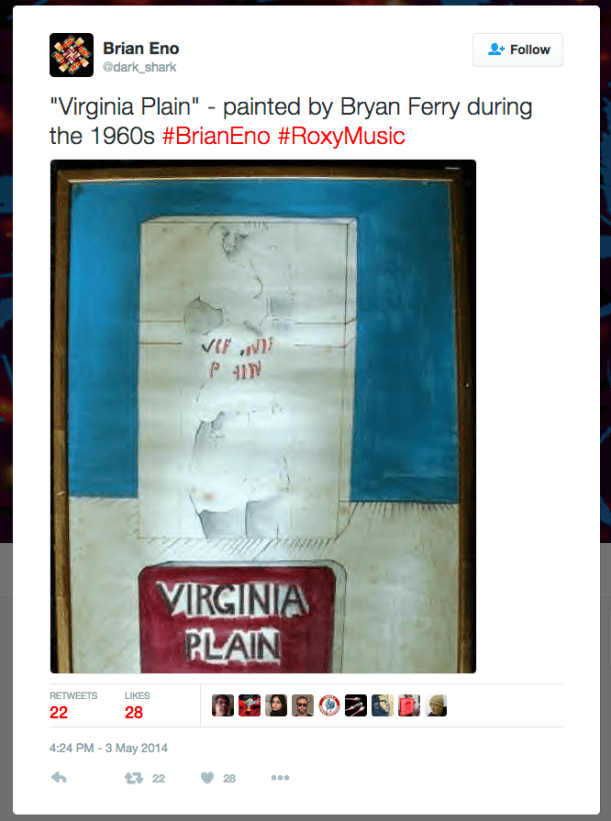
Catchy yes, and stylish as hell. The performance on Top of the Pops is career-defining, as was Bowie’s a month before with ‘Starman’. Both appearances coming so close together it was like a coordinated art happening, and it worked, launching the thinking man’s Glam, leaving Mud, Sweet, Slade, and the rest of the Nicky Chinn/Mike Chapman stable looking for new sound gimmicks. (The Glitter Band’s zoot suit sax was pretty nifty tho). Considering the nerves and inexperience of the band, Ferry‘s performance is absolutely masterful, steering the group with his stilted sneer and his pop-art poem, he rips into the first verse without flinching and delivers a Glam Manifesto.

Was there ever a hit single with an oboe in it? I don’t know. But I think the feeling was there should be. No other band at the time seemed to have one.

Phil Manzanera, to Mick Wall, 2014

Credits: “Baby” Jane Holzer photographed by David Bailey, capture Alfredo Garcia; breaking Roxy in America poster, Reprise Records; Virginia Plain single cover, Netherlands; clockwise, BF TOTP, Command Studios building exterior (today), Virginia Plain single cover, UK; inspirational cigarette package, Virginia Plains; Bryan Ferry original painting, capture Brian Eno twitter; clockwise, Richard Hamilton, Fashion Plate, The Tate Gallery, 69-70; Brian Eno mask; Phil Manzanera mask