For Your Pleasure

A song-by-song analysis of the lyrics and music of Roxy Music and the solo work of Bryan Ferry, Brian Eno, Andy Mackay and Phil Manzanera in the 1970s


Leave a comment

Piece of My Heart

Screen Shot 2019-04-03 at 7.21.20 AM
Piece of My Heart Bryan Ferry (cover version, These Foolish Things, 1973)
Piece of My Heart Erma Franklin (original, written by Jerry Ragovoy/Bert Berns, 1967)
Piece of My Heart Big Brother & The Holding Company (cover, Cheap Thrills, 1968)

Bert Berns – one of the greatest songwriters of all bloody time, it’s as simple as that!

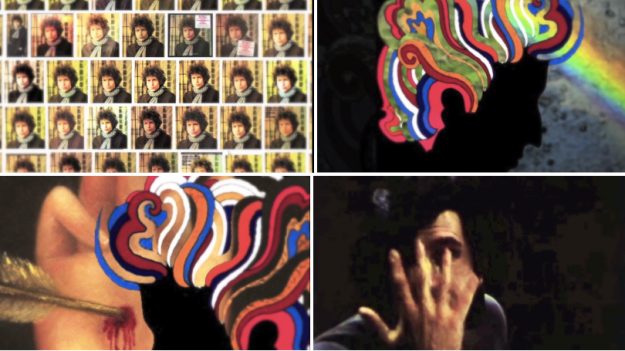
Keith Richards

By the time Bryan Ferry recorded Jerry Ragovoy and Bert Berns’ ‘Piece of My Heart’ in 1973 the song was already a classic – producing hits for Erma Franklin (Aretha’s sister), Dusty Springfield and Janis Joplin. Taking on a woman’s song can never be easy, especially when one version – Joplin’s – is probably the defining track of a short career – but Ferry may have felt he could deliver a more soulful version than the throw-away delivered by Scottish all-male group Marmalade in 1968 (he could, and he did). By the time Sammy Hagar covered ‘Piece of My Heart’ in 1981, the legacy of Erma, Dusty and Janis were calling for a moratorium on men covering the song (Marmalade fared better their mega #1 hit cover of The Beatles Ob-La-Di, Ob-La-Da. So much for originality in pop in 1969!).

Ferry does a surprisingly excellent version of ‘Piece of My Heart’ on his first covers album These Foolish Things – surprising in that, negating the quirks of his quavering vocal style, he sweetens his voice to a degree that releases him from the narrow vocal canvas of Roxy Music and points the way towards the fuller sound heard on Stranded and 1974’s solo hit ‘Smoke Gets in Your Eyes’. Certainly, the opening line of ‘Piece of My Heart’ is stunning in its affectation as Ferry allows himself to be close-miked and vulnerable (hear the echo of the studio standing between him and the words):

Didn’t I make you feel (pause) like youuuu (hold) are the on-ly (hold) one (hold)?

Ranking as some of the best phrasing of his career to date, Ferry’s vocal is so considered and melodic in these opening lines that you, the cruel lover, cannot doubt the sincerity of the question being asked regarding actions towards the tender and broken heart. From here though, the success of Ferry’s recording really depends on how you feel about the song, for the upcoming shift in mood relies on the sudden call-to-arms of the jilted lover, an approach most successfully realized by Janis Joplin’s raspy and impatient ‘Co-o-ome on, come on, COME ON, co-o-o-ome on and TAKE IT!/Take another little piece of my heart now, baby‘. Suddenly ‘Piece’ shifts from imploring sweetness – which suits Ferry’s delivery to a tee – to brokenhearted antagonism, a style better suited to Joplin’s in-your-face Texas blues, and a reason surely why Joplin’s version is the standard for the song and not Erma Franklin’s more sombre (even glum), take. To my ears ‘Heart’ loses melody and purpose at this point, and Ferry’s version does little to change the outcome. Similiar to that perennial yet irritating 60s chestnut ‘Take a Load Off Fanny‘, you can either live with it, or you can’t. Nothing ventured, nothing gained.

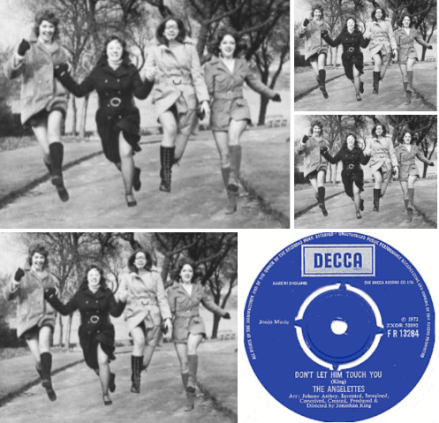
Designing his version of the song to be more Erma Franklin than Janis Joplin, Ferry has in the end to deal with the legacy and weight of the Joplin version. In order to do so he applies a three-prong attack: beef up the female contingency via the all-girl harmony group The Angelettes – who do a fantastic job on ‘Hard Rain’ and indeed on the entire album (see entry ‘Hard Rain‘); beef up the horns – courtesy of Average White Band founder Roger Ball, a multi-talented composer, saxophonist, keyboardist, songwriter and arranger; and be sure to beef up Ferry’s vocal reach and range of expression – listen to the line ‘You’re out on the street (looking good)/And you know deep down in your heart that it ain’t right‘ at 23-32s and you’ll see that performing other people’s songs gives Ferry an opportunity to have some fun and stretch his range outside of the classic Roxy Music mold, with the benefit that he returns to the Roxy state of mind rejuvenated and focused.

All the same, none of this handsome attention to detail and fine vocal delivery really gets to the heart of the song – nor does it add much to the song’s presence in the world. Part of the reason is that the origin and history of ‘Piece of My Heart’ carries a heavy burden of illness and breakdown – the song’s key associations stemming from composer Bert Berns traumatic physical heart ailment that killed him at age 38 and Janis Joplin’s traumatic emotional life that killed her at 27. Too young, in both instances.

For many people The Beatles ‘Twist and Shout’ is a Lennon/McCartney number, famously belted out by a flu-struck John Lennon to complete the legendary twelve hour recording of The Beatles debut album Please Please Me. Yet it was Bert Berns who co-wrote the song with Phil Medley (Berns later credited as “Bert Russell”) and was originally a hit for the Isley Brothers in 1962. A monumental track in the Beatles catalog – performed at the critical Sunday Night at the London Palladium and Royal Command performances (“the rest of you just rattle your jewellery”), and for the February 1964 appearance on the Ed Sullivan Show – this brush with Beatles mega-fame was not the only example of Bert Berns originality. Bert created Bang Records in 1965 with Atlantic music giant Ahmet Ertegün (Ray Charles, Stones, Zeppelin) Nesuhi Ertegün and Jerry Wexler.  At Bang Berns wrote and produced a string of influential hit records, including ‘I Want Candy‘, ‘Hang on Sloopy‘, ‘Brown Eyed Girl’ (Van Morrison’s first single), and other Van Morrison/Them hits like the amazing riff-heavy ‘Baby Please Don’t Go’, and ‘Here Comes the Night‘. As the movie tie-in proclaims – “Though not as widely known as his contemporaries, Bert Berns ranks among the most significant and influential of his generation” (Wiki) hardly sounds like an exaggeration.

Despite the success, Berns life was marked by frail health: as a teenager he suffered from a rheumatic fever so virulent he was left with a permanently weakened heart: he was told he would not live to be 21 (HoF). When he died of heart-attack at 38 years old on  December 30, 1967, he was building a house for his family, and it is here that the emotional weight of ‘Piece of My Heart’ can be found both in song title and the weight of its compelling history. As metaphor, ‘heart’ plays a significant role in Berns writing, particularly the love songs that evoke tender emotion – titles such as ‘Cry to Me‘, ‘Everybody Needs Somebody to Love‘, ‘Cry Baby‘, and of course ‘Piece of My Heart’ – all speak to a melancholy and sensitivity sometimes lacking from other song-writers of the era (see: Gerry Goffin, ‘Don’t Ever Change‘). ‘I cry all the time‘ Berns writes in ‘Piece of My Heart’ and it feels like time is closing in, unmistakably love-lorn and companionless: When you’re all alone in your lonely room/Don’t ya feel like cryin’, don’t ya feel like cryin‘ (‘Cry to Me’). Overtly sensitive, Berns played the music game like he was short on time, clock ticking, combining both hit-making savy with feelings of approaching loss and melancholy.

In general terms then, much of the Bert Berns catalog requires a degree of emotional weight in order to be told with insight and sincerity – the performer does not necessarily have to have a life of discord and strife – certainly Bryan Ferry would presumably not have too much to complain about as his career rocketed in those few short years between 1971-1973 – but the ability to get inside a crying Bert Berns song with the necessary gravitas is crucial. This is where Janis Joplin scored so highly with her cover of ‘Piece of My Heart’ – taken from the band’s album Cheap Thrills, their version peaked at No. 12 on the U.S. pop chart, but the song became associated with Joplin long after the pop charts lost their relevance. By the time it was a hit for the hippie generation Berns was dead, and Joplin was beginning her very brief fifteen minutes in the limelight. Janis Joplin adopted ‘Piece of My Heart’ like it was her own off-spring: a wounded heart-sick woman who had only three years to live from the day of the song’s release.

In David Hepworth‘s book “Uncommon People: The Rise and Fall of The Rock Stars” Hepworth provides an extremely sad set of details chronicling Janis Joplin’s life: she came from hard working class environment in Texas. Puberty – especially the torments of acne – produced a self-conscious sensitivity about her looks, a wound she spent the rest of her life trying to shake. One student University poll cruelly called her the “ugliest man on campus”. On route to fame, she drank too much and became addicted to heroin (“I wanted to smoke dope, take dope, lick dope, fuck dope”). In spite of her fame, she never stopped trying to get acceptance and validation from those who had hurt her back in her home town. In 1970, she received an invitation to attend her high school reunion. Announcing her intention to attend on the Dick Cavett show (no less) she told the nation-wide television audience “They laughed me out of class, town, out of State, so I’m going home.” On another occasion: “Man these people hurt me…It makes me happy to know I’ve made it, and they are just still plumbers like they were” (Washington Post).

Unsurprisingly, it was not a good home-coming, doing little to settle old grudges. She clashed with the towns folk, who did not take kindly to being slagged on national TV. She clashed with siblings. Her parents left town to go to a wedding. She even volunteered to the television crew filming the event to re-visit the most painful incidents of her teenage years. “By the end of the visit,” Hepworth writes, “when the booze and pills had worn off, she looked broken and heart-sick. No vindication. No triumph of life over the little people.” (Hepworth). Two months later she was found dead in a Hollywood hotel room, alone, victim of a heroin overdose.

Heart-sick is the primary metaphor for the two people most closely associated with ‘Piece of My Heart’, writer Bert Berns and singer Janis Joplin. Other singers – notably Erma Franklin and Dusty Springfield – have gotten close to the emotional pulse of the song, but did not bring the ultimate sadness that the tune seems to demand of its singers. For Ferry, it was a genre piece – much loved and respectfully rendered – but his version is, by design, all dressed up and professionally delivered, drawing its strength and interest as much from a wish to acknowledge the great songwriting factories of the Sixties (Goffin/King; Leiber/Stoller) as opposed to portraying an emotional impact per se. This is of course in keeping with the stylistic and ironic distance found in the songs of Roxy Music. And while the solo covers & standards albums provide an opportunity to claw in the distance with a knowing wink, Ferry does have to deal with the fact that the passage of time renders the anthems of the 60s golden oldies (after all).  Ferry re-invented ‘A Hard Rain’s a-Gonna Fall’ and delivered ‘River of Salt’ straight, and produced credible, enjoyable successes. When it came to ‘Piece of My Heart’ though the song stood before him like a slab of unbearable sadness, unmovable, beyond reach.

Recorded: AIR Studios, England June 1973.

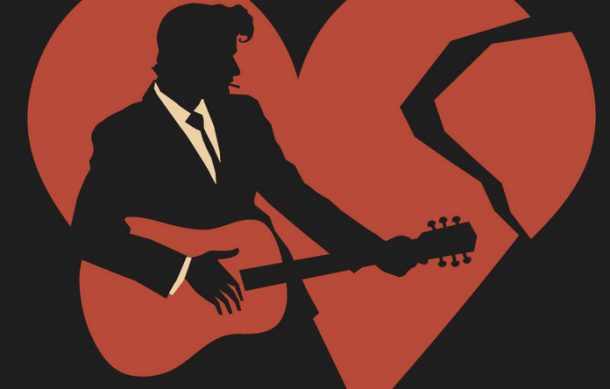
Credits: Poster for the stage musical The Bern Berns Story: Piece of My Heart; roxymusicsongs photo-composite left to right – BB in the studio/BB with Van Morrison/poster for the film Bang! The Bert Berns Story/BB with singer Solomon Burke; Pearl album cover out-take, Janis Joplin photographed by Barry Feinstein in Hollywood, Los Angeles in 1970; Janis foreign film poster for Janis: Little Girl Blue, 2015.

Next: Ferry takes on Elvis with ‘Baby I Don’t Care’ – and nary a karate chop in sight!

Leave a comment

Don’t Ever Change

Screen Shot 2019-03-27 at 6.41.57 AM
Don’t Ever Change Bryan Ferry (cover version, These Foolish Things, 1973)
Don’t Ever Change The Crickets (original, written by Gerry Goffin & Carole King, 1961)
Don’t Ever Change The Beatles (cover version, 1963)

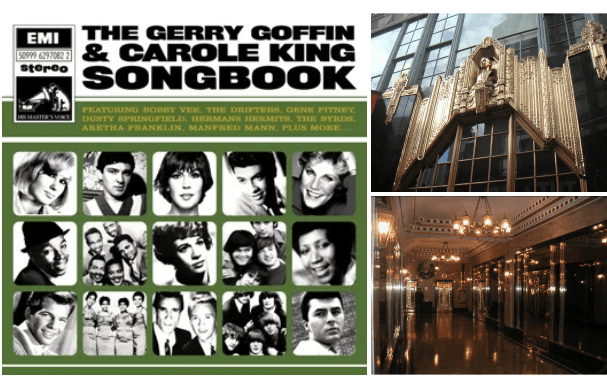
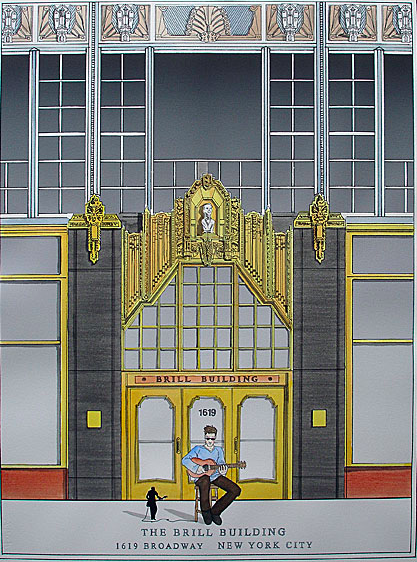
Few people outside of New York or the music business have heard of the Brill Building. Located at 1619 Broadway in New York City, just north of Times Square, the Brill was the place a great chunk of American pop music was written, arranged, recorded and sold, including ‘Don’t Ever Change‘ written by (Gerry) Goffin & (Carole) King, recorded by The Crickets (sans Buddy) in 1961, providing a Top 10 hit in the UK. ‘Don’t Ever Change’ confirms Bryan Ferry’s assertions that These Foolish Things was intended as a break from For Your Pleasures darker themes and mood. Having cracked ‘Hard Rain‘ and the rare ‘River of Salt‘ (“I’m probably the only person in England with a copy of that”), Ferry decided next to go to the Classic Songwriter’s Songbook and pull down a cut from the famous writing team of Goffin & King – the jaunty ‘Don’t Ever Change’ comes up next and it’s a nasty piece of work, despite its early 60s jaunty beat. The music suggests sunny optimism but the lyric delivers tyrannical rule.

‘Don’t Ever Change’ was written on the top floors (“on the roof”) of the The Brill Building, a stunning art-deco masterpiece that stretched along Broadway between 49th and 53rd streets. A mecca for songwriting talent, the Brill contained 165 music businesses at its peak in 1962. The songwriters worked to order, crafting melodies and lyrics that would define the late 50s and 60s: “You’ve Lost That Lovin’ Feelin'” (Phil Spector, Barry Mann, Cynthia Weil); Don’t Be Cruel (recorded by Elvis, written by Otis Blackwell); Do You Know the Way to San José? (the brilliant Burt Bacharach/Hal David); and so many more. Before Carole King become the mega-selling Carole King of ‘Tapestry’ (and the subject of the Broadway show Beautiful: The Carole King Musical) she was the teenager Carol Klein, married at 17 to 20-year-old lyricist Gerry Goffin. They got their break through their connection with Neil Sedaka, who knew Carole at High School and, in a last-ditch attempt at writing a hit before he was dropped from his contract, had composed and recorded a song called “Oh! Carol” (desperate, Sedaka studied the top singles of the day, mapped their melody, chord progression, lyrical styles and developed the ingredients of a hit single – he nailed it). Soon Goffin & King were writing compact, minor-miracle songs that sold by the truck-load – “Will You Love Me Tomorrow” (The Shirelles); “The Loco-Motion” (Little Eva); “(You Make Me Feel Like) A Natural Woman” (Aretha Franklin), and the fantastic “Pleasant Valley Sunday” (The Monkees).Screen Shot 2019-04-02 at 3.47.02 PM
In 1963, at the beginning of The Beatles rise to fame, John Lennon was quoted as saying that he and Paul McCartney wanted to become “the Goffin-King of England.”

‘Don’t Ever Change’ is one of Goffin & King’s lesser known songs, made to order like egg salad sandwiches at the local deli. Lesser-known in both status and (to be honest) tunefulness – The Crickets version did not chart in the USA – the song is nevertheless an interesting selection by Ferry who, presumably, had the budget and freedom to choose other Goffin & King songs, say, ‘On the Roof’ or ‘Will You Love Me Tomorrow’ (but not, thankfully, ‘Pleasant Valley Sunday’). Choosing to cover ‘Don’t Ever Change’ makes good sense in terms of These Foolish Things – it’s a breezy sing-along three tracks in – but there is something wrong with the song at root that Ferry cannot fix. His version is faithful to the original, with the benefit of being better recorded with deeper, fuller sound, but it neither detracts or adds to the original. The problem is not with Ferry’s take but the dishonesty of the song itself – ‘Don’t Ever Change’ pretends to be upbeat and idealist, but in truth it’s a mean song hiding behind a breezy disguise.

Carole King wrote in her memoir that her ex-husband Gerry Goffin – who she divorced in 1969 – suffered from mental illness following ingestion of LSD, eventually undergoing treatment with lithium and electroshock therapy, and later diagnosed with manic depression. Post-marriage Carole wrote her own lyrics, of which the mega-hit ‘You’ve Got a Friend’ (1971) is in character with her thoughtful and warm work. Contrast this with ex-hubby Goffin’s lyrical mauling of male/female relationships and you get the sense that long-term matrimony wasn’t in the cards, not with Goffin writing songs like ‘He Hit Me (And It Felt Like a Kiss)’ or ‘Chains’ or even the party-ending ‘Everybody Go Home’.  Goffin was talented, to be sure – his writing on the number 1 hit “Will You Love Me Tomorrow” show a sensitivity to the complications of sexual maturity, and ‘Pleasant Valley Sunday’ has a killer lyric (“The local rock group down the street/Is trying hard to learn their song/They serenade the weekend squire/Who just came out to mow his lawn”) – but lyricist Goffin typically informs his songs with a controlling hand that sets an uneasy tone that ‘Don’t Ever Change’ cannot escape and Ferry does little to interfere.

The premise of the ‘Don’t Change’ reminds us of ‘Chance Meeting‘ – male menace thinly disguised. You never wear a stitch of lace, we’re told – And powder’s never on your face / You’re always wearing jeans except on Sunday – you’re a tomboy in other words. Oh please don’t ever change, he continues, I kinda like you just the way you are. The narrator ‘kinda’ likes you, so be sure to swear allegiance to his idealized view of you for all eternity.

You don’t know the latest dance
But when it’s time to make romance
Your kisses let me know you’re not a tomboy  

In other words, I like you to be uninformed, awkward and sexually unthreatening – except when I’m having sex with you. And the final kicker: I know you would rather die than ever hurt me. ie. I know you would rather slit your wrists and bleed out instead of telling me what a jerk I am. And less we think that picking on songs written in the late 50s/60s is easy targets in 2019, we can hardly avoid the fact that the final sentiment of the song as a declaration of ultimate control. And for the tune itself – it would take the edge off perhaps if the music provided some respite from the high-handed rhetoric, but instead of sweetening its chorus, ‘Change’ hangs its hook on the descending riff “Sooo pleassse don’t everrr chaaange” that is in the chord of C#minor which in music theory contains the harmonic characteristic of despair, wailing, and weeping: “A passionate expression of sorrow and deep grief. Full of penance and self-punishment” (Ledgernote). Isn’t this supposed to be a love song? Run a mile girl, and then run another mile.

The Beatles recorded ‘Don’t Ever Change’ as part of a BBC session in 1963, and was not released until 1993 (just as Anthology was being compiled and the insatiable appetite for all things Fab Four was gaining force). Instantly forgettable in the Beatles catalog, ‘Don’t’ is notable only for the fact that it takes a rare Harrison/McCartney lead vocal. Perhaps we can see the song as an influence to solo-Lennon ‘Jealous Guy’, with its frank recognition of the failings of its controlling author John Lennon, and which Ferry, much to his credit, made his own in 1980 (“I guess I can relate to it”). You could never see the narrator of ‘Don’t Ever Change’ admitting that he never meant to hurt you, never meant to make you cry.

What is intriguing about ‘Don’t Ever Change’ is its pedigree as a production from the golden-age of late 50s early 60s song-writing partnerships. While ‘Change’ may not be the best of the Goffin & King canon – compare it to the uplifting ‘One Fine Day‘ – its appeal to Ferry during the selection process, in part, may be attributable to it being a part of America’s legendary Brill Building productions, and the idea of song-writing as craft, as a specialized art that required an apprenticeship and learned expertise.

Below Carole King describes the atmosphere at the “Brill Building” publishing houses of the period, a world perhaps that Ferry obviously wanted to acknowledge, promote, and – in contrast to his own brilliance-at-the-last-minute writing practices (see: ‘Mother of Pearl’ / ‘Love is the Drug’) secretly yearned for a Tin Pan Alley discipline of craft and professionalism that had been lost in the individualism of the singer/songwriter 1960’s and early 70s. ‘Don’t Ever Change’ – by the very nature of its title – may be a plea to never change, to return to a level of discipline that focused on the art of manufacturing hits for the youth market, a value and enterprise that Ferry himself discovered in 1973 with These Foolish Things and is still very much with us today as he recorded Bitter-Sweet (2019) with the Bryan Ferry Orchestra, an album that re-makes Roxy and solo Ferry songs in a style that re-creates the nostalgia of the past in a manner that makes it feel ever more potent in the present:

Every day we squeezed into our respective cubby holes with just enough room for a piano, a bench, and maybe a chair for the lyricist if you were lucky. You’d sit there and write and you could hear someone in the next cubby hole composing a song exactly like yours. The pressure in the Brill Building was really terrific—because Donny (Kirshner) would play one songwriter against another. He’d say: “We need a new smash hit”—and we’d all go back and write a song!

Carole King

Recorded: AIR Studios, England June 1973.

Credits: Brill Building drawing, New York Times; Goffin & King songbook/Brill Building exterior and interior; Goffin & King at the office, early 60s; Beatles and Crickets tackle ‘Don’t Ever Change’

Next: Ferry shoots for a Janis Joplin classic ‘Piece of My Heart‘ – you can’t fault him for brave choices!


Leave a comment

River of Salt

Screen Shot 2019-03-24 at 10.36.25 AM
River of Salt Bryan Ferry (cover version, These Foolish Things, 1973)
River of Salt Ketty Lester (original, You Can’t Lie to a Liar b/w ‘River of Salt’ )

One of the lesser-known cuts on Bryan Ferry’s first solo album These Foolish Things,River of Salt‘ was an obscure B-side single sung by American singer and actress Ketty Lester, written for her by Bernard Zackery, Irving Brown, and Jan Zackery. Never released on an album or as a single in its own right, ‘River of Salt’ is a miniature miracle that never found the audience it deserved. Lester had hit gold previously with the brilliant ‘Love Letters‘, a song that went to the top of the charts in both the US and the UK in 1962 (and one that David Lynch picked up for Blue Velvet). Chasing another hit single, Lester recorded and released three more ballads in 1962 but failed to repeat the success of ‘Letters’. That such a fine song as ‘River of Salt’ could be buried and forgotten as a B-side is testament to the quality of Lester’s output.

In choosing ‘River of Salt’ for the album, Ferry was in many ways drawing attention to his skills and appreciation for pop as a continuum, similar to the Art world reaching back into the (not so) distant past for its raw materials. Choosing well-known tunes was one thing – every one knows The Beatles, The Rolling Stones, Bob Dylan, Janis Joplin – but branching out into jazz and Motown, and giving the nod to artists like Nat King Cole, Ketty Lester, and Smokey Robinson was risky, especially for a working-class English boy from Newcastle. Expressing his love of the form, Ferry had very distinct ideas and tastes about music pre-rock: “The difference between then and now is that where you once had two almost clearly defined categories –  singers and songwriters – you now have a situation where all song-writers have to be performers … and sometimes it doesn’t work very well” (BF, 76). While rock-stars enjoyed referencing their rock roots – David Bowie’s Pin Ups/John Lennon’s Rock ‘n’ Roll – Ferry was reaching back to an earlier musical milieu. While not exactly singing The Great American Standards yet (that would come next in Another Time, Another Place) there was nonetheless an emphasis on classic singer/songwriter partnerships juxtaposed against the titan and preeminent standard These Foolish Things which, by choosing it to title the album, provided Ferry with a new mask: that of the lounge-lizard Romantic, the unrequited lovelorn personality whose confessions are framed by a writer’s self-conscious awareness of his own misery (and charm). A cigarette that bares a lipstick’s traces..

After the literary maelstrom that is Bob Dylan’s highly allusive and poetic ‘A Hard Rain’s a-Gonna Fall‘, Ferry pulls a fast one and gives his audience a 1 minute 48 second love ballad. As metaphor, ‘River of Salt’ is as basic as it gets:

River of salt
Flowing from my eyes
Seems as though
I can’t realize
My love is gone
She’s left this town
River of salt
Keeps flowing down

Metaphors can be exaggerated so much they become comical (as in, “Her tears were a river flowing down her cheeks and beyond”), but ‘River of Salt‘ has an innocence similar to Ferry’s cover of ‘Smoke Gets in Your Eyes‘ with its root metaphor of a lovely flame that dies, creating smoke, then tears (They said someday you’ll find/All who love are blind). In ‘Salt’ the bereaved lover also sheds unending tears while mourning the absent sweetheart. Although simple, the lyric may be onto something – there are no pure salt rivers in the world (according to Earth Science) and so the song taps into the Romantic idea of a bitter loss stretched across eternity, the Artist (hand on brow) writing reams of poetry à la climbing mountains, swimming oceans, walking thousands of miles to prove nothing less than everlasting love and commitment. Ferry knows the pulse of the song is earnestness tinged with a knowing wisdom and delivers it as such.

The musical set-up on ‘River of Salt’ is fantastic, and the track can be seen as a breakthrough in romantic sincerity for Ferry, a writer who in his own work prefers distance and irony to get to the heart of the matter. Richly recorded, bass and drum set the pace and are framed by a lovely electric piano chord introduction, laid down by professional session player Dave Skinner (who played for Roxy on the 1979 ‘Manifesto’ tour and solo Manzanera and Ferry records). By contrast the Ketty Lester recording is a bit stiff in these opening bars, with the double bass prominent but not particularly well-recorded, and the corresponding drum accompaniment sounding like it is being played with cutlery. In contrast, Ferry’s cover version is like hot chocolate in front of a roaring fire and white tiger rug. His vocal is (almost) stripped of its trade-mark quiver, and is delivered straight: Bryan Ferry the lounge-lizard/troubadour is born here, in this track, and in under two minutes he has set the stage for the appearance of his white tux and dickie-bow, glitter eye-liner be gone.

In most respects These Foolish Things is a love album. Songs like ‘Tracks of My Tears’; ‘Don’t Ever Change’; ‘Loving You Is Sweeter Than Ever;’ ‘Don’t Worry Baby’; ‘River of Salt’ strive to capture and represent love’s sentiments in all its various colors and Ferry is keen to present them to a young 70s audience.  What is telling is that he tackles these originals from a vantage point of sincerity and eagerness to please, as if covering a track like ‘River of Salt’ note-for-note is the purest form of flattery. After dealing with love as a postmodern game of signs and signifiers – ‘Re-Make/Re-Model’; ‘Ladytron’;Editions of You‘ – Ferry shifts his writing towards regaining (or finding) love in its full range of emotions. He does so from two directions: writing his own songs and covering the songs of others. While For Your Pleasure is cold to the touch, purposely distancing love in favor of a blow-up sex doll or bogeyman sex, These Foolish Things tackles love as an emotion lived and experienced by other people – in its 1 minute plus Ketty Lester’s ‘River of Salt’ has all the emotion it can handle – and so in his musical arrangement Ferry chooses not to mess too much with the established formula, as if by not doing so he might spoil a song that had once provided a lifeline to his personal feelings and experiences. For Ferry, Foolish Things was only “half successful” (NME) because he felt he did not experiment enough on the source material. If he had done so with ‘River of Salt’ it is very likely that the Third Roxy Music album Stranded would have been a very different recording – mature, yes, but insulated and aloof, instead of warm and tropical, full of emotional heat. Without ‘River of Salt’ it’s possible we might not have had ‘A Song for Europe’ … and where, dear friends, would that have gotten us?

It often seems that Ferry is using his music, not as an end in itself, but as an attempt to create an identity for himself, a reality beneath all the style.

Allan Jones

blue ferry
Next: The template for ‘Every Breath You Take’: Ferry covers ‘Don’t Ever Change‘, the same team that brought you hits from The Partridge Family, The Hollies, The Cookies, and Rod Stewart – Ladies and Gentlemen, Gerry Goffin and Carole King!

Recorded: AIR Studios, England June 1973.

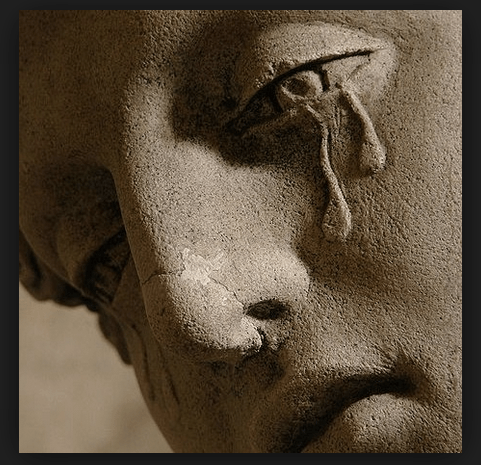
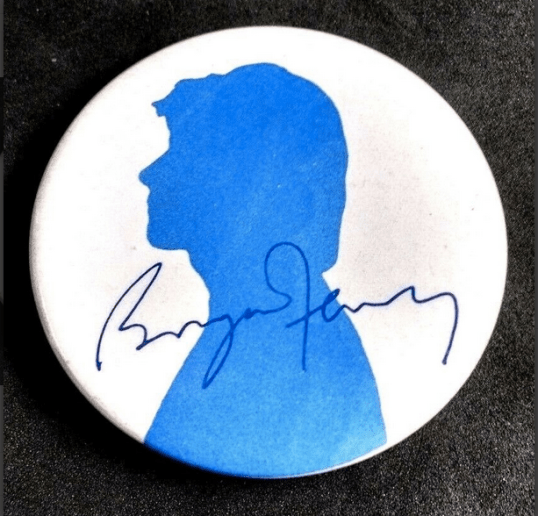
Pics: Detail of the 1672 sculpture Entombment of Christ, showing Mary Magdalene crying; RMS composite, ‘River of Salt‘ original pressing & original Love Letters LP; signed BF Foolish Things; below, it’s tough to make a living in the music business: Ketty Lester in Blacula (1972).

Til next time!
ketty


5 Comments

A Hard Rain’s a-Gonna Fall

Screen Shot 2019-03-04 at 3.59.57 PM

A Hard Rain’s a-Gonna Fall Bryan Ferry (cover version, ‘These Foolish Things’ 1973)
A Hard Rain’s a-Gonna Fall Bob Dylan (original, ‘The Freewheelin’ Bob Dylan’ 1963)

Oh, where have you been, my blue-eyed son?
Oh, where have you been, my darling young one?

I. Where Have You Been?

There is a moment at the beginning of Ken Burns heart-rending documentary The Vietnam War when Bob Dylan’s A Hard Rain’s a-Gonna Fall provides the soundtrack to a chilling and moving prophecy: something dreadful and abhorrent is on its way, and the blue-eyed sons of a generation are going somewhere they may never return from, and if they do return, they may never be the same again.

Another blue-eyed son – Bryan Ferry – takes Dylan’s anti-war anthem and turns it inside out, downplaying and de-emphasizing the poetry while heightening the music and tunefulness of the original. It’s a fair trade, and one that still stands as an astonishing cover version of a folk classic Strikingly original and as tuneful as hell, Bryan Ferry chose to re-record the song as the lead track on his first solo album These Foolish Things, and in doing so scored a surprise hit, reaching number 10 in the UK charts in October 1973 (Viva). Success came at a price however: the single was controversial for its stomping (literally) on sacred ground, and it also created a schism in Bryan Ferry’s writing – a trend towards  minimizing lyrical density in favour of cover songs and a heightened mainstream sensibility  – an inclination, thankfully, still far away on the horizon as 1973 unfolded, they year that delivered two classic Roxy Music albums (For Your Pleasure, Stranded) and a surprising, even innovative, “one-off” solo release in These Foolish Things. As Ferry drily noted, 1973 “was some year of work.”

As Brian Eno left the band in July 1973, the Roxy Music band-members felt the pain of losing their original line-up and their hard-earned musical identity. Andy Mackay felt angry enough to come close to quitting Roxy and joining Mott the Hoople (with whom he had played on their single ‘All the Way to Memphis‘ during the recording of For Your Pleasure). The saxophonist even insisted on creating a solo personae in the vein of a Ziggy Stardust alter-ego, as if to hedge bets for the future. (“I’m changing my name to Eddie Riff,” he told the NME in the same issue that Eno’s departure was announced). Phil Manzanera recalls the period as being, understandably, highly contentious and difficult: “When Eno left we were in danger of imploding completely” (Rigby, 86). After some breathing space and tempered negotiations – Manzanera and Mackay would receive writing co-credits on future Roxy Music recordings – the band decided to continue, Manzanera for one observing that “I hadn’t had my fill of being in a pop band yet” (Stump, 99). Band members also felt that doing solo albums would be a good way to relieve creative tension and so followed the two Brians on their solo album path, while retaining the Roxy Music brand as their raison d’être:

What’s interesting about Roxy is that most people in bands don’t do solo albums until they’ve been together for years. We all started doing solo albums almost immediately. We always had our own agenda, and as long as there was enough common ground we stayed together. There was always a possibility I could have left when Brian Eno did. I felt very loyal to him.

Andy Mackay

For his part, Bryan Ferry still felt that Roxy Music was the main thing, yet considered the Roxy ‘state of mind’ as malleable and applicable to other art projects. So he set upon the idea of recording an album of pre-written “ready-made” songs, some standards, some well-known classics, all of them personally important to Ferry as they spanned several decades from the 1930s through the 1960s, re-creating in spirit the set-list of his previous R ‘n’ B band The Gas Board.  Confiding to Melody Maker that “The people who did the best songs were pre-Beatles” Ferry was keen to surprise his audience, so much so music writer Hal Norman maintains that by its very contradictory nature These Foolish Things “remains as much of a revolution in the head as the great LPs of ’67 or ’77.” While this errs on the side of hyperbole – The Beatles and Sex Pistols be damned! – there is little doubt that Ferry was in new territory in 1973: for the post-60s generation originality was King, and anything less than an artist writing, recording and playing songs of striking originality was met with suspicion. Covering other people’s tunes demonstrated a lack of talent, a throw-back to Frank Sinatra‘s generation and the jazz standards of the 50s. No matter that John Coltrane had savaged the old Broadway chestnut ‘My Favourite Things‘ to create a be-bop revolution, the current thinking was that a Neil Young or a James Taylor wrote from their own observations  – meaning and expression was a gift to the audience by Artist, who toiled in everyday experience to bring the fruits of their insight to the masses.  Even Ferry was initially cautious in his ambition. “It wasn’t that I wanted to have another career,” he explained,  “I saw it as a one-off album”:

I must have been encouraged to do [a solo album] by Mark and David [Enthoven]. I thought it would be great to do a different kind of album to For Your Pleasure, one which wasn’t as dark and had a lightness in the way sinartrathat, say, Picasso does ceramics which are fun, and also does dark and mysterious work as well. I’m sure the album had good and bad repercussions. It opened Roxy Music up to a more mainstream audience. On the other hand, I might have pissed off the purists.

Bryan Ferry

Moving fast then – ‘Foolish Things’ was recorded in June 1973, with single and album released in September and October (at the same time Roxy went into the studio to record ‘Stranded‘), Ferry wisely stayed within his comfort zone by working with the members of the established Roxy Music machine – Paul Thompson was invited to play drums; Phil Manzanera played guitar on the Beatles cover of ‘You Won’t See Me’; For Your Pleasure musician and friend John Porter played bass and co-produced with Ferry; AIR Studios was re-booked; John Punter was back for co-production and engineering assistance; and as per the previous two Roxy albums, cover design was by Nicholas De Ville and photography was by Karl Stoecker. Andy Mackay and Brian Eno did not participate – which should come as a surprise to absolutely no one given the subterfuge and fall-out of the summer.

Utilizing Marcel Duchamp‘s idea of ready-mades or ‘found-objects’ – a pop-art trick Roxy Music had used so well on ‘Virginia Plain‘ and ‘Editions of You‘ – Ferry was keen to stick to mentor Richard Hamilton’s credo that art should be “Popular, transient, expendable, low-cost, mass-produced, young, witty, sexy, gimmicky, glamorous, and Big Business” (Hamilton). This opened the way to throw another brand into the mix – that of the solo star, a beefcake teen idol called “Bryan Ferry”. The message to his audience and fellow Roxy band-members was clear: damn the torpedoes, I have ideas to burn, I can make it on my own. In doing so Ferry hit the nail on the head: the record sold by the bucket-load.
Screen Shot 2019-03-06 at 7.04.53 AMII. Who Did You See?

‘Hard Rain’ starts with the plaintive and familiar sound of Bryan Ferry’s electric piano tapping out a D-chord intro: it’s telling that the rhythm is slightly choppy, irregular, a human touch  – until four short seconds in, when the sound of violins slowly creep into the mix, precise, panning across both speakers. Ferry takes a breath at .09 and the voice is introduced, mid-range. Paul Thompson kicks in at .16 with a deft double-stroke roll and we’re off to the races, the rhythm catching fire for an extremely original and entertaining 5.19 minutes of pop perfection.

The introduction and selection of ‘Hard Rain’ for this, the opening cut on Bryan Ferry’s first solo album, is inspired and provides context for much of what follows for Ferry and Roxy Music in the 70s. Take innovative song selection and album sequencing for starters: in its original format Dylan’s track is a brilliant, if musically repetitive, question-and-answer poem that was ten minutes+ plus live, and six minutes fifty-five recorded – influenced by French Symbolists Arthur Rimbaud, Stephane Mallarme, and others, Dylan took the question and response format from multiple sources, some religious, one of them in the style of a centuries-old Scottish border ballad called “Lord Randal” with its question-and-answer format: “Oh where have you been, Lord Randal, my son; And where have you been my handsome young man” (FT). All sources helped imbue his song with striking images of conflict and apocalypse. The effect was a rain-driven “surrealistic downpour” (Riley) that became increasingly important and prescient for a country who, in 1963, was incubating hostility in Vietnam. (In another world, in some faraway galaxy, it is nice to imagine a society that heeds the warnings of the poets and assigns the Generals and war-mongers the noble job of grocery shopping and child-rearing). Intensely cinematic, Ferry’s choice is inspired – so wrong it’s right – and the sequencing on the record surprises as we move from ‘Hard Rain’s five minutes plus (the longest track on the record) to Ketty Lester‘s ‘River of Salt’ (the shortest).

The first few moments of ‘Hard Rain’ also introduce a significant moment in the history of Roxy Music: the debut of new band member, the fantastic and compelling multi-instrumentalist Eddie Jobson.
Screen Shot 2019-03-08 at 7.20.59 AM
“Who can replace Brian Eno?!”
Andy Mackay fumed to the NME when the split was announced to the music papers in July 1973. The answer to Andy’s question is, Eddie Jobson can.. Or, to be more precise, no one can. But Eddie Jobson was not a replacement for Brian Eno – he wasn’t hired to mix sound at live concerts, or manipulate Phil Manzanera’s guitar in the studio; he wasn’t hired to provide theories of being in a rock band or explain the role of ‘non-musician’ – quite the opposite, the gifted and multi-instrumentalist Jobson was hired to enhance and strengthen the musicianship of Roxy Music, to provide a wide breadth of support for live concerts, where keyboards, synth, violin and more could be supplied as the songs required, while Bryan Ferry took center-stage as singer and centerpiece of the live Roxy line-up. This view of Roxy as a professional and much sought-after viable recording & live music entity was what had kept Bryan Ferry awake at nights during the writing and recording of For Your Pleasure. Now the message had clarity – the goal of all marketing initiatives –  resulting in no audience confusion on how to receive and enjoy the b(r)and. Glamour. Style. Pop and rock perfectly captured and presented – the best integrated guitar, drums and saxophone in England, and not an earthworm in sight. Now the parts were in place, Ferry began to extract the spoils of war and put the (very young) 18-year-old Eddie Jobson to work.

“Did you know I was the entire orchestra on Bryan’s first album?”

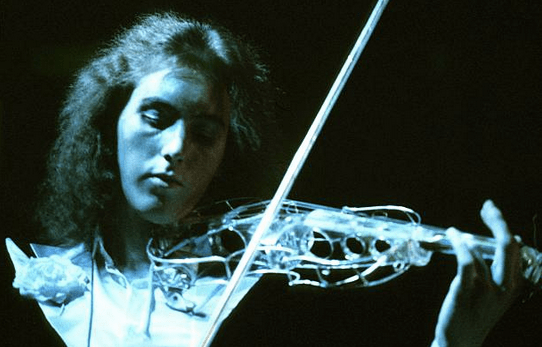
Whether by grand design or sheer luck – Bryan Ferry was familiar with Eddie Jobson via a close family connection, both men hailing from North England, County Durham – Jobson was an incredible find for Roxy Music, enhancing the band’s sex appeal via his youthful presence (he was eighteen when he joined Roxy) and musical skill, topped off with a visually arresting translucent plexiglass violin that was as thrilling to look at as it was to listen to. Screen Shot 2019-03-17 at 9.43.54 AMMoreover, Jobson contributed immensely in the studio, not only honing and applying an exquisite taste in musical embellishment, but also bringing his creativity and skill to some of Roxy’s best recordings (‘Song for Europe‘, ‘Out of the Blue‘ and ‘Sunset‘ among many). And so too is the case with Ferry’s first solo outing – if you ask most people about Ferry’s cover of ‘Hard Rain’ it is the strident and multi-layered strings that are most remembered. “I came up with the choppy strings,” Jobson recalled of the sessions:
My credit on [These Foolish Things] casually says “strings” but I don’t think people realize that I not only wrote all the string parts, but I individually over-dubbed the violins, violas and cellos until my fingers were blistered. I also added the double bass parts by playing them on viola at double speed and then slowing down the tape (Jobson, 141).

The intensive string over-dubs changed the music beyond recognition – the Dylan original was a classic finger-picked ballad/protest ballad in the vein of folk icon Woody Guthrie (with whom the unknown 19-year-old Dylan visited regularly during the famous folkie’s final years).  The finger-picking style – with thumb picking out the base line and middle fingers picking out the rest of the chord – is a great vehicle for writer/poets who prefer to place emphasis on sound and alliteration, the steady rhythm serving to unclutter the poetry and message. John Lennon’s ‘Working Class Hero‘ is a classic of the genre, where the beat is steady and simple throughout, yet the message is barbed and to the point. In this regard, Dylan’s ‘Hard Rain’ is designed to be listened to. Indeed, Dylan took the question and answer format in part from the sacred text Child Ballad No. 12 Lord Randal and it does carry a sense of religious fervor that one suspects Ferry responded to – he didn’t care much for the political aspects of the song (“I can’t be bothered with all that Cuba Crisis stuff” (Viva)), but the devotional format would have made sense with Roxy recording the evangelical ‘Psalm‘ from Stranded almost concurrently with ‘Hard Rain’s’ release.

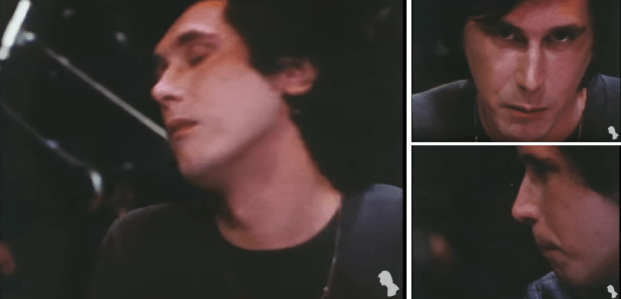
Lyrically, Ferry largely keeps to Dylan’s word choice, dropping only the repeated personal pronoun – instead of I’ve stumbled on the side of twelve misty mountains, Ferry’s version go straight to the verb form as in “stumbled on the side of twelve misty mountains”/crawled on six crooked highways and so on. These minor edits keeps each line moving at a fair clip. Ferry’s cover of ‘Hard Rain’ also adopts the Q&A format, with each verse the narrator asking a specific question, with answers coming from the young son. Verse 1 asks Where have you been? (Oh, where have you been, my blue-eyed son?/Oh, where have you been, my darling young one?). Verse 2 asks What Did You See? Verse 3 asks What Did You Hear? 4 asks Who Did You Meet? And the final verse asks the most important question What Will You Do Now? Ferry used this call-and-answer format to maximum effect in his famous (and very early) promotional video for the single: sitting at his Grand white piano, squeezed between the instrument’s cover and soundboard, Ferry looks directly to his viewers and asks his questions. A separate camera picks up the dialog as he turns his head dramatically to answer and describe what he sees/hears/meets (Heard the song of a poet who died in the gutter/Met a young woman whose body was burning/Saw a etc). An important aspect of Dylan’s song is retained and dramatized in the promo video as we, the audience, become the ‘blue-eyed’ son making our way through this tangle of poverty, ignorance and violence.Screen Shot 2019-03-17 at 9.36.29 AM
III. What Did You Hear?

By the time the first verse is underway, Ferry, Jobson and Thompson are inter-locked, moving swiftly towards twelve misty mountains and six crooked highways. At .44 we hear the winning sound of The Angelettes affirming Ferry’s conclusion that it’s a hard (hard!) hard rain’s a-gonna fall.” The Angelettes – Pat, Jan, Sue and Julie – were a harmony girl-group from Manchester, and along with Eddie Jobson, serve as a North England talent coup for Ferry, as he hired them for the AIR studio recordings and for his (now lost) appearance of the song on Top of The Pops. This is the first instance in a long career that Ferry uses female singers for vocal accompaniment – an attribute used extensively for future solo and Roxy Music recordings. While the commercial fortunes of The Angelettes never matched their skill for harmony and innovation, the fact that they contributed so much to ‘Hard Rain’ is often over-looked due to the humorous rag-tag chorus of the promotional video (complete with cross-dressing Coronation Street alumni), yet they shine on the album, particularly on ‘Hard Rain’ and the successful Beach Boys cover, ‘Don’t Worry Baby
Screen Shot 2019-03-21 at 9.28.25 AM
If Verse 1 sets the ball rolling with heavy rock, strings and dynamic drumming, then Verse 2 builds the sound picture with the introduction at 1.05 of John Porter’s guitar. In an effort to paint pictures in words and music, the guitar is the first instrument that sonically responds to the horror of the lyric, recoiling with a shake and a twang at I saw a room full of men with their hammers a-bleedin’ (1.21). Intending the song to be heard (before it was seen) Ferry applies sound-effects liberally: “The sound of a thunder” produces thunder-claps at 2.02;  “Heard the roar of a wave” and we hear the sound of waves crashing at 2.08; Heard many people laughin’ brings forth studio laughter (2.17) and so on. In fact, it may be the effects and laughter that got up the noses of hardcore Dylan fans and critics – how can laughter be appropriate in such an apocalyptic song? – but this is both the attraction and ultimate success of this cover version – it’s grand, crass, pompous (in the best 70s sense), ironical, inspired, and above all, reverential. Taking on the mantle of the poet who “died in the gutter” new poet Ferry assumes the role of Dylan the Clown (who cried in the alley) only to be mocked by the chorus – announcement of his death is met with a sarcastic “awwww” at 2.21. Sounds like everyone in the control room – including the Angelettes – had fun with that one.

Over the course of the five verses in this six minute song, music and effects are carefully added to build a tapestry of ominous visual images and puns. The question and answer effects continue (black dog: “howwwl“/rainbow: “sprinkkkle”), yet there is a sense at the half-way point that we could conclude here and all would be fine, slow fade. A good cut for the BBC and the singles market.  But the story is not over: we have been, seen and heard, but have yet to absorb the lessons of human history, so the young one volunteers to “a-goin’ back out ‘fore the rain starts a-fallin’.” Ferry is up for a-goin’ back out, and carries the second half by beefing up the instrumentation and vocals for the remaining two minutes 40 seconds of the song.
Screen Shot 2019-03-20 at 4.57.29 PM
Facing an emotional challenge – the young son will most certainly face death if he goes back out into the black forest (Where the executioner’s face is always well hidden) – the chorus and guitar build their lines to a harmonious climax. But the song is designed for Ferry by Ferry, the new solo star, so he creates room in the final verse to highlight his vocal performance and power, raising his naturally odd inflections across several closing lines:

Where the people are many and their hands are all empty
Where the pellets of poison are flooding their waters
Where the home in the valley meets the damp dirty prison
Where the executioner’s face is always well hidden
Where hunger is ugly, where souls are forgotten

Ferry sings brilliantly here as he spits out Where the people /Where the pellets/Where the home/…/ culminating in a fantastic staccato rhythm that requires an (audible) sharp intake of breath to get through the climax:

And I’ll tell it and think it and speak it and breathe it
And reflect it from the mountain so all souls can see it

Here Ferry declares his right to sing Bob Dylan’s ‘A Hard Rain’s a-Gonna Fall‘ and re-interpret this classic folk song, turning it away from its acoustic roots to the world of foot-stomping teenage-rampage Glam. It matters not a wit, the message is the same: he will tell it, speak it, and continue to breathe it, for truth never goes out of style. A song re-made without compromise, Ferry gives a giant to-hell-with-you to the snobs and critics, and climbs to the top of the mountain streamline as a beacon of light, a reflector of the new modernity.

In Memoriam: To all the men, women and children killed and injured in New Zealand, March 2019. To the families of those left behind, we are sorry for your loss.

Screen Shot 2019-03-21 at 3.39.38 PM
You may have chosen us but we utterly reject and condemn you.
New Zealand Prime Minister Jacinda Ardern

Next month: Brian tackles a sad-song metaphor – ‘River of Salt’

Recorded: AIR Studios, England June 1973. Various different versions of ‘Hard Rain’ release potent emotional energy – The Staple Singers engage in a powerful 1968 call-and-response that maintains a steady beat, and intensifies before the final verse; so too with Joan Baez, her unmistakable voice holding us in rapt attention. By far the most emotionally charged and profound take on the song, building to tears by the final verse, is Patti Smith‘s Bob Dylan’s acceptance speech at the 2016 Noble Peace Prize. At 1.54 Smith completely freezes (her word), and there is stunned silence from the Nobel crowd as she tries to get back to the verse lines. With a disarming “Sorry…I’m sorry.. Can we start that section.. I’m sorry…I apologise.. I’m so nervous” and a wide smile, she gains a well-earned round of applause. Emotion and good-will fill the room. It’s a profoundly moving moment, and Smith tackles the tough last verse cleanly with her frailty acknowledged and her humanity intact.

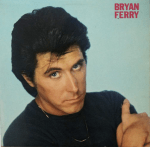
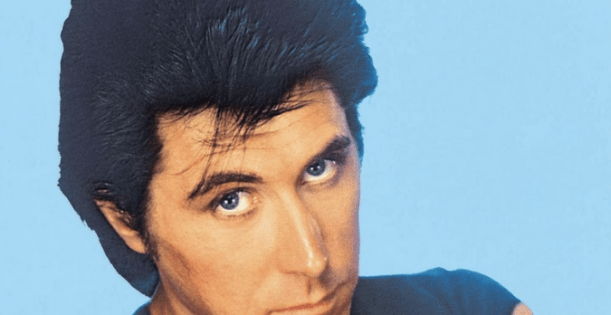
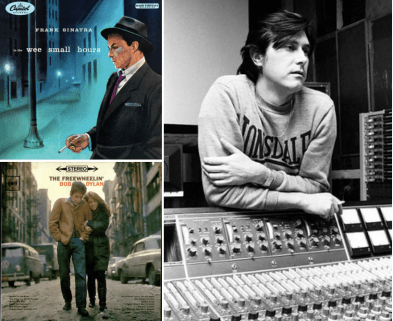
Pics: BF close-shot cover These Foolish Things; RMS composite Frank Sinatra, Bob Dylan, Bryan Ferry (in studio recording TFT); various editions of the single; Eddie Jobson; EJ and BF making boogie at the old Grand piano; RMS composite from ‘Hard Rain‘ promo video plus some Bob Dylan shots pinched from the internet; RMS composite the magnificent Angelettes; RMS composite official BF ‘Hard Rain’ promo vid.


Leave a comment

Bitters End

Bitters End (Ferry), Roxy Music, 1972

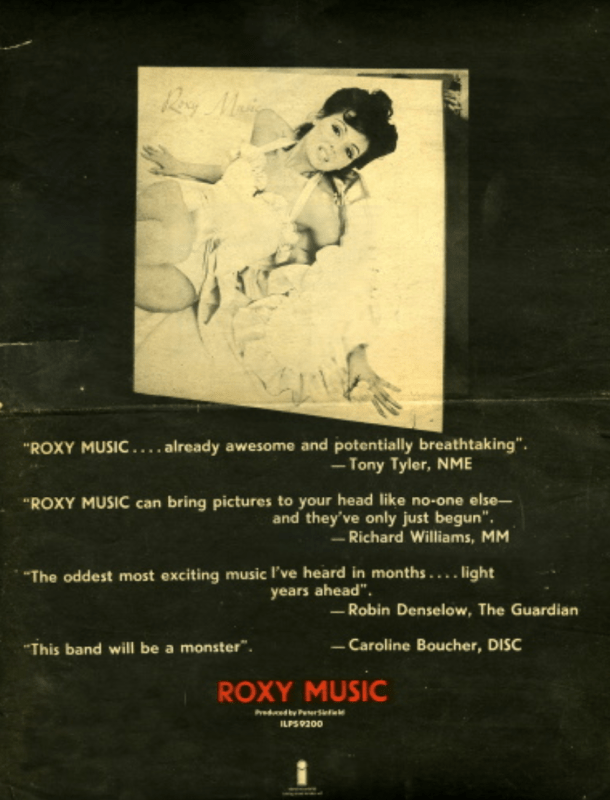
Roxy Music was recorded at Command Studios, a refurbished studio formerly owned by the BBC (Piccadilly 1) in central London. Command lasted for only a few years and was beset by management rows and technical troubles (the train noise from the Piccadilly tube would spill into recordings). Nevertheless even though the studio didn’t last long, in its short span it was responsible for capturing some killer sessions: Brian Eno’s  No Pussyfooting; King Crimson’s Lark’s Tongue in Aspic; and Slade Alive! (don’t laugh, Jimi Hendrix manager Chas Chandler set up a Slade fan club concert in Command’s large studio that by all accounts was riotous.  The subsequent album launched Slade’s commercial career – three singles went straight in at No 1, one of them selling half-a-million copies in its first week). Command Studios also gave us, of course, the debut Roxy Music album.

Roxy Music was recorded and mixed in less than a month for a modest sum (£5,000). Peter Sinfield’s production of the album has been criticized over the years, and while there is no doubt that the thin sound and high-pitch tremolo of Bryan Ferry’s vocals do take some getting used to, it is the context and circumstance that serves to define the sound of the album. The producer and the studio were not a fault – Sinfield did record Virginia Plain a few months later at Command Studios, and no way can anyone say that classic single does not jump out of the speakers! The issue, if any, is the fact that the mandate for the first Roxy Music LP was to be different, to try different styles and moods, to upset or stretch expectations about what pop could do. And this meant sounding different, and getting under the skin with something we hadn’t heard before.

screen-shot-2016-05-08-at-7-39-02-pm
The first record was really exciting to make, because it had so many different flavours.
Bryan Ferry, interview, Bracewell

‘Bitters End’ is the last cut on a musically diverse album. The lyrics are largely throwaway, though of course Pale fountains fizzing forth pink gin is a direct sign-post to the pink colour-assortment of the (soon-to-be) famous album cover. The image of decadent luxury, and old Brit cultural snobbery is embedded in the song, rife with doo-wop singers, a quivering Noel Coward vocal delivery, and some nifty sax. It’s a tuneful song, highly listenable with a subject matter and lightness close to The Beatles ‘Savoy Truffle (Creme tangerine and montelimar/A ginger sling with a pineapple heart). The party laughter and clinking of drink glasses that opens the album has its closer here, and with a wink and a nod Ferry summarizes the completion of the album – a celebration for the band – and its delivery, perhaps, to the unsuspecting record company:

Give now the host his claret cup (the host of this party, Island Records owner Chris Blackwell)

And watch madeira’s farewell drink (British cocktail: In a 2-oz. sherry glass, stir madeira with bitters and Campari. Serve)

Note his reaction acid sharp (host’s unfavourable reaction to the album’s diverse contents)

Should make the cognoscenti think (the intelligensia or ‘smart’ people to whom the record’s stylistic and lyrical pastiches and irony was aimed).

The record did appeal to the cognoscenti, and many more listeners besides: an immediate critical and commercial hit (16 weeks in the UK charts, with a high of #10). Roxy Music launched the careers of the band and its members, influenced countless others, and divided critics created who debated whether Roxy were a “real” band or just a bunch of art students taking the piss. The first single Virginia Plain would cement the band’s success and demonstrate that the group were more than just a gimmick. The following album, For Your Pleasure would deliver the first masterpiece.

Recorded: Command Studios, London, March 1972
Pics: Roxy Music album art; Roxy Music publicity shot (www.bryanferry.com/roxy-music-history-tab/#history); Command studios (www.gearslutz.com/board/so-much-gear-so-little-time/346235-1972-command-studios-piccadilly-england-what-gear.html); David Enthoven (www.theguardian.com/music/2016/aug/12/david-enthoven-obituary)

In Memory

enthoven-large_trans_nvbqzqnjv4bq7ie8pksw6zjj0woabk6siwo7j_tcyqxz1oc-nhcr2rk

David Enthoven (1944 – 2016), former co-manager, Roxy Music

Roxy Music were not to everybody’s taste…they were taking good, straight forward songs and treating them, and doing something quite madly avant-garde with them…It was “fun” music…so fresh and new.

David, interview, Bracewell

Graham Simpson (1943-2012), Roxy Music co-founder and bass player

Roxy Music were not so much a hybrid of musicians with different influences but were independent musicians with their own individual voice that work well together

Graham, interview, bryanferry.com

Graham Simpson was a founding member of Roxy Music with Bryan Ferry, and was an excellent bass player and contributed much to the first Roxy album (listen particularly to the amazing bass work in Sea Breezes). In 1972, Graham lost his mother to cancer and he was depressed. The life-style and pressure of being a member of an up-and-coming band did not alleviate his increasing mental health problems, and unfortunately, Graham had to leave the band in April 1972, after the first album and his wonderful contributions were recorded.

The Bryan Ferry website has an excellent page dedicated to Graham. (http://www.bryanferry.com/graham-simpson-1943-2012).  Please visit as often as you can, and be sure to check out the excellent short film called Nothing But The Magnificent which explored the disappearance, re-emergence and ultimate path to redemption of Graham Simpson.


Leave a comment

Sea Breezes – Part 2

x_seabreeze_diptych_137

so help me, so many questions? & are the answers naked to the eye – or ear? or are they undercover?
Simon Puxley, Roxy Music inner sleeve notes (72)

The first Roxy album asks questions, and offers answers grudgingly, undercover often, and for the ear mostly. The 2nd half of Sea Breezes makes an abrupt break with the tone and mood of the music that came before it. What is cool and interesting is that the objectivity of the piece shifts to a mind mediating on what that experience is. Breaking down the track we can read it as follows:

Waves (0.1-0.37)
Eno sets the scene with a mellotron seascape (It’s the first thing anyone does when they get a synthesizer, makes the sound of waves with it – BE). For him, the instrument is a pun, a fake form of emotional rendering. This is our first entry into the song.

Been Thinking (0.38-2.07)
We’ve been running round in our present state
Hoping help would come from above
But even angels there
Made the same mistakes in love
In love, in love, in love

The young Romantic poet takes to the beaches to console himself, offering up his suffering (his sensitivity) as a work of art in its own right. The North East England coast has never been so rain swept beautiful and, lest we forget, alone. This loss and loneliness is augmented by a stunning oboe accompaniment by Andy Mackay that later bleeds cross-purpose into Phil Manzanera’s guitar. Musically, the first verses are in the key of B minor, with shifts to A, G, and Em throughout. The harmonic characteristic of Bm is often expressed as one of patience, of calm awaiting ones’s fate and of submission to divine dispensation. There can be hardly a more accurate summary of the narrator’s stance in the first verses: terribly affected, awaiting divine judgement, the distant speaker eventually drifting away, drowned in love in love in love. 

Echoes (2.05 – 3.32)
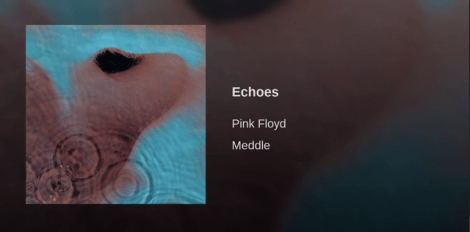
A tiny chime bell at 2.05 signals the start of an understated instrumental section, the kind of unfolding that, like the Pink Floyd at their best (Meddle, 1971) allows the music to grow from minimal information, taking the time to explore little sonic clusters and ideas. Andy Mackay plays the verse melody with a gentle line as Bryan Ferry’s electric piano carefully plucks the verse notes. Phil Manzanera’s guitar lines provide a mournful counterpoint, a sadness washed up on the tide of Eno’s mellotron seascape. This is a Roxy moment of extreme beauty and sublime interaction between the musicians that, for many fans, has never been bettered. The instrumental dissolves at 2.49, and then re-starts, mocking the anticipation of an ending. This time Mackay contributes more complex and uplifting lines. Manzanera says goodbye on a sustained root note, and then there is an abrupt change – like a windy slap in the face.

rm-72

Sea Breezes (3.33-6.12)
With as little as a few piano notes to warn us, we are thrown into a very discordant, abrupt rhythm. In come two key musicians that have been waiting on the sidelines: drummer Paul Thompson and bassist Graham Simpson. Paul’s drumming is avant garde jazz splutter, and Graham’s hesitant halting bass is as discordant as Bryan Ferry’s choke-on-an-apple vocal delivery. What happened to the lush musical landscape? Now that we are lonely/Life seems to get hard. Indeed, the life message here is delivered like a bracing wind and, just as a sea breeze brings in cold air from the ocean, the impact on the music is unequivocal, like a Samuel Beckett play where language, pace, rhythm, and delivery turn into something colder and self-analyzing:

Thought-train set in motion
Wheels in and around
Express our emotion
Tracks up then it cracks down, down, down, down, down

screen-shot-2016-12-28-at-10-23-43-pm

The internalization of thought is explicitly summoned here, tongue in cheek perhaps (motion is the key to this stanza: train/wheels/express/tracks) yet serious about what the experience of thought or thinking feels like. If the process of thought is captured as the movement of (fake) seashore waves, then a burst of cold insight comes like a punch to the gut: the narrator recognizes that to express our emotion with sensitivity and feeling is poetically admirable (Tracks up) but the down side is vulnerability and, in this case, depression or melancholia (Then it cracks down, down, down, down, down). The whole temper of the track shifts, and a gnarly solo from Phil confirms the bad tempered nature of this cold wind. We have moved, musically, from the divine calm waiting in the key of B minor to the sudden shift coming ashore in the form of D flat major. As musicologist Christian Schubart points out: [Db is] a leering key, degenerating into grief and rapture. It cannot laugh, but it can smile; it cannot howl, but it can at least grimace its crying. Consequently only unusual characters and feelings can be brought out in this key.

Help from Above (6.13-7.05)
This view offers up our narrator’s fate: from a patient, calm poet awaiting divine judgement (along with the angels, presumably), to a leering breakdown of a man degenerating into grief and rapture, marveling at his cleverness and way with language, exposed and raw, the endless torment of the suffering creative artist. Bryan Ferry and the band have fun with this one and the outcome is as hollow as Eno’s counterfeit mellotron waves: the singer re-states the original verses and theme (Hoping help would come from above), but no knowledge has been gained. This sea breeze has passed.

whitley-bay-poster-2

Recorded: Command Studios, London, March 1972
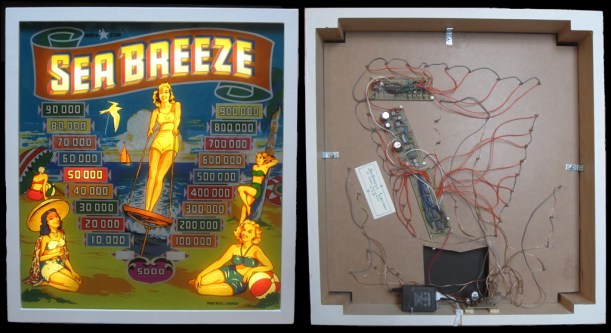
Pics: Sea Breeze pinball,
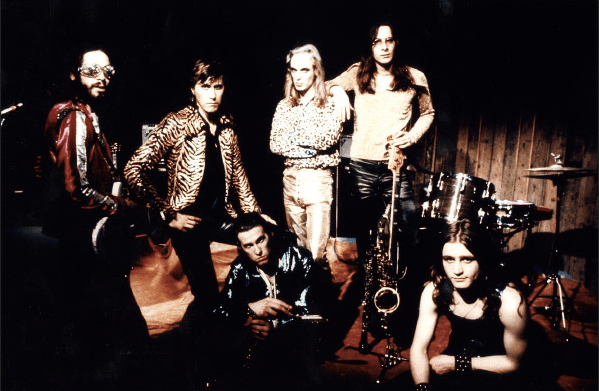
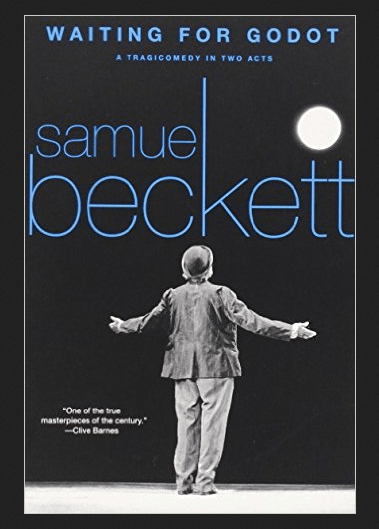
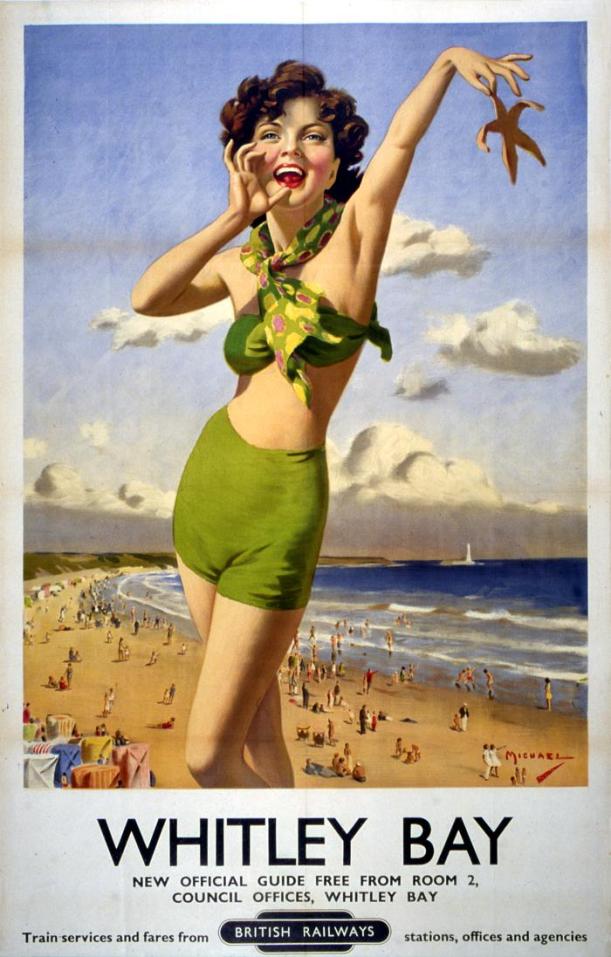
homemade; Roxy Music (72)http://www.bryanferry.com/roxy-music-history-tab/#history; First Edition Waiting for Godot, Samuel Becket; all aboard for Whitley Bay, British Railways.

Titbits

banshees

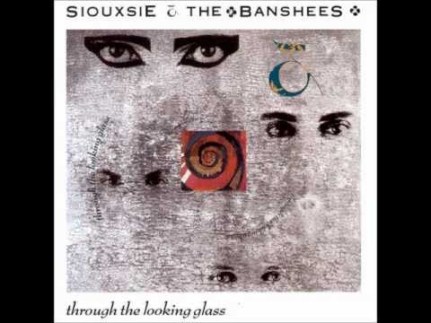
Susan Janet Ballion (ne. Siouxsie Sioux) was such a fan of Roxy Music that she named her band Siouxsie and the Banshees after Bryan Ferry’s formative pre-Roxy group the Banshees. Siouxsie has always worn her influences on her sleeve and in 1987 recorded an album of covers that included the Roxy Music track Sea Breezes. Though the Looking Glass tackles an excellent set of artists (John Cale, Iggy Pop, Kraftwerk, the Beatles) with exciting and mixed results in equal measure (though a UK top 3 hit was enjoyed with “Dear Prudence”). Looking Glass came at the tail end of a remarkable set of post-punk albums (Juju in particular still sounding fresh and accomplished), and Siouxsie herself can be seen on the Roxy Music documentary More Than This espousing her hatred of the suburbs and her love of the glamour of Roxy. Yeah!

Her Dark Materials: great interview with Siouxsie chatting with Roxy Music biographer Michael Bracewell.

screen-shot-2016-12-26-at-6-45-29-pm

Meddle, Pink Floyd (1971). While worlds apart, both Roxy Music and Pink Floyd were similar in that they never threw away a single idea, squeezing a piece of music until it spilled its truths and thrills. The instrumental at the heart of Sea Breezes has its antecedents in King Crimson and pre-Dark Side Floyd. Noticeably, Phil Manzanera and David Gilmour share common styles (clean tone and precise, bluesy lines). Manzanera has of course played a significant role in the latter day Floyd canon – co-producing several David Gilmour solo albums, and having significant input into the last (dreadful) Floyd album Endless River. Friends since pre-Roxy days, the pair have contributed some of the most tasteful guitar playing in rock. Echoes is essential, and never mind the stuff about the albatross.


Leave a comment

Sea Breezes – Part 1

hotel

Sea Breezes
Sea Breezes (John Peel Session)

Coming quickly after the Rock n’ Roll genre piece Would You Believe? Roxy Music deliver one of the album’s stand-out tracks, Sea Breezes. Recorded mid-way through the 2nd and final week of recording at Command Studios, the track delivers as a real group effort, highlighting not only Bryan Ferry’s exquisite melody and lyrics, but also the genuine musical sophistication and interplay of Brian Eno, Andy Mackay and Phil Manzanera as they shine in solo instrumentation passages, adding much-needed emotional texture to this unique and satisfying song.

I’ve been thinking now for a long time
How to go my own separate way
It’s a shame to think about yesterday
It’s a shame
A shame, a shame, a shame

We’ve been running round in our present state
Hoping help would come from above
But even angels there
Made the same mistakes in love
In love, in love, in love

Thematically, ‘Sea Breezes’ finds us on familiar ground as the narrator ponders the difficulties of love. The tone is lofty and elevated, the words used to express love are not spoken in a manner that would suggest maturity or emotional availability: for this chap, the end of love’s promise is merely a shame. In Roxy Music, love is always spelled with a capital L and is never mocked or undercut, unless purposely so (Would You Believe?). In this game the stakes are high, as love takes on a religious or artistic idealism which forms viewpoints, morals, and spiritual destinies. But what happens when love is not seen as a force of nature, a deep and lasting kinship with another person, but rather as a solipsistic way to marvel at your facility for cleverness and moral detachment? In lighter moments you might say, fine, I’ll take it, but in all likelihood that path is lonely and unsatisfying:

Now that we are lonely
Life seems to get hard
Alone what a word lonely
Alone it makes me cry

The focus on alone is so acute that the mere utterance of the word “lonely” wracks the narrator: Alone what a word lonely/Alone it makes me cry. What makes the narrator cry is not the prospect of lost love or companionship, but word choice. We’ve been here before on the album – the love object in Re-Make/Re-Model is a (witty) recollection of the license plate CPL593H, not the woman herself Throughout the ages it has been the job of the poet to discuss love, loss and loneliness with words that convey significant meaning, but that effort has meant different things over time, from Classicist ideals, to Romantic, Modernist, and Post-Modernist (and many more besides). In ‘Sea Breezes’ Bryan Ferry assumes the cloak of narratorial disguise enjoyed by the Romantic poets, in this case most associated with Lord Byron (George ‘Goodtime’ Gordon), a man who, in the words of one biographer, created an immensely popular Romantic hero — defiant, melancholy, haunted by secret guilt — for which, to many, he seemed the model. This is the narrator hero of ‘Sea Breezes’- defiant, melancholy, and guilty enough to blame everyone but himself for his predicament. This is Love as solipsistic self-analysis, and Ferry is fully aware of this narrative angle and, thankfully, plays it to the hilt.

Mad, bad and dangerous to know
Lady Caroline Lamb on Romantic poet Lord Byron

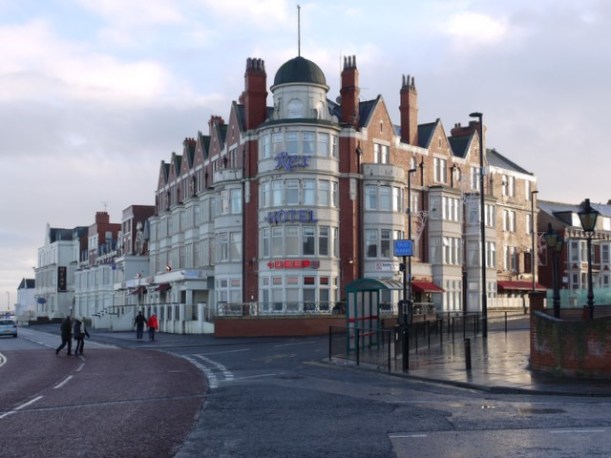
We’d often go to the seaside when I was a child…Whitley Bay or Marsden.
Bryan Ferry, before a 2016 festival gig in his hometown

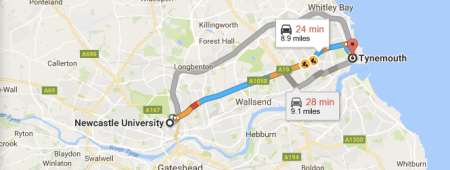
Born in Washington, County Durham, England, Bryan Ferry knew the Tynemouth coastline and its windswept landscapes well. Schooled at Washington Grammar school and Newcastle University, the young man was rarely less than 25 minutes away from coastal shores and beaches. The landscape of his youth was the North England coast and weather-beaten seascapes, 7th Century monasteries, and fortified castles.

screen-shot-2016-11-29-at-9-47-24-am
This is Romantic territory, in landscape if not in social graces. Clearly the sea-swept ocean imagery was fertile ground for Ferry’s imagination (see the beached damsels of Stranded; the blue-stained mermaids of Siren). In lyric and in tone, ‘Sea Breezes’ revels in the Romance poet’s suffering as the heightened emotion crashes against the cold sandy Tynemouth surf. Alone! he cries – what a word lonely/ Alone it makes me cry/I’ll cry, I’ll cry, I’ll cry. The Smiths later adopted this pose too, as Morrissey held his weary hand to brow and begged to Please please please let me get what I want…/this time. Ferry is the early master of the idiom of self-obsessed or narcissistic narrator, and the real love-object of the first Roxy Music album is the self-love of the narrator as he marvels at his ability to, at any given time, associate himself with the love trials of the Epic Hero Odysseus (Ladytron);  or align himself with the Romantic poets Byron and Shelley by melancholic over-emoting (If There is Something); and even takes sides with a dangerous sociopath, seeing love first as possession and ownership (Chance Meeting).

Hardly about love at all, and ‘Sea Breezes’ is no different: if you look closely you notice that for a song that calls itself ‘Sea Breezes’ there is actually no water or sea imagery used in the lyric and certainly nothing even loosely resembling a beach, wind, salt, storm – not a word. Then there is the amazingly abrupt and odd-metered musical interruption half-way through the song. Out of nowhere the meter changes, and Ferry sounds like he has been kicked in the knees and told to keep singing  – gone is the gentle appeal to the angels, Romantic or otherwise. Why the change? Because the poet cannot help but present his greatest love: his genius. In keeping with first album’s gleeful subversion of expectation, the lyric and singer becomes increasingly self-absorbed,to the point where what we are seeing and hearing is the sound of meditation and composition, of a brain working, of the poem being written: a thought-train set in motion – words in fog being prepared for paper, hard and alone, before the crack down.

Sea Breezes – Part 2, next week.

Pics
The Rex Hotel where BF visited sea swept Whitley Bay with his parents; Lord Byron has his eye on a charming lady on beach, grabbed here; when you’re obsessed with music you Google Map your hero and the route he would have taken to the seaside as a boy  (Nabokov: be obsessed with scientific yet artistic appreciation of detail); before selfies you had to stare into the abyss for days to know your true self,  Caspar David Friedrich, Wanderer above the Sea of Fog, 1818.

Titbits

The Smiths, bringing literary irony and anti-glamour to the 80s.

I can only think of one truly great British album: Roxy Music’s For Your Pleasure.
Morrissey

From left, clockwise:
Heaven Knows I’m Miserable Now: Viv Nicholson, found fame in 1961 when she won £152,319 (roughly £3m/$6M today). She famously said she was going to “spend spend spend!” And she did, squandered it all and battled with alcoholism and 4 husbands. On the bright side, she is still with us today, 79 years old. Great Beehive Viv!

This Charming Man: Swashbuckling actor Jean-Alfred Villain-Marais, in a still from Jean Cocteau’s film Orpheus (lovers in real life, Jean Marais also starred in the Cocteau masterpiece Beauty and the Beast). Easily a contender for a never-produced picture cover of ‘Sea Breezes’.

The Queen Is Dead: Of course he isn’t – Morrissey lives on as petulant and litigious as ever. Here is another French actor, Alain Delon, taken from the 1964 noir film The Unvanquished on the cover of The Smiths masterpiece album.

It is true, Morrissey told The Observer that he could “only think of one truly great British album” and that was For Your Pleasure. He later took it back because he was pissed off at one of Bryan Ferry’s sons support fox-hunting, but nevertheless the reference does confirm Morrissey as serious contender as England’s hand-me-down rock poet laureate: ‘Cemetry Gates‘ is a re-take of Ferry’s ‘Sea Breezes’, portraying as it does the artist as young man, the self-absorbed aesthete impressed by his talent and lecturing on his art (If you must write poems/the words you use should be your own/There’s always someone, somewhere/With a big nose, who knows) and greeting the horrors of a rare sunny day in Manchester:  A dreaded sunny day/So I meet you at the cemetery gates/Keats and Yeats are on your side/While Wilde is on mine. There are no apologies for high-brow literary references or taking sides in this scenario: Keats the Romantic & Yeats the Modernist take on Morrissey & Oscar Wilde, the Comic Realists. May the best man(ic) poet win!

The record covers were stunning; this was anti-glamour. As much as Roxy Music had aimed glamour towards the seedy, The Smiths sold the forgotten sex objects of British tabloid and European film as presented them as projections of Morrissey’s fantasies. In the UK you spend a lot of time In Your Room with your posters, wet dreams and soundtracks. (Years before fame, Steven Morrissey stayed in His Room writing letters to the New Musical Express – and they got published). In the 70s Bryan Ferry projected male dissonance and sexuality with Humphrey Bogart. In the 80s Morrissey projected the same with gay French stars and kitchen sink drama queens. As in Roxy as is in The Smiths – who you watch, read and listen to is who you are.


Leave a comment

Would You Believe?

Little RichardWould you Believe (Ferry), Roxy Music, 1972

When Roxy Music recorded their first album during 14th -29th March 1972, London and much of the world’s radio-listening public was in the grip of a Rock n’ Roll revival. The Beatles and pop/rock had kicked be-bop and jazz off the world’s charts during the mid-sixties, and as beards grew longer and more unruly there was a contrarian interest in dressing up and looking smart (a trend that Roxy/Bowie/Glam capitalized on). Nowhere was the signifier of fashion more clearly felt than in the drapes n’ duds of what was to become known as the Teddy Boy style, a play on the “Edwardian” style enjoyed years before by the wealthy young men of the Brit establishment.  The younger generations of the 50s adopted the Edwardian long jackets, but added the striking tapered trousers and fancy waist coats. By the early 70s a Rock n’ Roll revival was in full swing and the Teds kept upping the ante by wearing more outlandish versions of the old idea, culminating perhaps with the addition of the most extreme shoes anyone could ever be expected to wear outside of a fancy dress ball.

teddy-boy-shoes

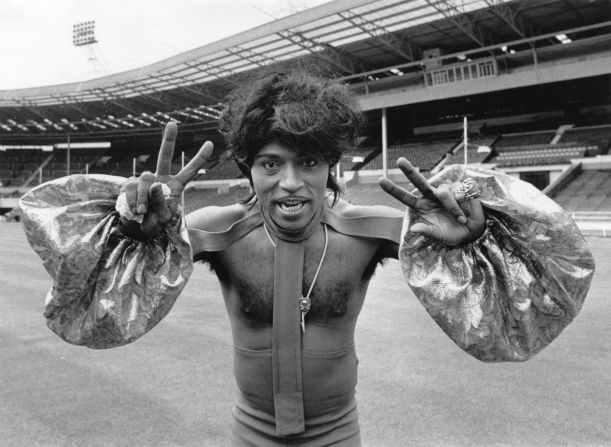
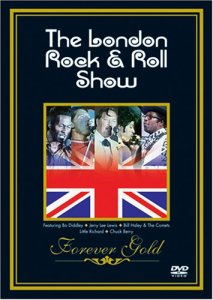
A month or so after Roxy released their first album in June 1972, The London Rock and Roll Show was held at Wembley Stadium on August 5. Bo DiddleyJerry Lee LewisLittle RichardBill Haley and His CometsChuck Berry, and others were flown in to perform an exelerating show in front of the Greasers, Teds and future punks of Londo5108g7n7k0ln. (Malcolm McLaren is shown in the concert film selling t-shirts and ‘Let it Rock’ gear five years before his own fifteen minutes of fame). Excellent performances are given, particularly by Jerry Lee and Chuck Berry, with Jerry hammering his piano keys with drop kicks and heel jabs. Watching the film gives the viewer a keen sense of London’s grit and style in the early 70’s, and reminds us of the impact Glam must have had on the collective psyche: stealing the best moves from its Rock n’ Roll masters, Glam (just rock n’ roll with lipstick! said John Lennon) was colourful, exciting, danceable and great back-drop for drinking, fighting and sex. (One supposes).
For Roxy, recording the rock n’ roll pastiche Would You Believe? and including it on the first album was just another one of their “12 different possibilities” of musical adventure. Unfortunately, doo-wop as a form is slight and repetitive and can be bit tedious after a few listens, and this track is no exception. Bryan Ferry himself did not find the rock n’ roll or vaudville styles the band were offering had much sticking power beyond the flash modernism of the first album: “What we’ll probably do is start making the changes fewer, because some people in the audience can’t really take sudden changes every 30 seconds or so. I quite like confusing people, but there are limits I suppose.”(Sounds,  July 1, 1972).

andy-stylin-2

Shackled by the form, the lyrics in Would You Believe? were intentionally written tongue-in-cheek, the rhyming scheme the poetic outcome of twelve year old girls in love:

Would you believe in what I do
When the things that I make are all for you?
Oh honey say you do
And in a while I’ll come to you
Showing showing why
What I think will all come true

And so on. Ferry is on the joke, of course, but it is clear why he and his listeners opted for the lyrical and musical possibilities of the more interesting album cuts  (Ladytron/If There is Something/Chance Meeting) to go on their journey further into the seventies. Would You Believe? was scrapped as a live staple, not performed by the band after early 1973.

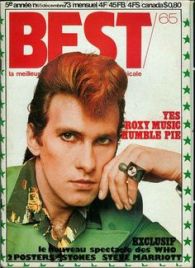
Credits: Little Richard at Wembley Stadium, The London Rock and Roll Show, August 1972;  a Teddy Boy creeper shoe, courtesy EBay; film poster London and Rock and Roll Show; Andy Mackay, geezer style, cover of Best magazine, issue #65.

Titbits

220px-livepeacecover
Live Peace in Toronto, Plastic Ono Band. A few years before the London Rock and Roll Show, a hastily assembled Plastic Ono band (John Lennon, Eric Clapton, Klaus Voorman, Yoko Ono, and Alan White) played at the Toronto Rock and Roll Revival in September 1969. 50s standards were played (nervous, drug-fuelled and scrappy), and the subsequent live album sold well, ensuring the street cred of the rock n’ roll revival into the early 70s.

Never Mind the Bollocks: Malcolm McLaren poses outside his shop on the King’s Road early 70s; by chance, London and Rock and Roll Show film still captures Malcolm and Vivienne Westwood selling Let it Rock gear at the Wembley Show August 1972; five years later Mr. J Rotten (John Lydon) proves that good duds never go out of style.


Leave a comment

Chance Meeting

tube_map

Chance Meeting (Ferry), Roxy Music, 1972

‘Chance Meeting’ is one of the more disquieting songs in the Roxy lexicon (pre-dating the Bogus Man by eight months), Bryan Ferry creates a narrator that is at once sinister and seductive. If there is a truism that the Devil gets all the best lines, then there is indeed menace in these words, a portrayal of looming violence set against Haiku-style imagery (red dress mine) that is delivered with conviction by the Roxy front-man. The performance marries unemotional detachment with a haunting melody line, creating an incongruity of meaning and intent: is this a song of lost love, or are we witnessing something more sinister – a chance meeting of integrative menace and/or murderous intent?  Whatever the case,  you can almost see the fingers on the victim’s throat as the narrator utters “time spent well is so … rare.”

I never thought I’d see you again
Where have you been until now?
Well how are you?
How have you been?
It’s a long time since we last met

A short song (10 lines), ‘Chance Meeting’ has been seen by many observers as melodic, romantic, a gentle ballad, emotional (or “emotionally inarticulate”, p39 Rigby). For critic Paul Stump the piece is a re-visioning of the 1945 romantic David Lean film Brief Encounter. This was a view that Ferry himself held and was outlined in his working notebooks – yet, without sounding presumptuous, there is the sneaking suspicion that name-checking Lean’s classic film may have provided an over-simplification and a pat way into the song. Certainly, Brian Eno’s sonic treatments of ‘Chance Meeting‘ was as far from classic romantic as can be imagined. And the song is based on a film alright, but Bryan Ferry’s cinematic influence is altogether more complex and sinister.

Bryan’s Secret Chance Meeting
David Lean’s 1945 classic film Brief Encounter was voted by a leading UK magazine as the most-romantic film ever made (despite the lack of sex or happy ending). The film is  an insightful, moving interrogation of marriage, sexual repression and self-sacrifice. The pedigree behind the production is impeccable, a masterpiece of writer-producer Noël Coward (based on his one-act stage-play Still Life) and a jewel in the filmography of director David Lean, who is no slouch when it comes to canonized classics (Lawrence of Arabia anyone?). In Michael Bracewell’s masterwork on the context and formation of early Roxy Music, “Re-Make/Re-Model: Becoming Roxy Music“, we are fortunate to be presented with Ferry’s working notes on ‘Chance Meeting’:

‘Chance Meeting’ (Quiet delicate simple plaintive)
voice & drama classical lovers chance meeting [inspired by the film Brief Encounter]

While Brief Encounter’s star-crossed lovers do happen to meet at a shadowy British railway station, and the unfolding events do have a classical doomed sensibility, the sensibility is nevertheless neither dark nor creepy, or even a tad bit dangerous: this is in stark contrast to the actual song we hear on the record – with its disassociated vocal and vacant lack of romance or emotion. In this case, the emotion isn’t inarticulate, it just isn’t there at all. By the time we get to Manzanera’s dissonant haunted-house feedback we are under the covers praying for daylight. Clearly, the execution of this “quiet delicate simple” piece is at cross-purposes with the romantic image that has been applied to it over the decades. It might be more useful to suggest that Ferry and Eno have been pulling the wool over our eyes, for there is a film that speaks more directly to the paranoia in the song, a film that was to introduce us to that girl in the red dress, and provide us no less with the actual title for the track,  ‘Chance Meeting’.

Hardy Krüger, Micheline Presle. Chance Meeting (US)

Chance Meeting is a 1959 British murder mystery film by Joseph Losey, the famous political noir film-maker. Ben Barzman and Millard Lampell were nominated for the BAFTA Award for Best British Screenplay and it shows: the plot is layered and nuanced and pulls few punches.  Jan (Hardy Kruger) is an artist who has recently met a high society woman. (If this isn’t a Bryan Ferry reference, I don’t know what is). When he arrives at her apartment for an afternoon tryst (as one might expect), he calls out to his lover but gets no answer. Instead Two cops show up at the door. Jan is an uncomfortable position since he doesn’t want to give away the details of his affair. 1504efe10cd815cc392f5a671aae2bc8The situation worsens as he realizes his lover lies dead under the blankets on a couch: she has been murdered, and the police think it is him. The film unfolds in flashback, and we see the complications of characters who meet but barely know one another. The high-society lover turns out to be a prostitute; the artist, honest, but naive. The working class detective, noble, but ineffective.  The killer, a high-level politician, getting away with murder.  There is a relentlessness to the film that underlines the loneliness of the main characters; their disassociation from love and their desire for sex – chance meetings and encounters and secrets that lead to grim outcomes.
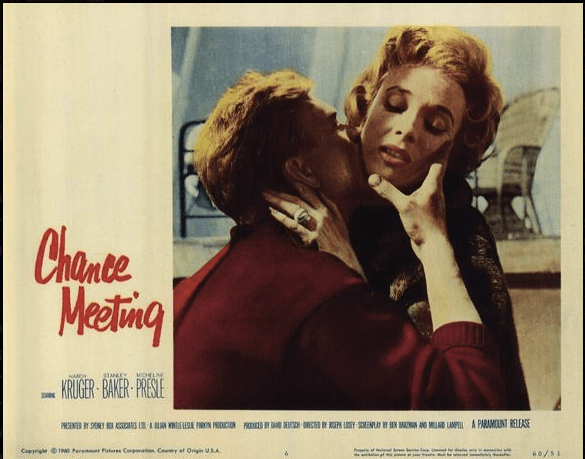
To this end we should recall the tone and distance of Ferry’s vocal decision and performance on one of Roxy Music‘s best tracks. the careful enunciation and lack of emotion in the delivery; the oppressive guitar feedback 0:38 seconds in, relentless as it rides over top of the melody crashing down with oppressive weight.  This is different social worlds colliding, relentless chance meetings spinning out of control, while the killer remains disassociated, untouchable. In a completely different reading of the song – gone is the Brief Encounter enchantment of previous readings –  the Bogus Man protagonist happens upon the woman he eventually kills. Sentence fragments are highlighted to emphasize the unnatural pacing of intonation and expression:

I ne/ver thought I’d see you/again [relationship over] 
Where have you been/until now?
Well / how are you? [tone and delivery removed from sentiment]
How have you been? / It’s a long time since we last met [‘met’ is delivered with spite. This is a great dramatic performance by Ferry]
It seems like yes/ter/day [Counting the hours, days]
When I /first saw you [Obsessing]
In your red dress mine [Red: symbol of sex, lust, blood – the single use of colour imagery in the song. ‘Red dress mine’: the Bogus Man awakens…]
How could/ I forget that day? [Obsessing]
I know that time well spent is so rare [obviously the time wasn’t well spent at all – run lady, run! while you still can!]

It took a while for Ferry to get the song right, but he never stopped championing the piece. A definitive live version was recorded in 1973 on Viva! (released 1976); the live version has an even chillier delivery which emphasizes the hint of menace in the song, coupled with a sublime oboe accompaniment by Andy Mackay. In 1976 Ferry re-recorded ‘Chance Meeting’ (as he did with many of Roxy’s 1st album choice cuts): the sound is richer and better sounding, and has its supporters. Count me as one of them.


Titbits

David Bowie, Red Money. Bryan Ferry, Sign of the Times.  The line that plays its hand in ‘Chance Meeting’ is red dress mine. The colour red is a shock, but only in hindsight, and on a close reading. This is Bryan Ferry’s Haiku moment. As you may recall, Haiku is a poetic device that juxtaposes two images or ideas, one of which acts as a “cutting word” or verbal punctuation mark. Red is the cutting word in this song as it comes as us with its seductive connotations of red (sex), dress (flesh), mine (possession) against a backdrop of languid melody and expression. For a period in late 1979 Bowie was intrigued with the colour red and used it as a symbol that could evoke a particular emotion, bringing together thematic ideas that were subliminal instead of explicit. In Lodger, ‘Red Sails’ closes side 1 (red sail action: wakes up in wrong town). ‘Red Money’ closes side 2 (red money, project cancelled: good bye Eno, Iggy, Sister Midnight). Not to be left out, Ferry himself returned to explicit colour imagery in the late 70s: in Red is the bloody sign of the times, he sang as the end of the decade approached. Lipstick ‘n leather, wear ‘n tear….

Oblique Strategies, Eno/Schmidt
My own copy (2nd edition), purchased on eBay eons ago. Today’s Card: “Do Nothing as Long as Possible.” Now they tell me.
screen-shot-2016-09-15-at-9-51-20-pm


4 Comments

The Bob (Medley)

St Paul's in the Blitz

War is hell, and The Bob (Medley) isn’t much better. Of its time, ‘The Bob’ is another first album punning titles (The Battle of Britain) and the song delivers yet another dramatic vocal performance from composer and singer Bryan Ferry. This one is strained though, and for the first (thankfully rare) time on a Roxy Music album, the lyrics are trite and forgettable – perhaps intentionally so. A year after The Bob was recorded, the band mothballed the track and never performed it again.

For all its shortcomings, The Bob did mark an important plot point for the early Roxy line-up as it was one of the songs recorded for the demo tape sent to the talented Melody Maker writer Richard Williams in 1971:

People didn’t normally send out tapes out of the blue in those days…To this day I don’t know how Bryan found my home address. But there is a note in my diary for March 1971 which states, “Brian coming in to drop off tape” – and that was Bryan. 

So I played the tape, and thought it was pretty extraordinary.
Richard Williams

roxy flyer 2nd
 Promotional sticker for the original Roxy Music demo tape//Malcolm Bird

Working hard to get the band a record contract – “Make me a deal and make it straight” (‘Virginia Plain‘) – Ferry’s attention to detail was exemplary (“I was quite obsessive”) as he composed the songs, compiled the tapes, ensured the artwork was striking and new, and worked the phones to get the songs in front of the right people – all this a mere four months before Roxy had played their first gig. The Bob’s heritage is marked by its inclusion as part of the early John Peel BBC sessions, first recorded in January 1972, in which the track opens with the sound of air raid sirens and Eno’s sinister pulsing VCS3. The Peel version recorded nine months later demonstrates a tighter approach, highlighting the increasing musical confidence of the band. The music was exciting art-collage for the cognoscenti:

We’d start off with ‘Memphis Soul’ Stew, and then we’d go into ‘The Bob (Medley)’, this heavy bizarre thing about the Battle Of Britain with synths and sirens. We had everything in there from King Curtis to The Velvet Underground to systems music to ’50s rock ‘n’ roll. At the time we said this was ’50s, ’60s, ’70s and’80s rock’n’roll!
Phil Manzanera

‘The Bob (Medley)’ is as arty, funny, indulgent, worthy in subject matter and approach, but has not aged well, much like early Pink Floyd epics Ummagumma (patchy) and Atom Heart Mother (wretched). The track starts with an eerie synth drone, early “madcap technophile” Eno at the helm, before crashing into Bryan Ferry’s hysterical shrill:

I dreamed last night about your face
Your star shone all night
Over the moon it shone brighter
Star shining so bright

The problem with the track is also echoed in the lyric: the ironic stance trips over itself, meta-awareness in spades from a group of art students hip to the Velvet Underground and John Cage. It was all in the air, of course: Monty Python was launched on staid BBC 2, and only co-opted in later years by BBC 1 and Hollywood. Three channels (BBC 1, BBC 2, and ITV) held a captive audience of 17-20M UK viewers culled from a population of 56M. The Blitz was common currency, Ireland was at War (Bloody Sunday, Jan 1972), the Miners were cutting off the lights, and it was all a bit cold and drab across the sceptered isle. Why not then deliver an anti-BBC version of The Battle of Britain and revel in the antiquated poetry (Over the moon it shone brighter/Star shining so bright) and chop it all up into a 6 part play. This got up a lot of people’s noses, of course, as spoofing World War Two was seen as an easy shot, and even though Manzanera and Thompson let rip on some good rock n’ roll power chords, musically the montage just didn’t have anywhere to go.

Recorded: March 1972 at Command Studios, London

Titbits
British Tommy (sculpture)

Trauma is passed from generation to generation. I’ve unwittingly inherited what my father experienced
Pete Townshend, 2012

war kids 2

The effect of World War Two on a generation is expressed musically, at least, in two best-selling double albums of the 1970s – Tommy (’69) and The Wall (’79).  In both collections, murdered or murderous Fathers are a source of pain and anger, while the child moves through a cruel and ignorant society while encouraged to stifle emotions and not ask questions. The anger and violence is treated seriously in both records: Roger Waters re-creates sonically the horrifying realism of his father’s death in the first wave of fighting as the Allies attempted to secure the beach head at Anzio, south of Rome. And Tommy is rendered mute by the shock of witnessing more murder (father kills in the album verison; father is killed in the film version):

You didn’t hear it, you didn’t see it!
You never heard it, not a word of it!
You won’t say nothin’ to no one,
Never tell a soul what you know is the truth!

In all instances war delivers a wounded legacy to its children.

bird
Malcolm Bird//Biba
In addition to doing early design work for Roxy Music, Malcolm Bird’s illustrations also have appeared in magazines and newspapers,  greeting cards, comic strips, and books.

This is Tomorrow Art exhibition, August 1956
This Is Tomorrow was a seminal art exhibition in August 1956 at the Whitechapel Art Gallery on High Street in London, UK, facilitated by curator Bryan Robertson. The show is now considered a watershed in post-war British Art and in some respects kick-started the development of the British arm of Pop Art. Richard Hamilton was part of the most remembered portion of the exhibit, Group 2, with its Op Art dazzle panels. Bryan Ferry took notes and name-checked the show twenty one years later in his single ‘This is Tomorrow’ from the In Your Mind album.

Dad’s Army was a top show in 1972, further reducing WW2 to even greater depths of  cliche, which in may respects Roxy were taking the piss. Look no further: Series 5, Ep 30, A Solidier’s Farewell: Mainwaring, unhappy because his men are not living up to his expectations and believing his leadership to be unappreciated, dreams he is Napoleon after eating too much toasted cheese. 

Credits: Blitz Cinema: Daltrey, Waters, and Pink contemplate their next move.