For Your Pleasure

A song-by-song analysis of the lyrics and music of Roxy Music and the solo work of Bryan Ferry, Brian Eno, Andy Mackay and Phil Manzanera in the 1970s


1 Comment

2HB

tumblr_lsmien26ZG1qkeitqo1_1280
Words Don’t Express My Meaning
2HB (Ferry), Roxy Music, 1972

I told Mark [Lancaster] I was writing some songs, and he said, “what are they called?” So I said that there was one called ‘2HB’, and he said “Oh that’s so great – writing a song about a pencil.” Which is a very Pop art concept really. Except that I was writing a song about Humphrey Bogart.

Bryan Ferry
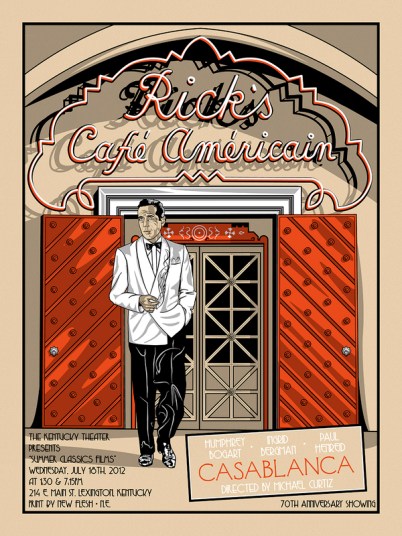
RicksSm_original-600x800
White jacket black tie wings too..
Bogart, Casablanca Anniversary Poster

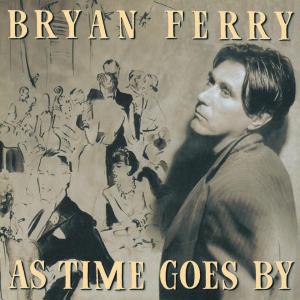
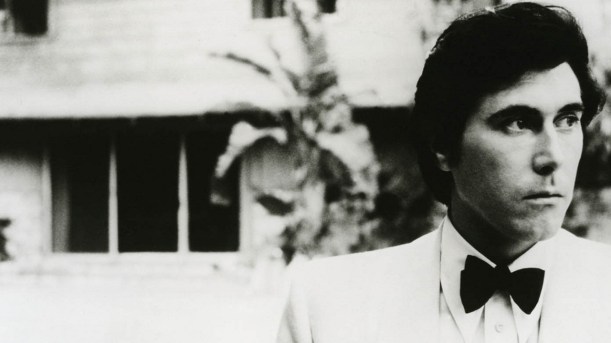
Before ‘Nothing Compares 2 U,’ there was ‘2HB‘, Bryan Ferry’s homage to Humphrey Bogart and Casablanca. The song is a declaration of stylistic and thematic intent and even in these early stages there was no pulling punches on the subject and context of his art: the fourth cut on Roxy Music was important enough to Ferry in future years that he re-recorded ‘2HB’ for the B-side of his first solo single, A Hard Rain’s A-Gonna Fall (1973) and made available a few years later on his solo album Let’s Stick Together in 1976. Stylistically,  the influence of the white dinner-jacketed Rick Blaine inspired Ferry to transpose Bogart’s Hollywood pose on the cover of his solo album Another Time, Another Place  (the title itself taken from a 1958 movie melodrama); Ferry also released the single Tokyo Joe, a title that was shared with Bogart’s 1949 movie of the same name. The Bogart influence continued into 1999 with Ferry recording a prime cut from Casablanca, As Time Goes By, of which key lines had already been taken and injected into Roxy’s masterpiece ‘Mother of Pearl’  (It’s still the same old story/Fight for love and glory).  A key influence indeed, with the white tux remaining one of Ferry’s stylistic conceits for much of mid-seventies, the singer himself looking every inch the 40s film star.Poster - Casablanca_13
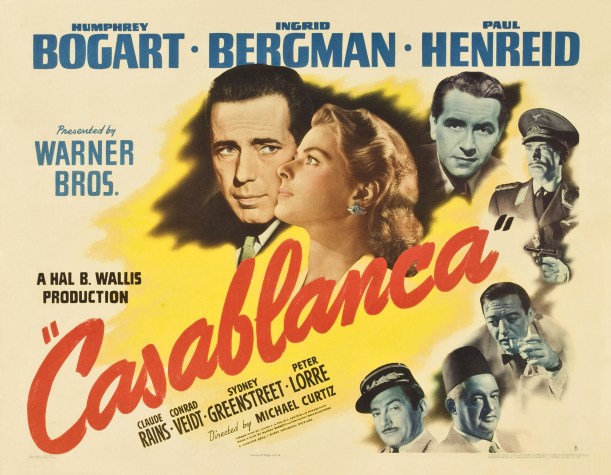
More corn than in the states of Kansas and Iowa combined. But when corn works, there’s nothing better.
– Casablanca
script writer Julius Epstein  

The plot and characterization in Casablanca is of course, sheer hokum. Shot in 1942, right in the middle of World War II, with millions dead and no end in sight, the Allies grouped together and planned Operation Torch – an invasion of North Africa to seize the key ports and airports of  Casablanca, Oran and Algiers. As a result, Casablanca was both entertainment and propaganda: the outcome of the war was not assured in 1942, and the killing showed no signs of letting up. The film put its stressed audiences in the position of making moral decisions within doomed or difficult circumstances: lust in Paris, love in Morocco, fear everywhere. In the end change and maturity win: night-club owner Rick Blaine’s sense of self (and duty) changes over the course of the film, and he becomes a hero by saving the woman he loves, sending her (and husband) away from the Nazis, to safe passage. Rick is left behind, but his sacrifice changes who he is and who he has been.
roxy cinema
Of all the gin joints in all the towns in all the world, she walks into mine..

I started going to the pictures early on — even when I was at junior school. My dad had an allotment where he grew his vegetables, and that was right next door to the cinema — the Carlton. It was a local fleapit really; but it was my Cinema Paradiso from a very early age, because my mother used to make tea for the projectionist — cakes and scones and sandwiches. So he got these free teas, and we got free tickets. There were wooden benches that you sat on … I saw Gone With the Wind there and all sorts.
Bryan Ferry, as told to Michael Bracewell.

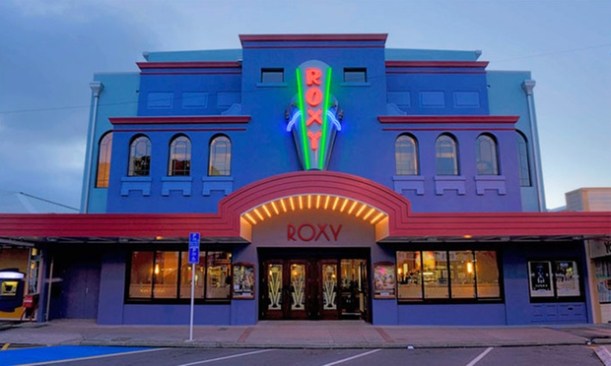
The Carlton, Renalto, Regal, Odeon, and Roxy were typical names for 20th century British cinema houses. And so in this regard, ‘Roxy’ Music is ‘Cinema’ Music, and throughout the band’s career the lyrical heft of Ferry’s cinematic, performance driven writing is a consistent triumph. The declaration of love for art, Bogart and cinema is unequivocal:

Oh I was moved by your screen dream
Celluloid pictures are living
Your death could not kill our love for you

It is funny that many reprinted 2HB lyrics have that line as “scream dream” which makes no sense at all given that this is Casablanca and not exactly the Bride of Frankenstein. In any case, the stanza makes some interesting statements about the power of art to move and create an emotional connection; as is typical with Ferry the Romantic, we have art as the “real thing” (Celluloid pictures are living) and the belief that art will triumph death every time (Your death could not kill our love for you).

Art, death and cinema is the subject of 2HB, and the motifs move across the eye like frames of moving film: late-night detail (Two people, romantic/Smoky nightclub situation/ your cigarette traces a ladder/white jacket black tie wings too). The imagery is straight out of a F. Scott Fitzgerald novel. And direct references to the film populate the lyric:  Here’s looking at you, kid/Ideal love flies away now/You gave her away to the hero all beautifully represent the film and its final scene, the foggy airport runway denouement:

Here’s looking at you kid
Celebrate years
Here’s looking at you kid
Wipe away tears
Long time since we’re together
Now I hope it’s forever

The references here come with a wink and some tears: on the one hand there is direct reference to star-crossed lovers Rick and Llsa in the film, their parting and never seeing one another again. Sad, to be sure, but so is the idea that Ferry is singing his dedication to Bogart (looking at you/celebrate years); while simultaneously mourning Bogart’s passing (wipe away tears) and his own Cinema Paradisio Bogart-watching youth (Long time since we’re together). Now that Ferry has immortalized the star in his own cinema music, they may co-exist, somewhere, together, forever.

Heady stuff indeed, and Ferry seems aware of the conundrum of trying to articulate this uncomfortable idea and recognizes that in a film where music is a key narrative driver – ‘As Time Goes By’ tells the story, holds the memory, divides and unites the protagonists – Ferry admits that notes could not spell out the score: neither words or music by themselves will express the meaning, but all songs can be seen as a declaration of love between composer and reader, for art is life-affirming (it lingers ever) and Ferry’s hero in 2HB is hard to forget, until, that is until his own death (at least not yet).
the_end1

Recorded: March 1972, Command Studios, London

Titbits
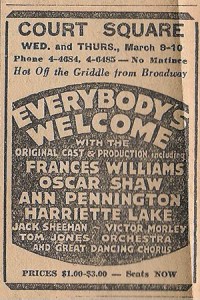
original play w song as time goes byferry time
As Time Goes By is an incredible song, much loved and covered. Melodies like this are indeed forever. The song was written and published by Herman Hupfeld in 1931 for the Broadway musical Everybody’s Welcome. Bryan Ferry recorded ‘As Time Goes By’ (of course he did) for his solo album of the same name. Fantastic stuff.
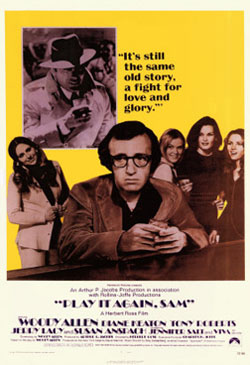
PlayItAgainSam-Poster
Woody Allen’s Play it Again Sam was released one month before Roxy Music in May 1972. The iconography of Bogart was stronger in the early 70s than it had been at the time of his death in 1957.
Allan: If that plane leaves the ground and you’re not on it, you’ll regret it; maybe not today, maybe not tomorrow, but soon, and for the rest of your life.
Linda: That is beautiful!
Allan: It’s from Casablanca. … I’ve waited my whole life to say it!

His journey is complete.

Leave a comment

If There is Something – Part 2

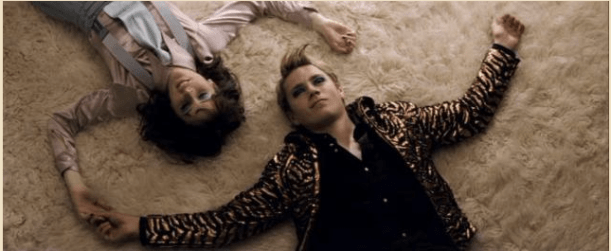
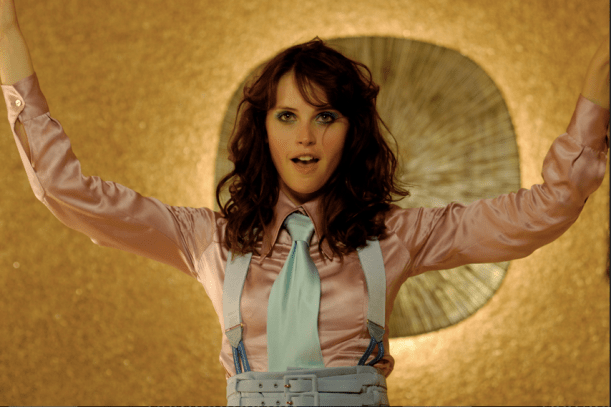
Screen Shot 2016-02-07 at 8.09.09 AMFelicity Jones (Ruth) sings Roxy Music in the celebratory ‘If there is Something‘ sequence, Flashbacks of a Fool (Baillie Walsh), 2008.
Think Roxy girl…  I’m gonna be Bryan.
Ruth

If you’re going to be Bryan, Ruth, you better be able to hit the high notes!  Ferry’s narrative exaggerations and declarations of love fill the ear and mind with wonderful images of Romantic Love and turbulent raw emotion. The song is clearly a quest narrative (if there is something/that I might find?), setting forth in vivid poetic language the signs and symbols that represent our idea of love and human connection, while simultaneously articulating the writer’s struggle to find the right words, feeling and emotion (if there are many meaning the same/Being specific is just a game).  Throughout, the narrative voice and vocal performance is wracked, raw, blissful, operatic, and aware of itself as performance. This dynamic finds its epiphanic conclusion in the final stanza, but to sweeten the deal we need first a musical bridge to take us there – a guided path to arrive satisfactorily to the conclusion of Ferry’s 4-act play. Andy Mackay and Phil Manzanera respond with a perfect musical link that builds on the band interplay already established on  Re-Make/Re-Model and Ladytron, with the added bonus of introducing a third musical bedrock to the Roxy Music listening experience – The Great Paul Thompson.

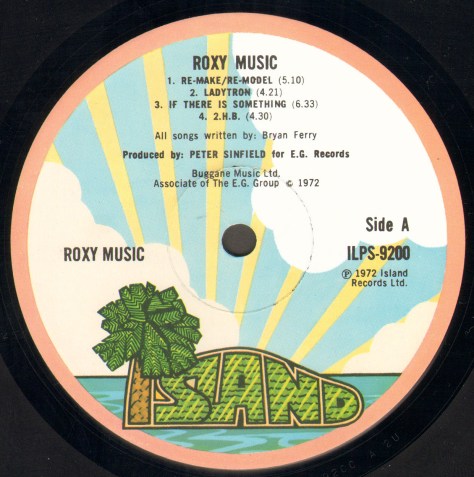
roxy label
Friendly Yellow Lights

As we seen in our last (Part 1) entry of ‘If There is Something’ Brian Eno’s never-used stage directions for ‘If There is Something’ provide ample insight on band intent for the song:

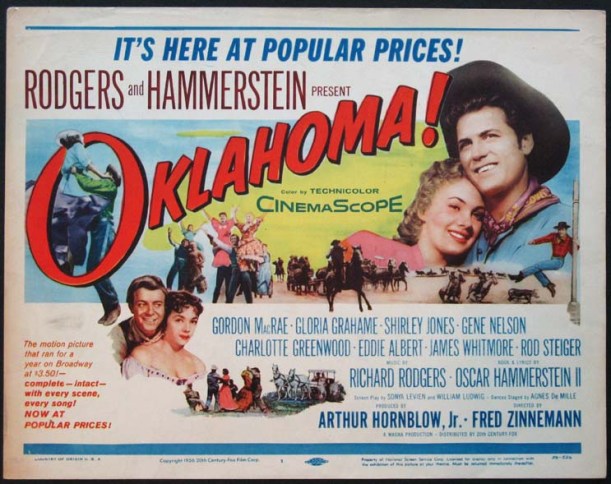
Friendly yellow lights – cf ‘Oklahoma’
‘I would do.’ – dark and more dramatic
occasional reds in torrid section
grand purple guitar arpeggios – lights on player
Sax solo – fade to morose deep green and violet
‘Shake your head girl’ – pink spot on Bryan
2nd verse spot on Andy and Eno
guitar solo

The beautiful melody refrain backed by chord progression Cm/Bb/Ab/G at 1.39 will ring through the grand purple guitar arpeggios and assure there  is a light is shined on the players. Ferry’s outburst I would do anything for you! delivers the emotional cracked-voice intensity, and ushers in at 2.40-5.05 an instrumental section of some of the most sublime music Roxy ever put to vinyl.

The Bridge: Deep Green and Violet
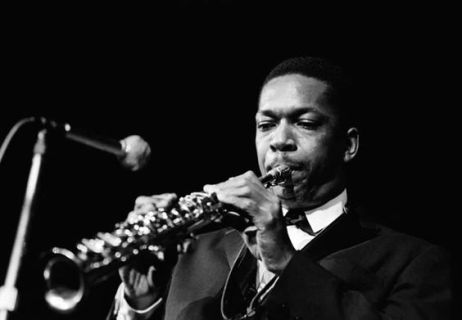
2.39-2.50: The musical motif is repeated by piano, guitar, but is given full breath by Andy Mackay’s soprano sax, building on the notes until he hits a split (cracked) note clearly heard at 2.45. This is significant as it highlights the avant-garde sensibility and influence of John Coltrane‘s playing on Mackay’s style, a fairly brave move that was new to rock (no cracked notes on Dark Side of the Moon, for example).

2.51-3.26: We hear a rolling barrage of saxophone notes as Mackay repeats the melody motif until it tumbles back onto itself; the ear at this point is now picking up Ferry’s piano, mirroring the same pattern with his signature rhythmic drive. At 3.30 there is a distinct chance that Mackay shifts (with production edit assist?) from soprano to tenor saxophone as he now blows shimmers of wind through the instrument as the tune dives and turns bird-like over and under the signature motif.

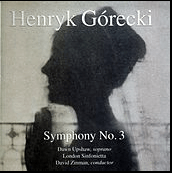
3.27-4.44. From this moment on we witness the sublime slow build of the already accomplished horn solo as it pans across the speakers and builds in style similar to elegiac and slow tempi works such as Gorecki’s  Symphony No. 3. Between 4.24-4.39 there is a single-breath sustained note executed with breath-taking skill and emotion, finished with a splinter note at 4.44 to conclusion. If this was a jazz club the applause would leave stand-up room only.

john coltrane oboe
John Coltrane, ‘My Favourite Things’, (1961) | Open Culture

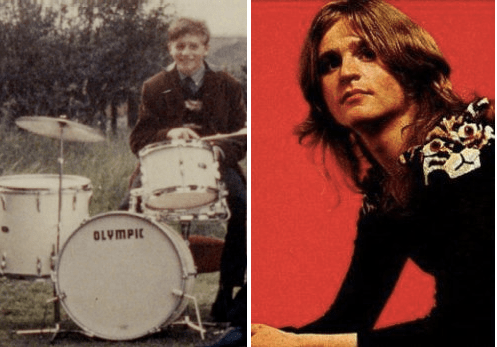
4.44-5.04. As the wind instrument dies and the sound disperses, we are aware of the steady even-handed 4/4 time drumming of Paul Thompson. We recognize the pinched but solid beat has not overwhelmed the soundscape, but rather, has been there all along, sensitive in tone and touch. Producer Pete Sinfield must have realized this for he gives the music room to breathe: drum and piano  syncopate as the song coils towards it final stanza conclusion. Heady stuff, and an absolute shining moment for the drummer Bryan Ferry would henceforth introduce to live audiences as The Great Paul Thompson.

paull t
The Great Paul Thompson

If it hadn’t been for Paul Thompson, Roxy Music would have have just been another art rock band
Brian Eno

If There is Something’ has become a strange creature. It’s modified into something else completely…It’s Grand Music, if you know what I mean, it’s got a feeling of grandness about it.
Brian Eno 

Grand Music: Pink Spot on Bryan
In live performance and on record Ferry’s voice cracks as it implores his girl/wife/ /youth/memory to shake it one more time. We have been lifted so far by the glorious music presented by the band, and we are glad to be here. The track has fulfilled the early Roxy promise of presenting rock as artifice: mashed up and hybrid musical stylizations (vaudeville/hillbilly/prog/jazz); narrative perspectives (me/she looking at me/you looking at us); and vocally wrought performances that mimic country stylizations and poetic flights of angst. Now Ferry brings the musical and vocal performance to a religious climax – the message is rapid, repetitive, the delivery is evangelical, sacred even – this is  ‘Psalm’ 2 years ahead of its release:

Shake your hair girl with your ponytail
Takes me right back (when you were young)
Threw your precious gifts into the air
Watched them fall down (when you were young)
Lift up your feet and put them on the ground
You used to walk upon (when you were young)
Lift up your feet and put them on the ground
The hills were higher (when you were young)
Lift up your feet and put them on the ground
The trees were taller (when you were young)
Lift up your feet and put them on the ground
The grass was greener (when you were young)
Lift up your feet and put them on the ground
You used to walk upon (when you were young)

The shifting of viewpoint and tense is all over the place here, echoing the same strategy of displacement we have seen throughout the song. This does not make for a straight-forward reading or a hymn to innocence lost, as Jonathan Rigby suggests with his nostalgic Ferry  “mourning a ponytailed lost love…commemorating lost youth”(34). Acts 1-3 have demonstrated a shifting perspective on identity and character, and here the trend continues as the pose shifts into meta-analysis, provoked into being by the same kind of epiphanic moment seen in Re-Make/Re-Model – license plate CPL593H and ponytail serve the same function: they produce the emotional reaction that enables the song to be written.

Shake your hair girl with your ponytail – Writer evokes image
Takes me right back Writer indulges nostalgia
Threw your precious gifts into the air “Threw” is interesting; past tense; subject shifting to self?
Watched them fall downRegret 
Lift up your feet and put them on the groundEvokes Self to write a decent song
You used to walk upon – The way is intuitive, natural; the Romantic Ideal
Lift up your feet and put them on the groundAmen!
The trees were taller Obstacles were great
Lift up your feet and put them on the groundAmen!
The grass was greener – Experience was deeper
Lift up your feet and put them on the groundAmen!
You used to walk upon Get Back to the Garden.

There is something very Deliverance about the song as it cycles from hillbilly country yokel, to growing potatoes by the score, through mellotron prog, jazz, back to evangelical fervour, but Ferry and the band are absolutely right in their understanding of emotional nuances, and their powerful music and lyrical congregation produce, as Brian Eno observed, Grand Music in the Oklahoma tradition.

Recorded: 17 March 1972, Command Studios, London

Screen Shot 2016-02-07 at 8.08.44 AM
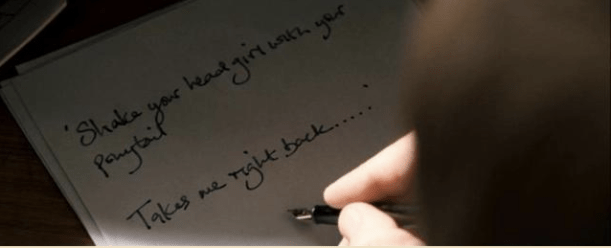
Joe remembers, and writes the letter…Flashbacks of a Fool.

Postscipt: Flashbacks of a Fool. The film, a vanity for project for chums Daniel Craig and Baillie Walsh, uses the song to drive its central narrative and emotional focus. This in itself is a delight for Roxy fans who usually have to suffer through misfired duffs like Velvet Goldmine (a story about David Bowie without any David Bowie songs, told with Roxy Music songs because Bowie wouldn’t let them do David Bowie songs). Thankfully Walsh’s film is a genuine attempt to capture what Roxy Music means to him and his generation (my generation, if you will). The sequence of Felicity Jones (Ruth) with young Joe Scot dancing to ‘If There is Something‘ is absolutely brilliant and highlights the elements that make Roxy Music so exciting. (Baille is better anyway with the shorter sequences; cutting his teeth making high profile rock classic videos for Massive Attack and Oasis). Speak with any artsy younger person about Roxy Music and there is a very good chance that this song and sequence is their reference point for the band. We salute you Baille and Daniel – seriously lads, cheers!

Titbits

philmanzanera.com
Still Talking. A nice bit of musical interplay between Andy and Phil 40+ years on.

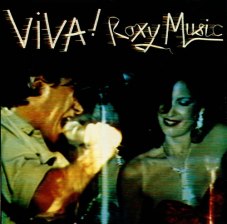
Roxy Music - Viva!
Viva! We’ll review the live Roxy Music album when we crash, chronologically speaking, into its August 1976 release date, but this incredible version of  “If There Is Something” captured at Newcastle City Hall, 27 or 28 October 1974, is well worth calling out. Go on, give it a spin – the sirens are calling.

goreci
Symphony No. 3 (Górecki)
The saddest record about memory and loss ever made.


4 Comments

If There is Something – Part 1

Screen Shot 2016-02-07 at 6.31.05 PM
Flashbacks of a Fool (Baillie Walsh), 2008
‘If There is Something’, (Bryan Ferry), Roxy Music, 1972

How fantastic is this song? How could you choose between Bryan Ferry and David Bowie? They’re gods!
Baillie Walsh

Re-Make/Re-Model‘ and ‘Ladytron‘ received justified glowing attention in the Roxy Music album reviews during that “abnormally cool; generally changeable and dull” British summer of 1972.  The first two tracks were highly regarded both in the John Peel live session(s) format and as energetic studio cuts under Peter Sinfield. Strangely, the epic third track ‘If There is Something’ seemed to lose points by comparison, possibly due to its ambitious narrative structure or because of a stated overuse of that damn mellotron (“an obvious mistake,” noted Melody Maker). Roxy Music were fortunate to have signed with E.G. Records, David Enthhoven and John Gaydon’s respected management firm who’d managed to score a hit with King Crimson and their classic In the Court of the Crimson King. In doing so, Roxy joined a high-profile, high-prog stable that included King Crimson and Emerson, Lake and Palmer, so barbs regarding the mellotron were to be expected (perhaps warranted).  Writing for the NME, Tony Tyler praised the album but judged ‘If There Is Something’ to be less successful, “I wish it weren’t there because there’s too much Crimson-quoting.” (Again with the bloody mellotron!).

Over the course of five decades the song has gained in stature and power, triggering much discussion, praise, narrative analysis, and a surprising stamp of approval from the Millennials in the form of a major Hollywood movie vanity project. And who are we to argue? ‘If There is Something’ is arguably the best track on the album, delivering a sublime Ferry lyric and melody; a John Coltrane-inspired solo from Andy Mackay; gorgeous guitar work from Phil Manzanera, and – shake your hair girl! – the definitive introduction to the Great Paul Thompson on record. You heard it here first kids, this one has it all…

oklahomaWhat interests me, far more than ambiguity, is juxtaposing things so they shock
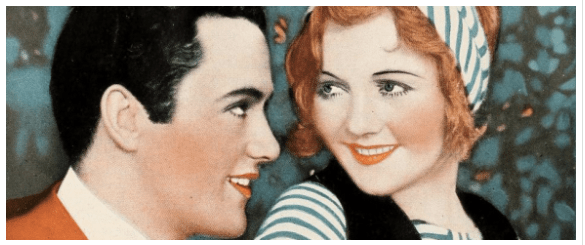
Bryan Ferry, 1972

Writing in his diary (‘Roxy, early, 71-72’, quoted from Brackwell),  Brian Eno designed and staged (on paper at least) his idea of how the song could be presented to a live audience:

‘If There is Something’
Friendly yellow lights – cf ‘Oklahoma’
‘I would do.’ – dark and more dramatic
occasional reds in torrid section
grand purple guitar arpeggios – lights on player
Sax solo – fade to morose deep green and violet
‘Shake your head girl’ – pink spot on Bryan
2nd verse spot on Andy and Eno
guitar solo

In this notebook sketch we get a clear sense of sense of how the band felt about the song, how they  viewed its various components and narrative conceits. Eno’s reference to yellow lights viz ve ‘Oklahoma’ is prescient as in the opening bars we have big country music, the expanse and optimism of Old West sheen brought to us by Phil Manzanera’s good ‘ol boy scale runs and slide guitar refrain. It may not be ‘Oh, What a Beautiful Mornin‘ but this is jocular, hillbilly music and the approach is cheeky indeed, considering contemporary critics didn’t like cheeky rock bands (see the Doors through the eyes of Lester Bangs, for instance). Perhaps this is the reason why ‘If There is Something’ did not click with some reviewers – the honkey tonk piano and twangy guitar was witty but suspect: it was either musically naive or it was taking the piss – neither of which was very cool to the musical press.  Of course it was taking the piss! (Of course it wasn’t taking the piss!).  This was early Roxy Music juxtaposition at play, and it was shocking (and funny).

Friendly Yellow Lights

If there is something that I might find
Look around corners try to find peace of mind,
I say Where would you go if you were me?
Try to keep a straight course not easy

After the opening coda of country guitar and drums, Ferry enters in with an Americanized strained yokel accent – I-If there is ah s-something, that ah m-might fiiindd – and we quickly recognize that our singer has kicked off a call and response here, the first and second part of the first line divided into two voices, a pattern that continues as said juxtaposed conversation between two different voices or selves throughout the first verse:

If there is something (enter wobbly country yokel) 
That I might find (enter new voice, production echo)
Look around corners (country yokel)
Try to find peace of mind (echo voice)
I say, Where would you go (yokel)
If you were me? (echo)
Try to keep a straight course not easy (yokel / echo combine)

The song is clearly a quest narrative, in this instance a quest for “peace of mind,” and it again quite uncannily captures Bryan Ferry’s key concerns, even within this early pre-fame persona: The dedication to a quest for knowledge (art school) vs. party-time wasting (rock school).  Try to keep a straight course not easy!

follow-thru 3
Follow Thru, Lloyd Corrigan & Laurence Schwab, 1930

The call and response pattern continues in the second verse but the gaze is crucially shifted from looking/seeking to being seen/sought:

Somebody spe-cial / looking at me
A certain re-action /we find what should it try to be?, 
I mean if there are many /meaning the same
Being specific is just a game

This is metafictional self-consciousness writ large: the looker now finds himself looked at (around that corner) but artfully steps outside himself to consider (construct) what his re-action should be – if many (possibilities) mean the same, then the possibility of natural Ideal Love is rendered meaningless within the slippery medium of language, awareness, and randy thought. Roxy has taken us here before: in Re-Make/Re-Model the love object is recalled through the recollection of license plate CPL593H – the cleverness of the image being the true love subject of the song!

In the first two stanzas of ‘If There Is Something’, Bryan Ferry expounds on the professional and personal conundrum that has provided the jet fuel of his exemplary writing and music for over five decades.  The man is, by many accounts, an obsessive possessing an intensity of intent and work ethic coupled with a melancholy disposition (Rigby/Bracewell/Buckley). In this regard, Bryan Ferry is truly a modern Romantic thinker in the mold of a Bryon or Shelley, intellectually gifted, seeking his one natural and passionate (intuitive) Ideal, yet also slightly morose in his infatuation with the impossibility of knowledge or love in this degraded, meta-textual world. There are sublime examples of this mind-set in the Roxy albums that follow (For Your PleasureSiren) but this record, at 1:39 in,  is just finding its voice and the band have lots of space still to deliver their extraordinary literary and muscular musical argument.

Dark and More Dramatic

The 3rd act of this 4 act play is where Ferry constructs his vision of the Ideal Love and that image is at both once profoundly touching and, let it be said, gently, intentionally,  hilarious:

I would do anything for you / I would climb mountains
I would swim all the oceans blue 
I would walk a thousand miles / reveal my secrets
More than enough for me to share
I would put roses round our door / sit in the garden
Growing potatoes by the score

What woman (or man) could resist such declarations of love?  This guy would walk a thousand miles, swim not just the ocean blue but all the oceans! This is the promise of life’s commitment to domesticity  – roses are dutifully placed round the door, secrets are revealed, and potatoes are grown by the score (this is Oklahoma after all). Look closer though, and there is doubt in the declaration, and the structural tense provides the clue: contrast the declaration of I would walk a thousand miles with I will walk a thousand miles.  Would is the past tense form of will. Because it is a past tense it is used to talk about the past, or to talk about things that are imagined rather than true. Our man is deep in his head again, imagining himself as the Byron poet declaring his love with offers of traversing endless oceans instead of actually getting down and dirty with the potatoes.  

Titbits
If There Is Something (BBC SESSION 1972)
This is an excellent BBC session recorded on 18th July 1972 at Maida Vale studios, broadcast on Sounds Of The Seventies with John Peel on August 1st.

young ferry 2

If There is Something – Memphis IndustriesScreen Shot 2016-05-08 at 8.03.54 PM
A nice synthetic version with Bryan Ferry vocals evoked with taste and confidence.

Ferry/Shelley
The picture accompanying Dark and More Dramatic is of the great Romantic Poet Percy Bysshe Shelley. As the synopsis says, regarded by many as among the finest lyric, as well as epic, poets in the English language.


6 Comments

Ladytron

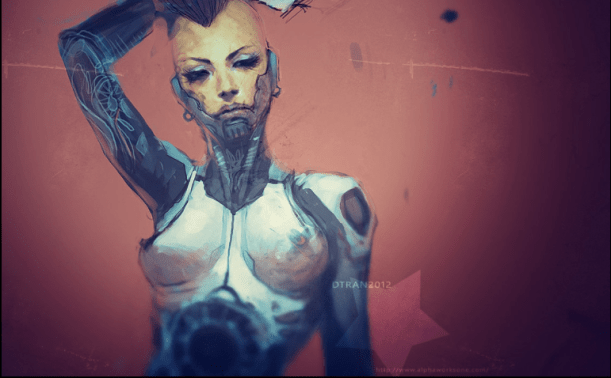
Screen Shot 2016-01-28 at 7.12.48 AMLadytron‘, (David Tran)

Ladytron‘ (Bryan Ferry), Roxy Music, 1972

The sly and clever Ladytronis the second cut on Roxy Music and the first of the album’s many punning titles: ‘tron‘ is, in part, a bit of word play referencing the Mellotron keyboard used so prominently in the song – and it is also a refreshing early introduction to Bryan Ferry’s love quest narrative. In this instance, the object of desire might be (take your pick): a mechanical fantasy woman; a love letter to the writer’s ego; or maybe even an homage to the beauty of music, its difficulties and distance, and its eventual betrayal and submission at the hands of the multi-talented poet rock star.

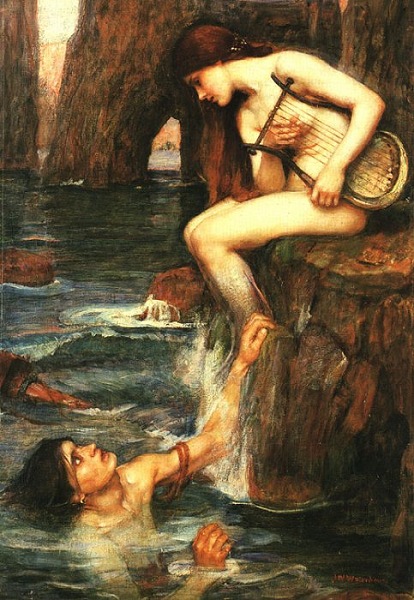
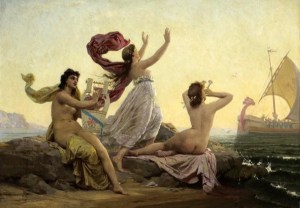
In this regard, ‘Ladytron’ is the first entry in the canon of Ferry’s Greek Odysseus siren theme of dangerous yet beautiful women who lure seafaring sailors (read: lost men) to shipwreck and ruin with their haunting music.  The pinnacle of this idea is played out most fully in The Fifth Roxy Music album Siren, but this early sketch is an excellent example of the artist’s curse (“why am I so sensitive & talented!”) and his attempt to avoid being destroyed by all this useless beauty.

A watery death may well have been the fate of this shipwrecked sailor, but Bryan Ferry is having none of that, and with a wink and a dab of post-modern irony, he equates himself and his experience with the trials of Odysseus – the only man on record (that I know of) tie himself to a ship’s mast, weep and wail uncontrollably while his mates berate him for resisting the charms of an island full of naked women. Odysseus does eventually resist the siren’s call for, as the story goes, their power is defeated by his male cunning and will-power in the face of lute (and feathers).

the-siren
The Sirenby John Waterhouse.

His life ebbed away as she dragged him still further, And laughed when she saw she’d accomplished her goal. – Charlotte Lester

Bryan Ferry’s good friend and confidante Dr. Simon Puxley points out in the album’s liner notes that the title ‘Ladytron‘ “conflates the lady of the lyric with sound of the music.” As a result, the lyric captures Bryan Ferry’s heart-felt confession about the difficulties in writing (possessing) the song (You’ve got me girl on the run around run around), while offering himself completely to the service and mastery of his art (if you want a lover/look no further/I’ll find some way of connection). At the mid-juncture of this mellotron Odyssey, the author/suitor springs his trap, revealing the extent of his deviousness and cunning (hiding my intention/I’ll get to you).

In ‘Ladytron’ seduction roles are reversed: the song writer uses and confuses his lady/melody thereby assuming the role of predator and instead of suffering certain watery death, rides this new-found dominance, presumably, all the way to the top of the charts. This process does not make for pleasant reading (still you won’t suspect me) but Bryan Ferry is almost alone in his willingness to reveal right off the bat the ‘sinister overtones’ of the crippled male imagination and the unbridled ego of the modern rock star/poet.

I’ll find some way of connection
Hiding my intention
Then I’ll move up close to you
I’ll use you and I’ll confuse you
And then I’ll lose you
Still you won’t suspect me

‘Ladytron’ lays bare Ferry’s awareness of his increasing power as a talented tune-smith – an awareness that would have seismic repercussions for Roxy as they shifted from a critical darling art-house collective to smooth pop masters. Yet the song’s success also comes from an opposite impulse: collaboration, group dynamics, and a unified sense of purpose and effort. Here Ferry’s lyrical and narrative insights are given equal weight by the visceral impact of the music, and ‘Ladytron’ provides the first indication of something special working within this group of miscreant musicians.

“‘Ladytron’ is a sort of sci-fi lunar landscape with the oboe playing what I call the  The Haunted Landscape Theme.

Bryan Ferry, NME, 1973

Haunted LandscapeLunar Landing... the first 66 seconds of ‘Ladytron’ announces Brian Eno‘s musical gifts as he lays down a sublime sonic synth-bed for Andy Mackay‘s deftly blown oboe theme. Interrupted by a line of cackle interference that will be heard again (a rare repeat) on Manzanera/Eno solo cut Miss Shapiro, the sound double-tracks and lifts off, replicating the cadence of a lunar module arriving on some strange musical landscape. The production is good here and clearly announces that the Eno/Mackay unit is as much an essential a sound to classic Roxy Music as Ferry’s quivering tenor vocal delivery and towering presence.

‘Ladytron’ brims with collisions and allows each of the musicians to take a solo, albeit at odd angles.  It is like musical blocks are purposely being built to rub against one another in order to generate the necessary spark and tension needed to get to the next track. Even a cursory breakdown of the song reveals eight or more distinct sections running over the course of its 4:26 minutes:

1. Opening/Lunar landing – Eno/Mackay
2. Melodic and lyrical introduction:You got me girl…” – Ferry
3. Verse 1, drums and bass intro:Lady, if you want to find a lover…” – Thompson/ Simpson
4. Break 1, galloping oboe and drum trot: Mackay oboe/Manzanera slash-chords
5. Verse 2,I’ll find some way of connection…” – Ferry
6. Break 2, Deep theme: Mackay switches instrument (saxophone)/Manzanera switches approach (chords to solos)
7. Break 3, Heightened response: Manzanera reprises chords/Eno launches synth attack
8. Ending/Lunar Demise: Eno explodes the lunar pod; renders the moonscape barren.

Structurally ‘Ladytron’ pits musicians and musical ideas against one another: it’s not so much a contest to see who will remain standing, but rather to see if the results should be filed under harmony or car crash. This approach had already been successfully utilized by many classic jazz bands  – notably Miles Davis’s second great quintet (1964–68) – but jazz instruments and Moog pop pastiches were pretty fresh to rock fans in mid-1972. In this regard ‘Ladytron’ became a template for future recordings (not all necessarily by Roxy Music) and the song still holds a cultural and punch-to-the-gut visceral impact. Or, if you prefer – as one notable US critic proclaimed – “the most painful yet psyche-grabbing moment in rock this year!”

Recorded: Command Studios, London 15 March 1972

Photo Credits: Andy Mackay, consequenceofsound.net; Andy Mackay‘s book on electronic music – “Electronic Music – The Instruments, the Music & the Musicians.” A wee bit hard to find. My copy: Ebay; Australia.; Brian Eno, early 70s

Ladytron: The classic early performance
Ladytron: Ballsy as hell; Eno synth excellent, and Phil lets ‘er rip around the 4 min mark.

Passing the Sirens: Bryan Ferry has lots more where this comes from: In addition to Ladytron and half the songs on Siren, my own temptress favourite is found in ‘Editions of You‘ (And as I was drifting past the Lorelei/I heard those slinky sirens wail, whooo…!).

Marie-François_Firmin-Girard_-_Ulysses_and_the_Sirens_1868

Byron! Byron! Over here!

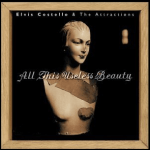
Elvis Costello, “Useless Beauty
If you reference useless beauty, you better reference Useless Beauty. Indispensable.

useless beauty


2 Comments

Re-Make/Re-Model

rethink

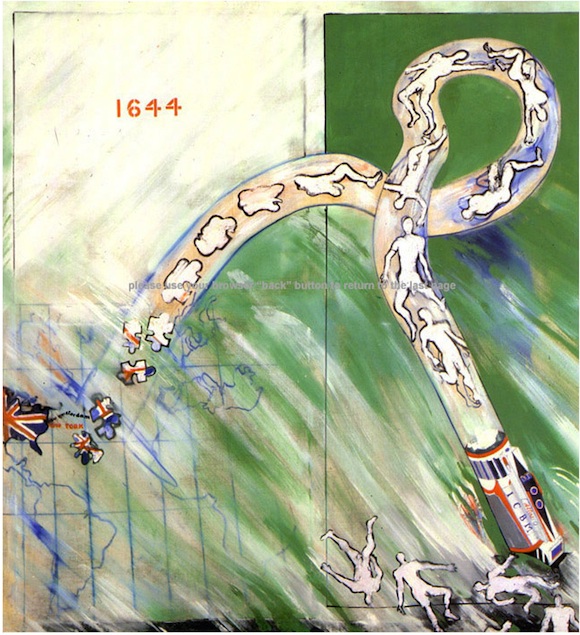
Re-think/Re-entry‘ (Derek Boshier), oil on canvas, 1962

Re-Make/Re-Model‘ (Bryan Ferry), Roxy Music, 1972

I tried but I could not find a wayLooking back, all I did was look awayNext time is the best time, we all knowBut if there is no next time, where to go, go, go, go, go, go, go, go?
She’s the sweetest queen I’ve ever seen (CPL593H)See, here she comes, see what I mean? (CPL593H)I could talk, talk, talk, talk, talk myself to deathBut I believe I would only waste my breath
Ooh, show me
I tried but I could not find a wayLooking back, all I did was look awayNext time is the best time, we all knowBut if there is no next time, where to go, go, go, go, go, go, go, go?
She’s the sweetest queen I’ve ever seen (CPL593H)See, here she comes, see what I mean? (CPL593H)I could talk, talk, talk, talk, talk myself to deathBut I believe I would only waste my breath


Roxy Music and Bryan Ferry introduced their art-manifesto to the world with ‘Re-Make/Re-Model‘, the opening cut on first album Roxy Music (1972). With ‘Re-Make’ the listener is presented with the image of a beautiful Goddess driving by in her car, the glimpse of which stirs our Artist as Young Man to write a modern pop song (She’s the sweetest queen I’ve ever seen). Ferry’s goal: to produce a perfect mixture of words and music – something new for an eager, open-minded modern audience. Responding to the tuning fork of his creative impulse, Ferry looked to Derek Boshier and his innovative pop art painting Re-Think/Re-Entry (1962) for inspiration. When Ferry composed Re-Make/Re-Model he wasn’t just writing a rock song: he was applying Boshier’s fine art methodology to sound.

‘I’ve always liked what Goethe said: “The greatest thing a person can achieve is astonishment”.’
Derek Boshier

A wonderful and playful painting, ‘Re-Think/Re-Entry‘ is an invitation to look at the process of perception and narrative expectation viewed through the visual language of art. We move forward. Or, are the British jigsaw mannequins moving backward, actually originating from the future, and returning to the values of their past. In this regard, the young Bryan Ferry – student of Fine Art at the University of Newcastle – crafted one of his earliest songs to convey his fascination with change and how art and music can highlight new and exciting ways of seeing:

I tried but I could not find a way
Looking back all I did was look away
Next time is the best time we all know
But if there is no next time where to go

‘Re-Make/Re-Model’ moves within a series of musical and narrative collisions and transformations.  The song also provides the earliest example of Bryan Ferry’s career-defining artistic and emotional concerns: that of the sensitive aesthete searching for love in a looking-glass world, knowing full well that memory of the chase is better than the catch (Next time is the best time we all know). In evidence is Ferry’s hallmark structural simplicity set to a sublime outcome: the poetic scheme of the song is straight-ahead rhyming couplets (way/away/know/go) set within a time-shifting verse. The playfulness becomes evident when we realize that the object of desire (the sweetest queen) is actually missing in action, comically absent from the narrative. While we might reasonably expect our day-dreaming lad to describe his Queen with shimmering bedroom eyes and Greta Garbo hair, instead he riffs and obsesses on the license plate number of the car she was driving – CPL593H! (Has there ever been a song of passion whose chorus name-checks a car license plate?). Clearly, our boy knows on which side his postmodern signified/signifiers are buttered as ‘Re-Make‘ demonstrates that the trigger for memory can be more rewarding than the memory itself. Ohhh show me!

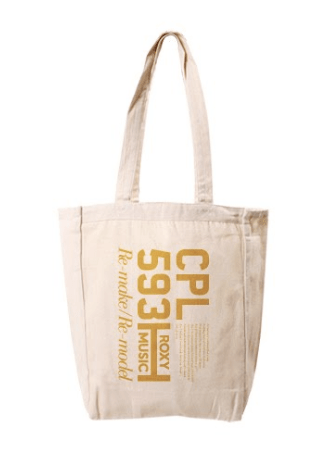
bag 2

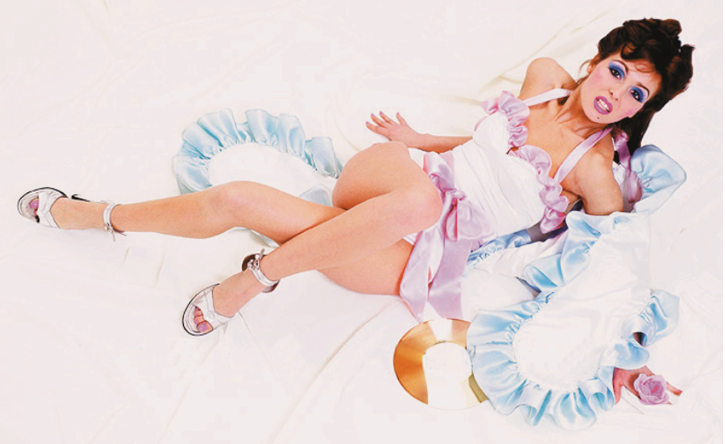
Roxy Music has always had humour in spades and it is a shame that this aspect of the band’s output is often over-looked. “The early 70s,” John Peel once complained, “were kind of boring apart from Roxy Music.” This was the era of The Band, CSNY, and George Harrison‘s lush and opulent beard. Jesus Christ Superstar was the biggest US seller of 1971.  In the UK it was no better: on the positive side, Bridge Over Troubled Water was a chart topper, but then so was Andy Williams Greatest Hits The art-school trio of Ferry, Eno and Mackay looked to the visual arts, cinema, magazines, and 50s pop to provide the band with a dress code that emphasized pastiche and theatricality at the expense of typical rock group posturing. Early band pictures highlight a hilarious collision of styles: Teddy Boy vs. Tarzan  (nice leopard suit Paul); Boa Boy vs. Space Child (Andy Mackay particularly striking with Star Trek sideburns and green sparkle regalia). The approach was a consciously disposable art that drew attention to the creative process while gently mocking it. Even the credits for Roxy Music were fresh, famously crediting “clothes, make-up and hair” to fashion designer Antony Price. “Cover concept” by Bryan Ferry; “Cover girl” by Kari-Ann; “Photography” by Karl Stoecker. The whole thing read like the Hollywood movie it was pretending to be.

In June 1972 – over 50 years ago – seven months after the release of Clockwork Orange spooked a nation enough for the film to be banned (truths too close to home, I expect), the first wave of glam punk delivered to the British public the troubled spawn of the 60s in the form of Roxy Music and David Bowie‘s Ziggy Stardust and the Spiders from Mars. Both Roxy and Bowie albums were spiritual brothers, cut from the same cloth: released in the same month, Roxy Music were selected as the special guest to open for Bowie on the Spiders of Mars tour. The shows were glammed up to be sure – hot, seedy, and musically tough. A sense of humour was necessary to crank it out and take it in for these two artists were performing a cut-up collage of space creatures and 50s rock n’ roll. Yet, in spite of the theatricality and irreverence, Roxy in particular were asking a perfectly honest and important question: where do we go from here? (For Bowie, the answer was nuclear war and the burn-out of Hunger City). For Roxy, the answer was more complicated – they believed in the future but had the balls to ask: Next time is the best time we all know/But if there is no next time where to go?

To fresh young ears the first Roxy Music album must have sounded like a mess. It still does. The music is harsh and in your face (future Sex Pistol Steve Jones was certainly taking notes – the name of his first band was called The Strand). The sonics are thin, the vocals shrill and gimmicky (something Ferry tried to address with his re-recording of four of the original tracks for his solo album Let’s Stick Together) but the record’s overall buzz, ingenuity, energy and sense of fun are palpable. ‘Re-Make’ takes off in the key of F and races like a locomotive up the neck. It’s thrash-rock in full flight, the F root chord holding down its tubby arse as it recoils from the move to G#  (not the expected G major) and then, worse, to D#, the sharps upping the tension with sustained off-program momentum. Three chords and attitude. (Buzzcocks eat your heart out). And when the song takes a breather it’s still got plenty of sass: throwing out line and quotes from The Beatles (Day Tripper), Eddie Cochran (C’mon Everybody) and even Wagner (Ride of the Valkyries) while Brian Eno blows sploodge bubbles with his VCS3 like there is no precedent. (There wasn’t).

This song is a mashup before mashups existed, and it fuckin’ rocks!”
Song of the Day, We Ball Harder

Strident, in-your-face, a trio of firsts (first recorded, first cut, first album), ‘Re-Make/Re-Model’ is the manifesto for the Roxy aesthetic.  From here the journey would be variants on the theme of the Roxy Machine..

Derek Boshier
Derek Boshier’s career is long, varied and innovative. He has recently updated his website with fascinating links to his back-catalogue: take a moment to check it out, www.derekboshier.comyou won’t regret it.

Screen Shot 2016-01-09 at 7.37.36 PM
Bryan Ferry re-recorded  “Re-Make/Re-Model“, “2HB“, “Chance Meeting” and “Sea Breezes” for his Let’s Stick Together solo collection (1976). The voice is deeper, the funk is tuned, the result surprisingly strong. In bar fights I am quick to point out that the musical guests are Phil Manzanera, Paul Thompson, John Wetton, and Chris Spedding. Highly recommended.